When a magnet is heated up, it reaches a critical point where it loses magnetization. Called “criticality,” this point of high complexity is reached when a physical object is transitioning smoothly from one phase into the next.
Credit: Northwestern University
When a magnet is heated up, it reaches a critical point where it loses magnetization. Called “criticality,” this point of high complexity is reached when a physical object is transitioning smoothly from one phase into the next.
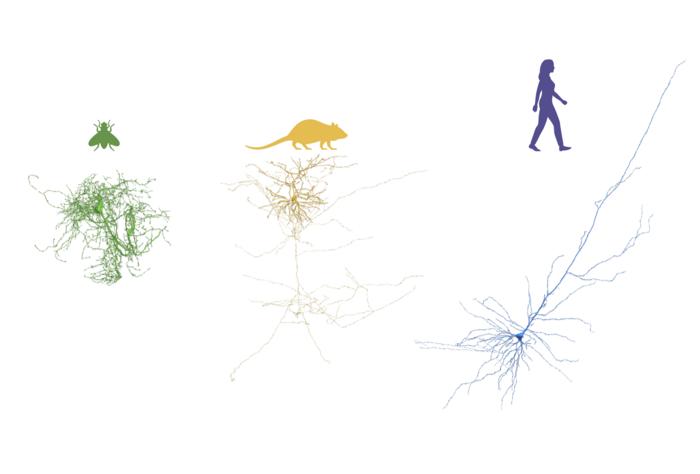
Now, a new Northwestern University study has discovered that the brain’s structural features reside in the vicinity of a similar critical point — either at or close to a structural phase transition. Surprisingly, these results are consistent across brains from humans, mice and fruit flies, which suggests the finding might be universal.
Although the researchers don’t know what phases the brain’s structure is transitioning between, they say this new information could enable new designs for computational models of the brain’s complexity and emergent phenomena.
The research was published today (June 10) in Communications Physics, a journal published by Nature Portfolio.
“The human brain is one of the most complex systems known, and many properties of the details governing its structure are not yet understood,” said Northwestern’s István Kovács, the study’s senior author. “Several other researchers have studied brain criticality in terms of neuron dynamics. But we are looking at criticality at the structural level in order to ultimately understand how this underpins the complexity of brain dynamics. That has been a missing piece for how we think about the brain’s complexity. Unlike in a computer where any software can run on the same hardware, in the brain the dynamics and the hardware are strongly related.”
“The structure of the brain at the cellular level appears to be near a phase transition,” said Northwestern’s Helen Ansell, the paper’s first author. “An everyday example of this is when ice melts into water. It’s still water molecules, but they are undergoing a transition from solid to liquid. We certainly are not saying that the brain is near melting. In fact, we don’t have a way of knowing what two phases the brain could be transitioning between. Because if it were on either side of the critical point, it wouldn’t be a brain.”
Kovács is an assistant professor of physics and astronomy at Northwestern’s Weinberg College of Arts and Sciences. At the time of the research, Ansell was a postdoctoral researcher in his laboratory; now she is a Tarbutton Fellow at Emory University.
While researchers have long studied brain dynamics using functional magnetic resonance imaging (fMRI) and electroencephalograms (EEG), advances in neuroscience have only recently provided massive datasets for the brain’s cellular structure. These data opened possibilities for Kovács and his team to apply statistical physics techniques to measure the physical structure of neurons.
For the new study, Kovács and Ansell analyzed publicly available data from 3D brain reconstructions from humans, fruit flies and mice. By examining the brain at nanoscale resolution, the researchers found the samples showcased hallmarks of physical properties associated with criticality.
One such property is the well-known, fractal-like structure of neurons. This nontrivial fractal-dimension is an example of a set of observables, called “critical exponents,” that emerge when a system is close to a phase transition.
Brain cells are arranged in a fractal-like statistical pattern at different scales. When zoomed in, the fractal shapes are “self-similar,” meaning that smaller parts of the sample resemble the whole sample. The sizes of various neuron segments observed also are diverse, which provides another clue. According to Kovács, self-similarity, long-range correlations and broad size distributions are all signatures of a critical state, where features are neither too organized nor too random. These observations lead to a set of critical exponents that characterize these structural features.
“These are things we see in all critical systems in physics,” Kovács said. “It seems the brain is in a delicate balance between two phases.”
Kovács and Ansell were amazed to find that all brain samples studied — from humans, mice and fruit flies — have consistent critical exponents across organisms, meaning they share the same quantitative features of criticality. The underlying, compatible structures among organisms hint that a universal governing principle might be at play. Their new findings potentially could help explain why brains from different creatures share some of the same fundamental principles.
“Initially, these structures look quite different — a whole fly brain is roughly the size of a small human neuron,” Ansell said. “But then we found emerging properties that are surprisingly similar.”
“Among the many characteristics that are very different across organisms, we relied on the suggestions of statistical physics to check which measures are potentially universal, such as critical exponents. Indeed, those are consistent across organisms,” Kovács said. “As an even deeper sign of criticality, the obtained critical exponents are not independent — from any three, we can calculate the rest, as dictated by statistical physics. This finding opens the way to formulating simple physical models to capture statistical patterns of the brain structure. Such models are useful inputs for dynamical brain models and can be inspirational for artificial neural network architectures.”
Next, the researchers plan to apply their techniques to emerging new datasets, including larger sections of the brain and more organisms. They aim to find if the universality will still apply.
The study, “Unveiling universal aspects of the cellular anatomy of the brain,” was partially supported through the computational resources at the Quest high-performance computing facility at Northwestern.
Journal
Communications Physics
DOI
10.1038/s42005-024-01665-y
Method of Research
Meta-analysis
Subject of Research
Not applicable
Article Title
Unveiling universal aspects of the cellularanatomy of the brain
Article Publication Date
10-Jun-2024