• HOME
  • NEWS
  • EXPLORE
    • CAREER
      • Companies
      • Jobs
    • EVENTS
    • iGEM
      • News
      • Team
    • PHOTOS
    • VIDEO
    • WIKI
  • BLOG
  • COMMUNITY
    • FACEBOOK
    • INSTAGRAM
    • TWITTER
Saturday, February 7, 2026
BIOENGINEER.ORG
No Result
View All Result
  • Login
  • HOME
  • NEWS
  • EXPLORE
    • CAREER
      • Companies
      • Jobs
        • Lecturer
        • PhD Studentship
        • Postdoc
        • Research Assistant
    • EVENTS
    • iGEM
      • News
      • Team
    • PHOTOS
    • VIDEO
    • WIKI
  • BLOG
  • COMMUNITY
    • FACEBOOK
    • INSTAGRAM
    • TWITTER
  • HOME
  • NEWS
  • EXPLORE
    • CAREER
      • Companies
      • Jobs
        • Lecturer
        • PhD Studentship
        • Postdoc
        • Research Assistant
    • EVENTS
    • iGEM
      • News
      • Team
    • PHOTOS
    • VIDEO
    • WIKI
  • BLOG
  • COMMUNITY
    • FACEBOOK
    • INSTAGRAM
    • TWITTER
No Result
View All Result
Bioengineer.org
No Result
View All Result
Home NEWS Science News Biology

New study reveals anti-cancer properties in Kencur ginger

Bioengineer by Bioengineer
August 28, 2023
in Biology
Reading Time: 2 mins read
0
Kencur (Kaempferia galanga L.) a tropical plant of the ginger family cultivated mainly in Indonesia and other Southeast Asian countries
Share on FacebookShare on TwitterShare on LinkedinShare on RedditShare on Telegram

You may know it as an aromatic spice to add flavor to your dishes or as a soothing herbal remedy to use for upset stomachs, but researchers from Osaka Metropolitan University have uncovered promising findings that Kencur, a tropical plant in the ginger family native to Southeast Asia, possesses anti-cancer effects.
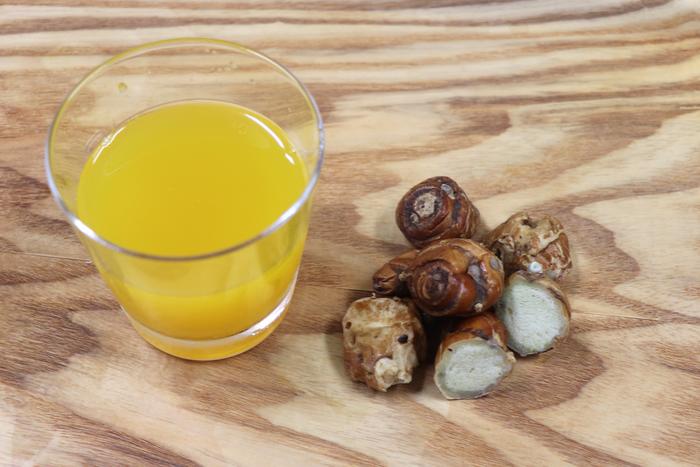
Kencur (Kaempferia galanga L.) a tropical plant of the ginger family cultivated mainly in Indonesia and other Southeast Asian countries

Credit: Akiko Kojima, Osaka Metropolitan University

You may know it as an aromatic spice to add flavor to your dishes or as a soothing herbal remedy to use for upset stomachs, but researchers from Osaka Metropolitan University have uncovered promising findings that Kencur, a tropical plant in the ginger family native to Southeast Asia, possesses anti-cancer effects.

Led by Associate Professor Akiko Kojima of the Graduate School of Human Life and Ecology, the researchers demonstrated that Kencur extract and its main active component, ethyl p-methoxycinnamate (EMC), significantly suppressed cancer cell growth at the cellular and animal levels.

While previous studies on EMC indicated its anti-cancer potential by decreasing the expression of mitochondrial transcription factor A (TFAM), which is associated with cancer cell proliferation, the exact mechanism remained unclear until now.

“The results of this study confirm the anti-cancer effects of Kencur extract and its main active ingredient, EMC. It is highly expected that TFAM will become a new marker for anti-cancer effects in the future as research advances in related fields,” Professor Kojima stated.

Their findings were published in Heliyon.


Let’s have a Kencur break! (YouTube)


###

About OMU 

Osaka Metropolitan University is the third largest public university in Japan, formed by a merger between Osaka City University and Osaka Prefecture University in 2022. OMU upholds “Convergence of Knowledge” through 11 undergraduate schools, a college, and 15 graduate schools. For more research news visit https://www.omu.ac.jp/en/ or follow us on Twitter: @OsakaMetUniv_en, or Facebook. 


Journal

Heliyon

DOI

10.1016/j.heliyon.2023.e17588

Method of Research

Experimental study

Subject of Research

Animal tissue samples

Article Title

Kaempferia galanga L. extract and its main component, ethyl p-methoxycinnamate, inhibit the proliferation of Ehrlich ascites tumor cells by suppressing TFAM expression

Article Publication Date

23-Jun-2023

Share12Tweet8Share2ShareShareShare2

Related Posts

Florida Cane Toad: Complex Spread and Selective Evolution

Florida Cane Toad: Complex Spread and Selective Evolution

February 7, 2026
New Study Uncovers Mechanism Behind Burn Pit Particulate Matter–Induced Lung Inflammation

New Study Uncovers Mechanism Behind Burn Pit Particulate Matter–Induced Lung Inflammation

February 6, 2026

DeepBlastoid: Advancing Automated and Efficient Evaluation of Human Blastoids with Deep Learning

February 6, 2026

Navigating the Gut: The Role of Formic Acid in the Microbiome

February 6, 2026

POPULAR NEWS

  • Robotic Ureteral Reconstruction: A Novel Approach

    Robotic Ureteral Reconstruction: A Novel Approach

    82 shares
    Share 33 Tweet 21
  • Digital Privacy: Health Data Control in Incarceration

    63 shares
    Share 25 Tweet 16
  • Study Reveals Lipid Accumulation in ME/CFS Cells

    57 shares
    Share 23 Tweet 14
  • Breakthrough in RNA Research Accelerates Medical Innovations Timeline

    53 shares
    Share 21 Tweet 13

About

We bring you the latest biotechnology news from best research centers and universities around the world. Check our website.

Follow us

Recent News

Evaluating Pediatric Emergency Care Quality in Ethiopia

TPMT Expression Predictions Linked to Azathioprine Side Effects

Improving Dementia Care with Enhanced Activity Kits

Subscribe to Blog via Email

Enter your email address to subscribe to this blog and receive notifications of new posts by email.

Join 73 other subscribers
  • Contact Us

Bioengineer.org © Copyright 2023 All Rights Reserved.

Welcome Back!

Login to your account below

Forgotten Password?

Retrieve your password

Please enter your username or email address to reset your password.

Log In
No Result
View All Result
  • Homepages
    • Home Page 1
    • Home Page 2
  • News
  • National
  • Business
  • Health
  • Lifestyle
  • Science

Bioengineer.org © Copyright 2023 All Rights Reserved.