• HOME
  • NEWS
  • EXPLORE
    • CAREER
      • Companies
      • Jobs
    • EVENTS
    • iGEM
      • News
      • Team
    • PHOTOS
    • VIDEO
    • WIKI
  • BLOG
  • COMMUNITY
    • FACEBOOK
    • INSTAGRAM
    • TWITTER
Saturday, November 14, 2026
BIOENGINEER.ORG
No Result
View All Result
  • Login
  • HOME
  • NEWS
  • EXPLORE
    • CAREER
      • Companies
      • Jobs
        • Lecturer
        • PhD Studentship
        • Postdoc
        • Research Assistant
    • EVENTS
    • iGEM
      • News
      • Team
    • PHOTOS
    • VIDEO
    • WIKI
  • BLOG
  • COMMUNITY
    • FACEBOOK
    • INSTAGRAM
    • TWITTER
No Result
View All Result
Bioengineer.org
No Result
View All Result
Home NEWS Science News Biology

New study reveals anti-cancer properties in Kencur ginger

Bioengineer by Bioengineer
August 28, 2023
in Biology
Reading Time: 2 mins read
0
Kencur (Kaempferia galanga L.) a tropical plant of the ginger family cultivated mainly in Indonesia and other Southeast Asian countries
Share on FacebookShare on TwitterShare on LinkedinShare on RedditShare on Telegram

You may know it as an aromatic spice to add flavor to your dishes or as a soothing herbal remedy to use for upset stomachs, but researchers from Osaka Metropolitan University have uncovered promising findings that Kencur, a tropical plant in the ginger family native to Southeast Asia, possesses anti-cancer effects.
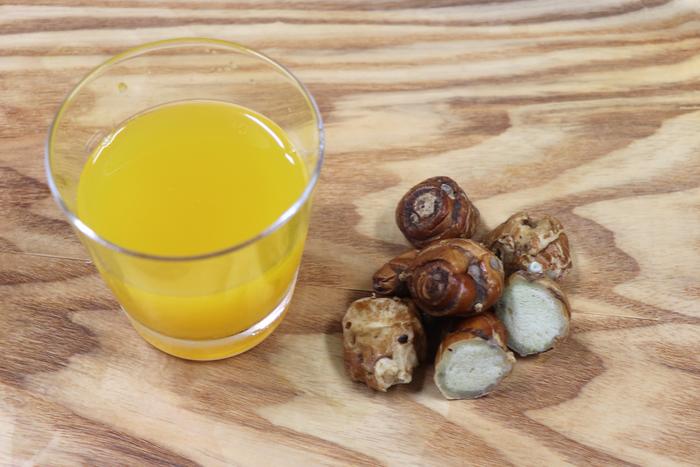
Kencur (Kaempferia galanga L.) a tropical plant of the ginger family cultivated mainly in Indonesia and other Southeast Asian countries

Credit: Akiko Kojima, Osaka Metropolitan University

You may know it as an aromatic spice to add flavor to your dishes or as a soothing herbal remedy to use for upset stomachs, but researchers from Osaka Metropolitan University have uncovered promising findings that Kencur, a tropical plant in the ginger family native to Southeast Asia, possesses anti-cancer effects.

Led by Associate Professor Akiko Kojima of the Graduate School of Human Life and Ecology, the researchers demonstrated that Kencur extract and its main active component, ethyl p-methoxycinnamate (EMC), significantly suppressed cancer cell growth at the cellular and animal levels.

While previous studies on EMC indicated its anti-cancer potential by decreasing the expression of mitochondrial transcription factor A (TFAM), which is associated with cancer cell proliferation, the exact mechanism remained unclear until now.

“The results of this study confirm the anti-cancer effects of Kencur extract and its main active ingredient, EMC. It is highly expected that TFAM will become a new marker for anti-cancer effects in the future as research advances in related fields,” Professor Kojima stated.

Their findings were published in Heliyon.


Let’s have a Kencur break! (YouTube)


###

About OMU 

Osaka Metropolitan University is the third largest public university in Japan, formed by a merger between Osaka City University and Osaka Prefecture University in 2022. OMU upholds “Convergence of Knowledge” through 11 undergraduate schools, a college, and 15 graduate schools. For more research news visit https://www.omu.ac.jp/en/ or follow us on Twitter: @OsakaMetUniv_en, or Facebook. 


Journal

Heliyon

DOI

10.1016/j.heliyon.2023.e17588

Method of Research

Experimental study

Subject of Research

Animal tissue samples

Article Title

Kaempferia galanga L. extract and its main component, ethyl p-methoxycinnamate, inhibit the proliferation of Ehrlich ascites tumor cells by suppressing TFAM expression

Article Publication Date

23-Jun-2023
Share12Tweet8Share2ShareShareShare2

Related Posts

Hybrid Nanoparticles Combined With Photodynamic Therapy Inhibit Salmonella Typhimurium Biofilms

Hybrid Nanoparticles Combined With Photodynamic Therapy Inhibit Salmonella Typhimurium Biofilms

November 14, 2026
Extra-Early Cowpea Trials in Niger Reveal Distinct Environments and Stable Genotypes

Extra-Early Cowpea Trials in Niger Reveal Distinct Environments and Stable Genotypes

November 14, 2026

Mitochondrial Cristae System Proposed as Checkpoint in Retinal Pigment Epithelial Degeneration

November 14, 2026

Molecular Profiling Uncovers Key Genes Linked to Triple-Negative Breast Cancer Recurrence

November 14, 2026

POPULAR NEWS

  • Mitochondrial Cristae System Proposed as Checkpoint in Retinal Pigment Epithelial Degeneration

    Mitochondrial Cristae System Proposed as Checkpoint in Retinal Pigment Epithelial Degeneration

    29 shares
    Share 12 Tweet 7
  • Molecular Profiling Uncovers Key Genes Linked to Triple-Negative Breast Cancer Recurrence

    29 shares
    Share 12 Tweet 7
  • Three Baseline Factors Predict Low-Frequency Hearing Levels in Menière’s Disease

    29 shares
    Share 12 Tweet 7
  • Mixed Lung Patterns Link to Higher Recurrence and Treatment in Sarcoidosis

    29 shares
    Share 12 Tweet 7

About

We bring you the latest biotechnology news from best research centers and universities around the world. Check our website.

Follow us

Recent News

Egalitarian Gender Role Attitudes Predict Stronger Clinical Decision-Making in Surgical Nurses

Knee Phenotype Alteration Links to Smaller Talar Inclination Changes After Arthroplasty

Nearly One-Third of Home-Treated Pyelonephritis Patients Developed Bacteremia Without Mortality

Subscribe to Blog via Email

Enter your email address to subscribe to this blog and receive notifications of new posts by email.

Join 87 other subscribers
  • Contact Us

Bioengineer.org © Copyright 2023 All Rights Reserved.

Welcome Back!

Login to your account below

Forgotten Password?

Retrieve your password

Please enter your username or email address to reset your password.

Log In
No Result
View All Result
  • Homepages
    • Home Page 1
    • Home Page 2
  • News
  • National
  • Business
  • Health
  • Lifestyle
  • Science

Bioengineer.org © Copyright 2023 All Rights Reserved.