With the help of an AI, researchers at Chalmers University of Technology, Sweden, have succeeded in designing synthetic DNA that controls the cells’ protein production. The technology can contribute to the development and production of vaccines, drugs for severe diseases, as well as alternative food proteins much faster and at significantly lower costs than today.
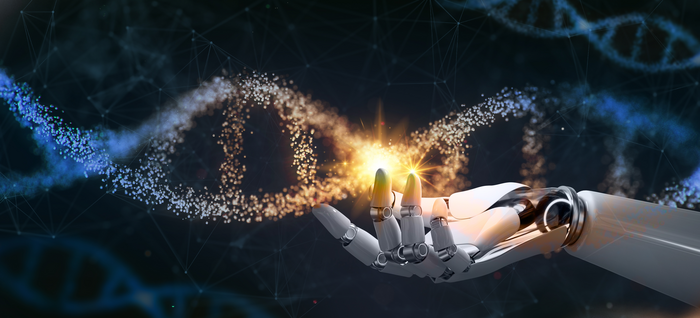
Credit: Credit: Yen Strandqvist
With the help of an AI, researchers at Chalmers University of Technology, Sweden, have succeeded in designing synthetic DNA that controls the cells’ protein production. The technology can contribute to the development and production of vaccines, drugs for severe diseases, as well as alternative food proteins much faster and at significantly lower costs than today.
How our genes are expressed is a process that is fundamental to the functionality of cells in all living organisms. Simply put, the genetic code in DNA is transcribed to the molecule messenger RNA (mRNA), which tells the cell’s factory which protein to produce and in which quantities.
Researchers have put a lot of effort into trying to control gene expression because it can, among other things, contribute to the development of protein-based drugs. A recent example is the mRNA vaccine against Covid-19, which instructed the body’s cells to produce the same protein found on the surface of the coronavirus. The body’s immune system could then learn to form antibodies against the virus. Likewise, it is possible to teach the body’s immune system to defeat cancer cells or other complex diseases if one understands the genetic code behind the production of specific proteins.
Most of today’s new drugs are protein-based, but the techniques for producing them are both expensive and slow, because it is difficult to control how the DNA is expressed. Last year, a research group at Chalmers, led by Aleksej Zelezniak, Associate Professor of Systems Biology, took an important step in understanding and controlling how much of a protein is made from a certain DNA sequence.
“First it was about being able to fully ‘read’ the DNA molecule’s instructions. Now we have succeeded in designing our own DNA that contains the exact instructions to control the quantity of a specific protein”, says Aleksej Zelezniak about the research group’s latest important breakthrough.
DNA molecules made-to-order
The principle behind the new method is similar to when an AI generates faces that look like real people. By learning what a large selection of faces looks like, the AI can then create completely new but natural-looking faces. It is then easy to modify a face by, for example, saying that it should look older, or have a different hairstyle. On the other hand, programming a believable face from scratch, without the use of AI, would have been much more difficult and time-consuming. Similarly, the researchers’ AI has been taught the structure and regulatory code of DNA. The AI then designs synthetic DNA, where it is easy to modify its regulatory information in the desired direction of gene expression. Simply put, the AI is told how much of a gene is desired and then ‘prints’ the appropriate DNA sequence.
“DNA is an incredibly long and complex molecule. It is thus experimentally extremely challenging to make changes to it by iteratively reading and changing it, then reading and changing it again. This way it takes years of research to find something that works. Instead, it is much more effective to let an AI learn the principles of navigating DNA. What otherwise takes years is now shortened to weeks or days”, says first author Jan Zrimec, a research associate at the National Institute of Biology in Slovenia and past postdoc in Aleksej Zelezniak’s group.
The researchers have developed their method in the yeast Saccharomyces cerevisiae, whose cells resemble mammalian cells. The next step is to use human cells. The researchers have hopes that their progress will have an impact on the development of new as well as existing drugs.
“Protein-based drugs for complex diseases or alternative sustainable food proteins can take many years and can be extremely expensive to develop. Some are so expensive that it is impossible to obtain a return on investment, making them economically nonviable. With our technology, it is possible to develop and manufacture proteins much more efficiently so that they can be marketed”, says Aleksej Zelezniak.
The authors of the study are Jan Zrimec, Xiaozhi Fu, Azam Sheikh Muhammad, Christos Skrekas, Vykintas Jauniskis, Nora K. Speicher, Christoph S. Börlin, Vilhelm Verendel, Morteza Haghir Chehreghani, Devdatt Dubhashi, Verena Siewers, Florian David, Jens Nielsen and Aleksej Zelezniak.
The researcher are active at Chalmers University of Technology, Sverige; National Institute of Biology, Slovenia; Biomatter Designs, Lithuania; Institute of Biotechnology, Lithuania; BioInnovation Institute, Denmark; King’s College London, UK.
For more information, please contact: Aleksej Zelezniak, Associate Professor, Department of Biology and Biological Engineering, Chalmers University of Technology, +46 31 772 81 71, [email protected]
Read the full study: Controlling gene expression with deep generative design of regulatory DNA
Caption: Aleksej Zelezniak, Associate Professor, Department of Biology and Biological Engineering, Chalmers University of Technology
Illustration credit: Yen Strandqvist, Chalmers
Journal
Nature Communications
DOI
10.1038/s41467-022-32818-8
Method of Research
Computational simulation/modeling
Subject of Research
Not applicable
Article Title
Controlling gene expression with deep generative design of regulatory DNA
Article Publication Date
30-Aug-2022