Scientists at the Garvan Institute of Medical Research have identified molecular profiles of the surrounding matrix of a common type of lung cancer that might indicate which patients are likely to develop aggressive tumours.
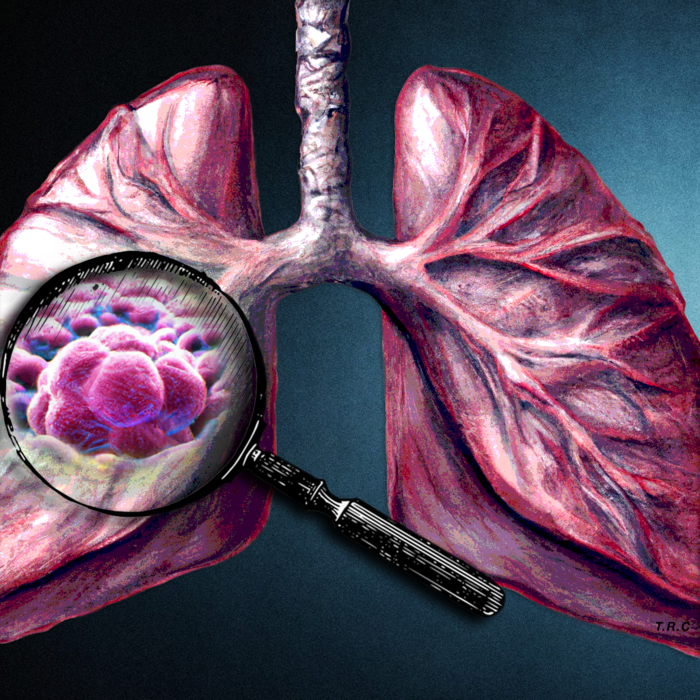
Credit: Thomas Cox/Garvan Institute
Scientists at the Garvan Institute of Medical Research have identified molecular profiles of the surrounding matrix of a common type of lung cancer that might indicate which patients are likely to develop aggressive tumours.
Squamous cell carcinoma is the second most prevalent type of lung cancer. Yet treatment options for these patients remain limited and have remained largely unchanged over decades. High rates of recurrence and chemotherapy resistance mean that less than one in five patients will survive more than five years after their diagnosis.
In addition to studying cancer cells, Garvan researchers have been turning their attention to the environment that surrounds these cancer cells in the tumour. A major component of this environment is the extracellular matrix, a 3D meshwork of around 300 core molecules. This matrix is present in all tissues in the body, where it normally provides structural and functional support to hold cells together. But in cancers, this matrix is fundamentally altered and these changes can promote tumour growth.
“Our focus was on how the matrix is changing in squamous cell lung carcinoma, how this might make tumours more aggressive, and how it could be used to help with understanding patient prognosis,” says Dr Amelia Parker, first author of the study.
“Tumours are an ecosystem, made up of cancer cells held together by the matrix – it is this matrix that we think is supporting cancer cells to keep growing and spreading, contributing to the poor outcome for some patients. But we didn’t really have an understanding of what the matrix looks like or why it makes lung cancer resistant to treatment. If we can understand that part of the tumour, we can reveal more effective ways to treat patients by targeting the way the matrix is making the cancer more aggressive.”
The findings, published in BMC Genomic Medicine, could potentially be used to develop biomarkers to determine which patients might benefit from more aggressive and more targeted treatment.
The team, led by Associate Professor Thomas Cox, comprehensively studied the molecular and protein composition of the matrix around squamous cell carcinoma lung tumours, taken from patient tissue samples.
They identified two tumour matrix profiles – one in which patient prognosis was good, and the other where patients did poorly. These matrix profiles appear to be established early in the initiation of the tumour and persist as the tumour grows, controlling how the tumour will respond to chemotherapy treatment.
The tumour matrix in patients who fared worse had more collagen proteins and more fibrosis – stiffening of the tumour structure – suggesting that the tumour matrix remodels to protect itself against treatment.
The team also found that, while adenocarcinomas and squamous cell carcinomas appear similar in the clinic, they are quite different in their matrix composition. These differences have the potential to be leveraged by existing therapies developed to treat other diseases.
“These two tumours look very similar under the microscope, and are typically treated the same way, but are very different on a molecular level,” says Associate Professor Cox, head of the Matrix and Metastasis lab at Garvan. “This sheds light on why some patients progress well and others don’t, and how we might be able to stratify patients to provide more personalised treatment.”
The next step is to engage with clinical partners to move toward a clinical trial for repurposing therapies that may prevent this matrix remodelling in lung cancer patients, and improve response to therapy.
Journal
Genomic Medicine
DOI
10.1186/s13073-022-01127-6
Method of Research
Experimental study
Subject of Research
Human tissue samples
Article Title
Extracellular Matrix Profiles Determine Risk and 1 Prognosis of the Squamous Cell Carcinoma Subtype of Non-Small Cell Lung Carcinoma
Article Publication Date
21-Nov-2022