• HOME
  • NEWS
  • EXPLORE
    • CAREER
      • Companies
      • Jobs
    • EVENTS
    • iGEM
      • News
      • Team
    • PHOTOS
    • VIDEO
    • WIKI
  • BLOG
  • COMMUNITY
    • FACEBOOK
    • INSTAGRAM
    • TWITTER
Saturday, February 7, 2026
BIOENGINEER.ORG
No Result
View All Result
  • Login
  • HOME
  • NEWS
  • EXPLORE
    • CAREER
      • Companies
      • Jobs
        • Lecturer
        • PhD Studentship
        • Postdoc
        • Research Assistant
    • EVENTS
    • iGEM
      • News
      • Team
    • PHOTOS
    • VIDEO
    • WIKI
  • BLOG
  • COMMUNITY
    • FACEBOOK
    • INSTAGRAM
    • TWITTER
  • HOME
  • NEWS
  • EXPLORE
    • CAREER
      • Companies
      • Jobs
        • Lecturer
        • PhD Studentship
        • Postdoc
        • Research Assistant
    • EVENTS
    • iGEM
      • News
      • Team
    • PHOTOS
    • VIDEO
    • WIKI
  • BLOG
  • COMMUNITY
    • FACEBOOK
    • INSTAGRAM
    • TWITTER
No Result
View All Result
Bioengineer.org
No Result
View All Result
Home NEWS Science News Chemistry

Brain support cells transfer their mitochondria to fight free radicals

Bioengineer by Bioengineer
August 15, 2022
in Chemistry
Reading Time: 2 mins read
0
Brain Support Cells Transfer Their Mitochondria to Fight Free Radicals
Share on FacebookShare on TwitterShare on LinkedinShare on RedditShare on Telegram

After a brain hemorrhage, neural support cells called astrocytes enhance healing by transferring their mitochondria to damaged neurons. The healthy mitochondria stimulate the production of a free radical-fighting enzyme, according to new research published in JNeurosci. 
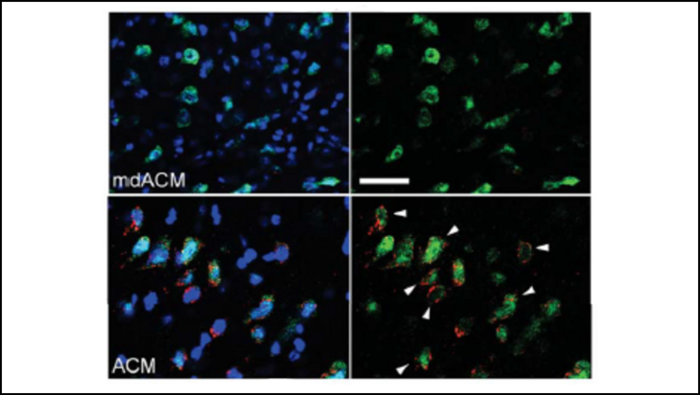
Brain Support Cells Transfer Their Mitochondria to Fight Free Radicals

Credit: Tashiro et al., JNeurosci 2022

After a brain hemorrhage, neural support cells called astrocytes enhance healing by transferring their mitochondria to damaged neurons. The healthy mitochondria stimulate the production of a free radical-fighting enzyme, according to new research published in JNeurosci. 

An artery in the brain bursts. Blood rushes into the tissue, inducing free radicals that cause even more damage. The hemorrhage damages mitochondria, the site of energy production in cells. Astrocytes transfer their mitochondria to damaged neurons after a hemorrhage. These healthy mitochondria contain a “healing” peptide called humanin and an enzyme called manganese superoxide dismutase (Mn-SOD) that help neutralize free radicals.

Tashiro et al. injected mice with healthy mitochondria after a hemorrhage. The hemorrhage reduced levels of Mn-SOD in the mice brain and increased the number of free radicals. Using molecular tags, the researchers found that the rodents’ neurons took up the mitochondria from the bloodstream. The mice who received the treatment showed improved neurological recovery, but the benefits decreased if the mice received mitochondria without the Mn-SOD enzyme. These results reveal mitochondria can transfer between brain cells to improve health and aide recovery.

###

Paper title: Transplantation of astrocytic mitochondria modulates neuronal antioxidant defense and neuroplasticity and promotes functional recovery after intracerebral hemorrhage

Please contact [email protected] for the full-text PDF and to join SfN’s journals media list.

About JNeurosci

JNeurosci, the Society for Neuroscience’s first journal, was launched in 1981 as a means to communicate the findings of the highest quality neuroscience research to the growing field. Today, the journal remains committed to publishing cutting-edge neuroscience that will have an immediate and lasting scientific impact, while responding to authors’ changing publishing needs, representing breadth of the field and diversity in authorship.

About The Society for Neuroscience

The Society for Neuroscience is the world’s largest organization of scientists and physicians devoted to understanding the brain and nervous system. The nonprofit organization, founded in 1969, now has nearly 37,000 members in more than 90 countries and over 130 chapters worldwide.


Journal

JNeurosci

DOI

10.1523/JNEUROSCI.2222-21.2022

Method of Research

Experimental study

Subject of Research

Animals

Article Title

Transplantation of astrocytic mitochondria modulates neuronal antioxidant defense and neuroplasticity and promotes functional recovery after intracerebral hemorrhage

Article Publication Date

15-Aug-2022
Share12Tweet8Share2ShareShareShare2

Related Posts

blank

Breakthrough in Environmental Cleanup: Scientists Develop Solar-Activated Biochar for Faster Remediation

February 7, 2026
blank

Cutting Costs: Making Hydrogen Fuel Cells More Affordable

February 6, 2026

Scientists Develop Hand-Held “Levitating” Time Crystals

February 6, 2026

Observing a Key Green-Energy Catalyst Dissolve Atom by Atom

February 6, 2026

POPULAR NEWS

  • Robotic Ureteral Reconstruction: A Novel Approach

    Robotic Ureteral Reconstruction: A Novel Approach

    82 shares
    Share 33 Tweet 21
  • Digital Privacy: Health Data Control in Incarceration

    63 shares
    Share 25 Tweet 16
  • Study Reveals Lipid Accumulation in ME/CFS Cells

    57 shares
    Share 23 Tweet 14
  • Breakthrough in RNA Research Accelerates Medical Innovations Timeline

    53 shares
    Share 21 Tweet 13

About

We bring you the latest biotechnology news from best research centers and universities around the world. Check our website.

Follow us

Recent News

Florida Cane Toad: Complex Spread and Selective Evolution

Exploring Decision-Making in Dementia Caregivers’ Mobility

Succinate Receptor 1 Limits Blood Cell Formation, Leukemia

Subscribe to Blog via Email

Enter your email address to subscribe to this blog and receive notifications of new posts by email.

Join 73 other subscribers
  • Contact Us

Bioengineer.org © Copyright 2023 All Rights Reserved.

Welcome Back!

Login to your account below

Forgotten Password?

Retrieve your password

Please enter your username or email address to reset your password.

Log In
No Result
View All Result
  • Homepages
    • Home Page 1
    • Home Page 2
  • News
  • National
  • Business
  • Health
  • Lifestyle
  • Science

Bioengineer.org © Copyright 2023 All Rights Reserved.