• HOME
  • NEWS
  • EXPLORE
    • CAREER
      • Companies
      • Jobs
    • EVENTS
    • iGEM
      • News
      • Team
    • PHOTOS
    • VIDEO
    • WIKI
  • BLOG
  • COMMUNITY
    • FACEBOOK
    • INSTAGRAM
    • TWITTER
Tuesday, May 5, 2026
BIOENGINEER.ORG
No Result
View All Result
  • Login
  • HOME
  • NEWS
  • EXPLORE
    • CAREER
      • Companies
      • Jobs
        • Lecturer
        • PhD Studentship
        • Postdoc
        • Research Assistant
    • EVENTS
    • iGEM
      • News
      • Team
    • PHOTOS
    • VIDEO
    • WIKI
  • BLOG
  • COMMUNITY
    • FACEBOOK
    • INSTAGRAM
    • TWITTER
  • HOME
  • NEWS
  • EXPLORE
    • CAREER
      • Companies
      • Jobs
        • Lecturer
        • PhD Studentship
        • Postdoc
        • Research Assistant
    • EVENTS
    • iGEM
      • News
      • Team
    • PHOTOS
    • VIDEO
    • WIKI
  • BLOG
  • COMMUNITY
    • FACEBOOK
    • INSTAGRAM
    • TWITTER
No Result
View All Result
Bioengineer.org
No Result
View All Result
Home NEWS Science News Chemistry

How quinine caused World War I (hyperbolic title alert) (video)

Bioengineer by Bioengineer
August 15, 2022
in Chemistry
Reading Time: 2 mins read
0
How quinine caused World War I (hyperbolic title alert) (video)
Share on FacebookShare on TwitterShare on LinkedinShare on RedditShare on Telegram

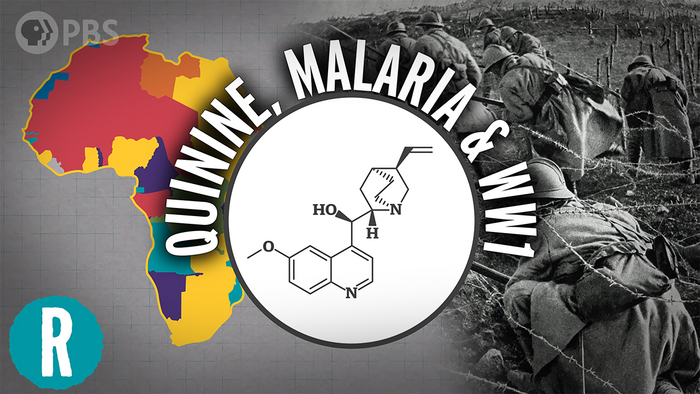
WASHINGTON, Aug. 15, 2022 — If we look at how the bark of the cinchona tree is used to treat malaria, we can see the cutting-edge chemistry of quinine binding an enzyme essential for the malaria parasite’s survival. But if we look from another angle, we can see how that coincidental affinity may have been a major contributing factor to World War I: https://youtu.be/wnvo53xUxP4.
How quinine caused World War I (hyperbolic title alert) (video)

Credit: The American Chemical Society

WASHINGTON, Aug. 15, 2022 — If we look at how the bark of the cinchona tree is used to treat malaria, we can see the cutting-edge chemistry of quinine binding an enzyme essential for the malaria parasite’s survival. But if we look from another angle, we can see how that coincidental affinity may have been a major contributing factor to World War I: https://youtu.be/wnvo53xUxP4.

Reactions is a video series produced by the American Chemical Society and PBS Digital Studios. Subscribe to Reactions at http://bit.ly/ACSReactions and follow us on Twitter @ACSReactions.

The American Chemical Society (ACS) is a nonprofit organization chartered by the U.S. Congress. ACS’ mission is to advance the broader chemistry enterprise and its practitioners for the benefit of Earth and all its people. The Society is a global leader in promoting excellence in science education and providing access to chemistry-related information and research through its multiple research solutions, peer-reviewed journals, scientific conferences, eBooks and weekly news periodical Chemical & Engineering News. ACS journals are among the most cited, most trusted and most read within the scientific literature; however, ACS itself does not conduct chemical research. As a leader in scientific information solutions, its CAS division partners with global innovators to accelerate breakthroughs by curating, connecting and analyzing the world’s scientific knowledge. ACS’ main offices are in Washington, D.C., and Columbus, Ohio.

To automatically receive news releases from the American Chemical Society, contact [email protected].

Follow us: Twitter | Facebook | Instagram



Share12Tweet8Share2ShareShareShare2

Related Posts

How Lasers Quickly Magnetize Fusion Plasmas: A Breakthrough in Fusion Science — Chemistry

How Lasers Quickly Magnetize Fusion Plasmas: A Breakthrough in Fusion Science

May 5, 2026
CityUHK Physicist Uncovers How Magnetic Fields Reactivate Superconductivity in Nickelates — Chemistry

CityUHK Physicist Uncovers How Magnetic Fields Reactivate Superconductivity in Nickelates

May 5, 2026

Quantum Algorithms Revolutionize Surface Coating Technologies

May 5, 2026

Here’s a rewritten version of the headline for a science magazine post: “A Simple Model Explaining How AI Learns” Or, if you want it a bit more engaging: “Understanding AI Learning Through a Toy Model” Let me know if you want it shorter, more technical, or more casual!

May 5, 2026

POPULAR NEWS

  • Research Indicates Potential Connection Between Prenatal Medication Exposure and Elevated Autism Risk

    835 shares
    Share 334 Tweet 209
  • New Study Reveals Plants Can Detect the Sound of Rain

    720 shares
    Share 288 Tweet 180
  • Scientists Investigate Possible Connection Between COVID-19 and Increased Lung Cancer Risk

    67 shares
    Share 27 Tweet 17
  • Salmonella Haem Blocks Macrophages, Boosts Infection

    61 shares
    Share 24 Tweet 15

About

We bring you the latest biotechnology news from best research centers and universities around the world. Check our website.

Follow us

Recent News

How Life Might Originate from Simple Molecules

Hand-Held Probe Revolutionizes Mapping of Cancerous Tissue

Context-Aware Metabzyme for Disc Degeneration Therapy

Subscribe to Blog via Email

Enter your email address to subscribe to this blog and receive notifications of new posts by email.

Join 82 other subscribers
  • Contact Us

Bioengineer.org © Copyright 2023 All Rights Reserved.

Welcome Back!

Login to your account below

Forgotten Password?

Retrieve your password

Please enter your username or email address to reset your password.

Log In
No Result
View All Result
  • Homepages
    • Home Page 1
    • Home Page 2
  • News
  • National
  • Business
  • Health
  • Lifestyle
  • Science

Bioengineer.org © Copyright 2023 All Rights Reserved.