A new study published in the CABI Agriculture and Bioscience journal highlights that pests, diseases, and drought, are the main challenges to pumpkin and watermelon production in Uganda.
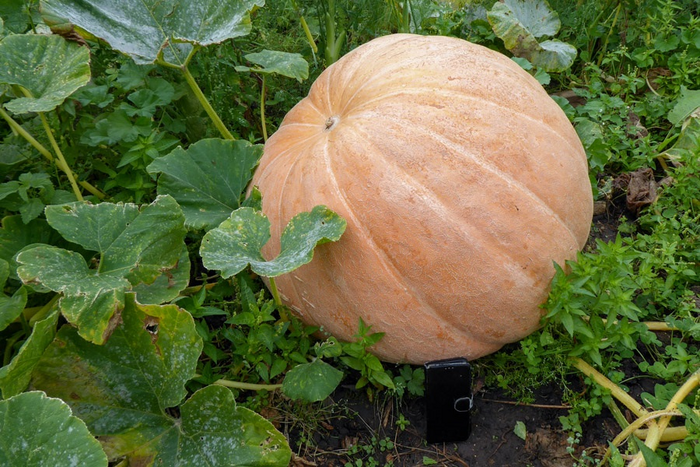
Credit: CABI
A new study published in the CABI Agriculture and Bioscience journal highlights that pests, diseases, and drought, are the main challenges to pumpkin and watermelon production in Uganda.
A range of recommendations are presented to help the country’s pumpkin and watermelon farmers increase their yields to help improve their livelihoods and food security.
The study assessed the current production constraints for watermelons and pumpkins, management practices, sources of production inputs to guide research and decision making in production of these crops.
The team of researchers, that included those from the College of Natural Sciences of Makerere University, Uganda, Muni University, Uganda, the National Crops Resources Institute, Uganda, and the University of KwaZulu-Natal in South Africa, surveyed 105 watermelon and pumpkin fields in 28 districts from nine-sub-regions of Uganda.
Among the findings, high transport and labour costs were also key factors affecting productivity of pumpkin and watermelon – grown by 85.7% and 14.3% of farmers surveyed respectively.
The scientists demonstrate that bacterial wilt (33.3%), downy mildew (20%), anthracnose powdery mildews (7.8%) and virus diseases (5.6%) were the most common and important disease constraints of both fruits.
With respect to pests, the whitefly (Bemisia tabaci, Gennadius) (29.5%), order hemiptera family aleyrodidae, aphids (Myzus Persicae, Sulzer) (20%), order hemiptera family aphidadae, melon fly (Bactrocera cucurbitae, Coquillett) (16.2%), order diptera family tephritidae and cutworm (Agrotis ipsilon, Hufnagel) (9.5%), order lepidoptera family noctuidae, were reported as the most limiting pests of both watermelon and pumpkin production.
Watermelons and pumpkins (collectively called cucurbits) are cultivated in Uganda for their leaves, fruits, and seeds, thereby contributing to food, nutrition and income security.
In Uganda, pumpkins have been cultivated for centuries. However, watermelon cultivation is a less than three decades-old activity and is increasingly becoming important because of its nutritional and economic value. Nonetheless, there is limited research and information on constraints affecting watermelons and pumpkin production.
Professor Arthur Tugume, a lead author of the paper, said, “This study highlights the importance of watermelon and pumpkin as sources of food, income, and nutrition security for local communities, even when these are not priority crop commodities in Uganda.
“There was low production of pumpkin which may be partly due to poor quality farm saved seed affecting profitability. The use of a hand hoe to remove weeds was the main method of weed control with a few farmers using herbicides while farmers mainly used ash as the main method of pest control.
“The farmers of watermelon practised farmgate method of selling their produce while those of pumpkins sold to nearby markets, and local traders.”
The researchers also highlight that many farmers were unable to distinguish between diseases affecting watermelon, pumpkin and their associated symptoms. A surprise finding was that farmers indiscriminately applied various kinds of agrochemicals – herbicides, fungicides, insecticides, acaricides, to control insect pests on these crops without any considerations on their intended use nor impact of the environment.
Fred Masika, a co-researcher on the paper from Makerere University and Muni University, said, “There is a need to train farmers on integrated pest and disease management, as well as in the appropriate methods for applying agrochemicals.
“Several interventions should be implemented to boost production of these crops so that the values of the crops are realised even more.
“For example, establishing storage centres for watermelon in the newly established irrigation schemes (e.g., Ngenge, Tochi, Doho, Mubuku, and Wadelai irrigation) and in Central Uganda where high production is expected.”
Other measures suggested by the scientists include establishing certified seed systems which provide disease-free planting materials, addressing the issues of transport, and value addition.
They also call for the identification of the causal pathogens of diseases so that management strategies can be developed. This may include, the researchers argue, the development and/or promotion of a more environmentally friendly method of breeding for resistance to pests and diseases.
Journal
CABI Agriculture and Bioscience
DOI
10.1186/s43170-022-00101-x
Method of Research
Experimental study
Subject of Research
Not applicable
Article Title
Pumpkin and watermelon production constraints and management practices in Uganda
Article Publication Date
22-Jun-2022