HOUSTON – (April 22, 2022) – Nanotechnology is increasingly important to the development of treatments for cancer. But to succeed, clinicians need to understand it.
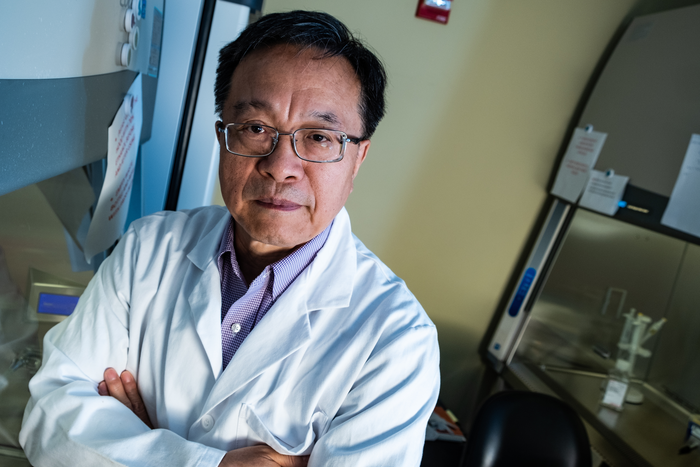
Credit: Jeff Fitlow/Rice University
HOUSTON – (April 22, 2022) – Nanotechnology is increasingly important to the development of treatments for cancer. But to succeed, clinicians need to understand it.
A National Institutes of Health grant to Rice University and the University of Texas MD Anderson Cancer Center will help train future medical professionals to translate these tools to the clinic.
The five-year, $2.6 million award to Rice bioengineer Gang Bao and Konstantin Sokolov, a professor of imaging physics at MD Anderson and an adjunct professor of bioengineering at Rice, continues an NIH T32 training programestablished in 2015 to educate future leaders who have specific interests in nano-enabled cancer applications.
At Rice, the program is administered by the university’s Institute of Biosciences and Bioengineering.
Bao and Sokolov, co-directors of the program, cite the challenge presented by the rapid pace of technology, noting the unique promise of nanotechnology to provide “otherwise unattainable solutions to cancer management, including very early cancer detection, accurate molecular-specific diagnosis and treatment that diminishes side effects.”
“We are very excited about this T32 award and the opportunity to work with MD Anderson to train outstanding pre- and postdoctoral fellows who will make significant contributions to the development and translation of nanotechnology-based approaches to improve the diagnosis and treatment of cancer,” said Bao, the department chair and Foyt Family Professor of Bioengineering, a professor of chemistry and of materials science and nanoengineering, and a Cancer Prevention and Research Institute of Texas Scholar.
“This interdisciplinary T32 program will fill an important gap in training future leaders in nanoengineering and oncological applications,” he said.
Sokolov said both institutions offer strong resources and clear institutional support, and mentors have a wide range of expertise in early cancer detection, molecular diagnosis, treatment and cancer management.
“Nanotechnology offers new possibilities for cancer diagnosis and treatment that differ greatly from traditional methods, and it’s important that we be ready to deploy them,” Sokolov said. “That takes training, and we feel there’s no better way to do that than to draw upon the range of talent and experience at MD Anderson and Rice.”
The program will support four predoctoral and four postdoctoral fellows per year, Bao said. He anticipates the grant will support each fellow for 2-3 years and that a total of 16 fellows will be recruited to the program over five years.
Training will involve seminars and hands-on coursework with faculty mentors at MD Anderson and Rice, who will help participants define and carry out independent research projects. Trainees will also participate in a weeklong boot camp in cancer management and nanotechnology to provide an overview of current opportunities and barriers in the field.
The co-directors said their program will recruit trainees from groups that are historically underrepresented in health-related research, including women, individuals from racial and ethnic minority groups, individuals with disabilities, and individuals from disadvantaged backgrounds.
Sokolov noted all of the trainees who have participated so far have continued their careers in health-related fields, many focusing primarily on the development of cancer technology or in relevant research areas.
The grant is part of NIH’s Ruth L. Kirschstein Institutional National Research Service Award program, which enables institutions to recruit individuals for research training in specified shortage areas.
-30-
Read the abstract at https://reporter.nih.gov/search/l3qRPQLkW0ij-qXDO6F9Rw/project-details/10410744.
This news release can be found online at https://news.rice.edu/news/2022/rice-trains-postdocs-nano-cancer-future.
Follow Rice News and Media Relations via Twitter @RiceUNews.
Related materials:
T32 Fellowship: https://ibb.rice.edu/research/graduate-programs/nih-t32-fellowship
Laboratory of Biomolecular Engineering and Nanomedicine: http://bao.rice.edu/index.html
Institute of Biosciences and Bioengineering: https://ibb.rice.edu
Images for download:
https://news-network.rice.edu/news/files/2022/04/0425_CANCER-1-web.jpg
Gang Bao. (Credit: Jeff Fitlow/Rice University)
https://news-network.rice.edu/news/files/2022/04/0425_CANCER-2-web.jpg
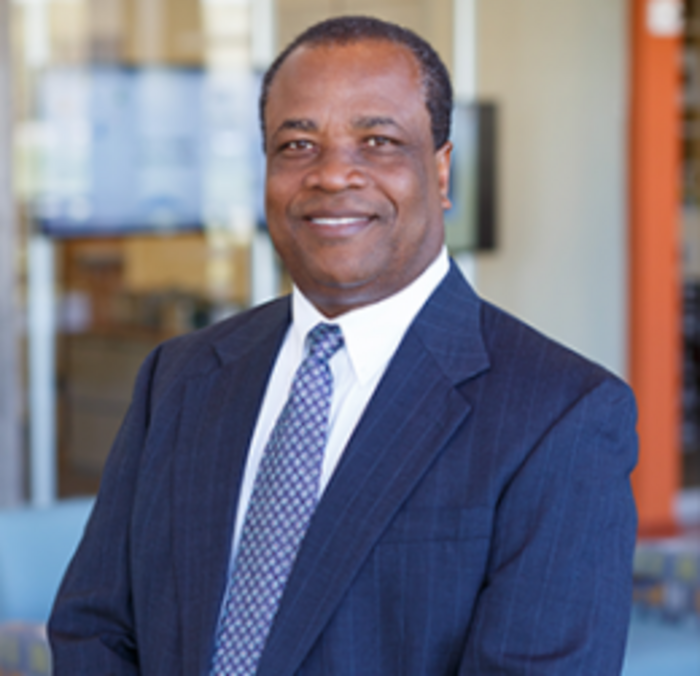
Konstantin Sokolov. (Credit: MD Anderson Cancer Center)
Located on a 300-acre forested campus in Houston, Rice University is consistently ranked among the nation’s top 20 universities by U.S. News & World Report. Rice has highly respected schools of Architecture, Business, Continuing Studies, Engineering, Humanities, Music, Natural Sciences and Social Sciences and is home to the Baker Institute for Public Policy. With 4,052 undergraduates and 3,484 graduate students, Rice’s undergraduate student-to-faculty ratio is just under 6-to-1. Its residential college system builds close-knit communities and lifelong friendships, just one reason why Rice is ranked No. 1 for lots of race/class interaction and No. 1 for quality of life by the Princeton Review. Rice is also rated as a best value among private universities by Kiplinger’s Personal Finance.