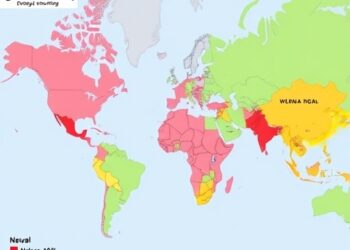
In a large-scale study of people from diverse ancestries, researchers narrowed down the number of genomic variants that are strongly associated with blood lipid levels and generated a polygenic risk score to predict elevated low-density lipoprotein cholesterol levels, a major risk factor for heart disease. The study, published in the journal Nature, was led by the Global Lipids Genetics Consortium. The authors include researchers at the National Human Genome Research Institute (NHGRI), part of the National Institutes of Health.

Credit: Harry Wedel, NHGRI
In a large-scale study of people from diverse ancestries, researchers narrowed down the number of genomic variants that are strongly associated with blood lipid levels and generated a polygenic risk score to predict elevated low-density lipoprotein cholesterol levels, a major risk factor for heart disease. The study, published in the journal Nature, was led by the Global Lipids Genetics Consortium. The authors include researchers at the National Human Genome Research Institute (NHGRI), part of the National Institutes of Health.
Lipids are fat-like substances that can be found in blood and body tissues. They come in two major forms — cholesterol and triglycerides. Humans need a certain amount of lipids in the body for normal function, but elevated lipid levels may increase the risk of developing a heart condition. Polygenic risk scores provide an estimate of an individual’s risk for specific diseases, based on their DNA changes related to those diseases.
“Finding the set of genomic variants that are important for this trait is key for us to understand the biology and identify new drug targets,” said Cristen Willer, Ph.D., senior author and professor of human genetics at the University of Michigan, Ann Arbor. ”These genomic variants then inform how well polygenic risk scores work to determine risk for such diseases.”
Since the field’s inception, the genomics community has performed over 6,000 studies looking at the association of specific genomic variants and cardiovascular disease. However, the design of these studies overwhelmingly included individuals from European ancestral populations.
To address this issue, researchers accumulated data from 201 previous genome-wide association studies, including about 1.65 million individuals from five ancestral groups: African, East Asian, European, Hispanic and South Asian. About 1.32 million of those studies were from European ancestry, and the remaining 350,000 were non-European. The studies contained data on blood levels of the different classes of cholesterol and triglycerides.
The research group calculated the polygenic risk scores using data from each of the different ancestral groups, either separately or all together. Then, they tested the risk scores in a diverse set of studies, including Africans enrolled from Ghana, Kenya and Nigeria as part of the Africa America Diabetes Mellitus study. Charles Rotimi, Ph.D., scientific director of the NHGRI Intramural Research Program, was the principal investigator of the study.
The results showed a polygenic risk score that includes diverse genomic data is much more predictive of whether a person of any ancestry will have elevated low-density lipoprotein cholesterol levels than a score that only includes European genomic data.
“The message couldn’t be more clear. To have a fuller understanding of the effects of genomic variation on disease, we simply must include as many diverse groups of people as possible,” said Rotimi, a co-author on the paper. “It is the single biggest way by which we can ensure that the gains of genomic medicine and technologies are equitably deployed to serve the health needs of all human populations.”
For each ancestral group, the polygenic risk score that used data from all ancestries worked at least as well as or better than the risk scores derived from data from the same ancestral group.
“These results show that our concerted effort to include many diverse groups of people in genomic research will yield benefits such as new therapeutics and prevention strategies that improve the health of all people,” says Cashell Jaquish, Ph.D., a genetic epidemiologist and program officer within the Division of Cardiovascular Sciences at the National Heart Lung, and Blood Institute.
Funding for the study was provided by the National Heart, Lung and Blood Institute, part of the National Institutes of Health.
link to follow [G[1]
Journal
Nature
DOI
10.1038/s41586-021-04064-3
Method of Research
Data/statistical analysis
Subject of Research
People
Article Title
The power of genetic diversity in genome-wide association studies of lipids
Article Publication Date
8-Dec-2021