• HOME
  • NEWS
  • EXPLORE
    • CAREER
      • Companies
      • Jobs
    • EVENTS
    • iGEM
      • News
      • Team
    • PHOTOS
    • VIDEO
    • WIKI
  • BLOG
  • COMMUNITY
    • FACEBOOK
    • INSTAGRAM
    • TWITTER
Thursday, March 26, 2026
BIOENGINEER.ORG
No Result
View All Result
  • Login
  • HOME
  • NEWS
  • EXPLORE
    • CAREER
      • Companies
      • Jobs
        • Lecturer
        • PhD Studentship
        • Postdoc
        • Research Assistant
    • EVENTS
    • iGEM
      • News
      • Team
    • PHOTOS
    • VIDEO
    • WIKI
  • BLOG
  • COMMUNITY
    • FACEBOOK
    • INSTAGRAM
    • TWITTER
  • HOME
  • NEWS
  • EXPLORE
    • CAREER
      • Companies
      • Jobs
        • Lecturer
        • PhD Studentship
        • Postdoc
        • Research Assistant
    • EVENTS
    • iGEM
      • News
      • Team
    • PHOTOS
    • VIDEO
    • WIKI
  • BLOG
  • COMMUNITY
    • FACEBOOK
    • INSTAGRAM
    • TWITTER
No Result
View All Result
Bioengineer.org
No Result
View All Result
Home NEWS Science News Biology

Wolf pups born on Isle Royale, moose poised for decline

Bioengineer by Bioengineer
July 15, 2021
in Biology
Reading Time: 3 mins read
0
IMAGE
Share on FacebookShare on TwitterShare on LinkedinShare on RedditShare on Telegram

IMAGE

Credit: Michigan Tech

The COVID-19 pandemic halted the in-person wintertime survey of wolves and moose on the island for the first time in 63 years. Consequently, there are no estimates of wolf or moose abundance for 2021, and the next estimates are scheduled in February 2022. But though the Isle Royale Winter Study didn’t happen quite as planned, researchers were still able to visit the remote national park in the spring.

Now, fieldwork has resumed and Michigan Technological University researchers have already uncovered new information about these two iconic wildlife populations. In particular, wolves produced at least two litters of pups, and moose appear poised for decline.

In the Isle Royale Winter Study, Michigan Tech researchers share other significant developments about curating the world’s largest moose bone collection, advances in understanding of wolf foraging behavior and the nutritional health of the moose population.

Key points:

  • The Isle Royale wolf population is likely growing. “We recovered footage of a group of four wolf pups taken in January 2021 by remote cameras at the east end of Isle Royale,” said Sarah Hoy, research assistant professor in Michigan Tech’s College of Forest Resources and Environmental Science (CFRES). “Additionally, observations of tracks and scats left by wolf pups last fall at two different locations suggest that there were probably two different litters of pups living at the east end of the island in September 2020.”

  • Wolves are specialized foragers. “Wolf foraging behavior seems driven by minimizing the risks associated with killing large prey, like moose, even when the differences in vulnerability among individual moose might seem relatively subtle compared to when predators are choosing between different prey species,” Hoy said.

  • Nutritional stress stacks the deck against moose, which holds significant implications for how moose will handle a warming climate. “We found that the nutritional health of moose was importantly influenced by how hot it is during the summer, and also by how deep the snow is in winter,” Hoy said. “Moose tended to be more nutritionally stressed during winters with deep snow, which may be because deeper snow makes it more difficult for moose to move around and find food.”

  • The moose population is likely declining. “Moose really struggled to find enough food this past winter,” Hoy said. “Because there have been such large numbers of moose on the island over the last five years and moose ate branches faster than the trees can recover and replace them, the amount of food available to moose during winter has been getting progressively worse each year since 2017.

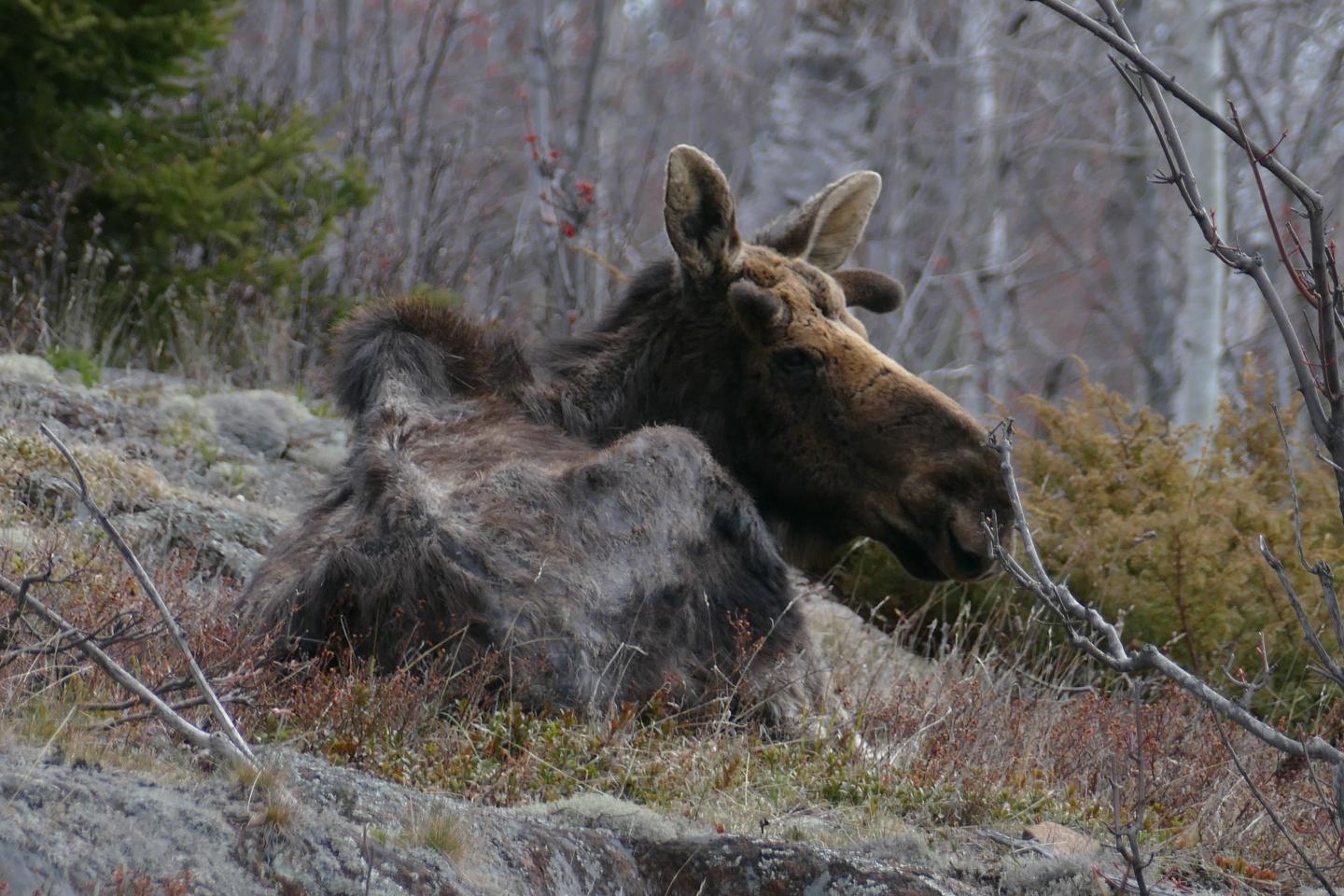
  • Winter ticks are worse than usual this year, as evidenced by moose with very little fur left in spring — having scratched or bitten off almost all of their winter coats in an effort to rid themselves of the blood-sucking parasites. This is significant because blood loss to ticks can exacerbate the detrimental effects of food shortage. Despite the mild winter, depleted food supplies and ticks made life harder for the island’s moose this year.

###

Media Contact
Kelley Christensen
[email protected]

Original Source

https://www.mtu.edu/news/stories/2021/july/wolf-pups-born-on-isle-royale-moose-poised-for-decline.html

Tags: BiologyClimate ChangeEcology/Environment
Share12Tweet8Share2ShareShareShare2

Related Posts

How to sway group opinions: Encourage opponents to stay undecided

How to sway group opinions: Encourage opponents to stay undecided

March 23, 2026
Deep Learning Model Maps How Individual Cells Shape Disease Outcomes

Deep Learning Model Maps How Individual Cells Shape Disease Outcomes

March 20, 2026

Removing only 15 female sharks annually could endanger the entire population, scientists warn

March 20, 2026

Scientists Urge Fragrance Industry to Transition from Sustainability Talk to Active Funding of Plant Conservation

March 20, 2026
Please login to join discussion

POPULAR NEWS

  • blank

    Revolutionary AI Model Enhances Precision in Detecting Food Contamination

    96 shares
    Share 38 Tweet 24
  • Imagine a Social Media Feed That Challenges Your Views Instead of Reinforcing Them

    1003 shares
    Share 397 Tweet 248
  • Uncovering Functions of Cavernous Malformation Proteins in Organoids

    54 shares
    Share 22 Tweet 14
  • Promising Outcomes from First Clinical Trials of Gene Regulation in Epilepsy

    51 shares
    Share 20 Tweet 13

About

We bring you the latest biotechnology news from best research centers and universities around the world. Check our website.

Follow us

Recent News

In-Sensor Cryptography Links Physical Process to Digital Identity

Can Psychosocial Factors Influence Cancer Risk?

Depression Factors in Elderly: Pre vs. Post-COVID Analysis

Subscribe to Blog via Email

Success! An email was just sent to confirm your subscription. Please find the email now and click 'Confirm' to start subscribing.

Join 78 other subscribers
  • Contact Us

Bioengineer.org © Copyright 2023 All Rights Reserved.

Welcome Back!

Login to your account below

Forgotten Password?

Retrieve your password

Please enter your username or email address to reset your password.

Log In
No Result
View All Result
  • Homepages
    • Home Page 1
    • Home Page 2
  • News
  • National
  • Business
  • Health
  • Lifestyle
  • Science

Bioengineer.org © Copyright 2023 All Rights Reserved.