• HOME
  • NEWS
  • EXPLORE
    • CAREER
      • Companies
      • Jobs
    • EVENTS
    • iGEM
      • News
      • Team
    • PHOTOS
    • VIDEO
    • WIKI
  • BLOG
  • COMMUNITY
    • FACEBOOK
    • INSTAGRAM
    • TWITTER
Saturday, March 28, 2026
BIOENGINEER.ORG
No Result
View All Result
  • Login
  • HOME
  • NEWS
  • EXPLORE
    • CAREER
      • Companies
      • Jobs
        • Lecturer
        • PhD Studentship
        • Postdoc
        • Research Assistant
    • EVENTS
    • iGEM
      • News
      • Team
    • PHOTOS
    • VIDEO
    • WIKI
  • BLOG
  • COMMUNITY
    • FACEBOOK
    • INSTAGRAM
    • TWITTER
  • HOME
  • NEWS
  • EXPLORE
    • CAREER
      • Companies
      • Jobs
        • Lecturer
        • PhD Studentship
        • Postdoc
        • Research Assistant
    • EVENTS
    • iGEM
      • News
      • Team
    • PHOTOS
    • VIDEO
    • WIKI
  • BLOG
  • COMMUNITY
    • FACEBOOK
    • INSTAGRAM
    • TWITTER
No Result
View All Result
Bioengineer.org
No Result
View All Result
Home NEWS Science News Biology

Restless nights: Shelter housed dogs need days to adapt to new surroundings

Bioengineer by Bioengineer
July 13, 2021
in Biology
Reading Time: 2 mins read
0
IMAGE
Share on FacebookShare on TwitterShare on LinkedinShare on RedditShare on Telegram

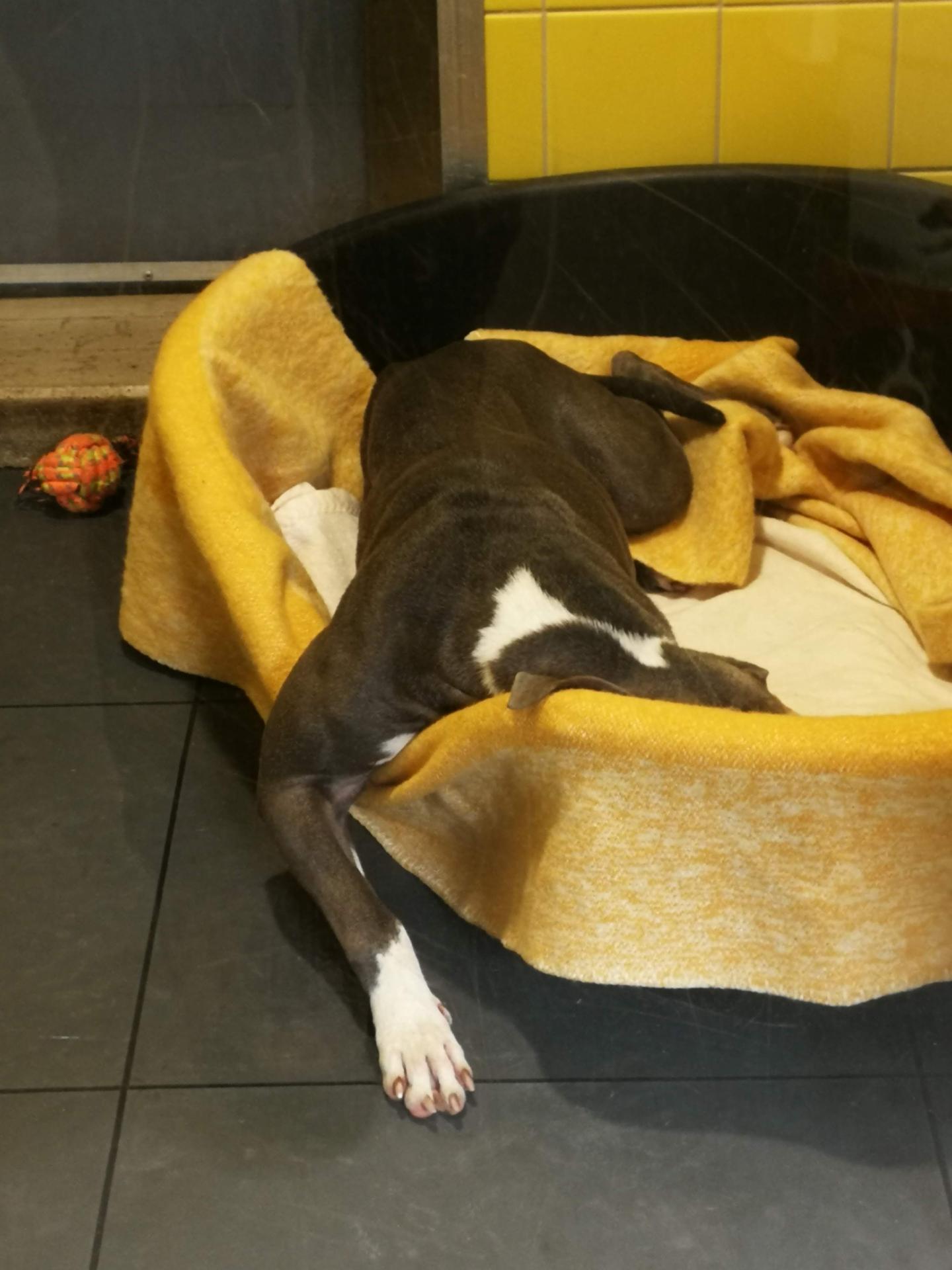
Nocturnal activity of dogs as an indicator of adaptability
IMAGE

Credit: Janneke van der Laan

Every year, thousands of dogs end up in a shelter in the Netherlands. Experts expect an increase in this number in the upcoming period, when people go back to the office after working from home during the corona crisis. Despite the good care of staff and volunteers, the shelter can be a turbulent experience for dogs. Researchers at Utrecht University investigated if dogs can adapt to their new environment based on their nocturnal activity.

Janneke van der Laan and fellow researchers from Utrecht University’s Faculty of Veterinary Medicine compared the nocturnal activity of 29 shelter dogs and 29 pet dogs in their own homes – similar in breed, age and sex – with the help of night cameras and a small activity tracker on their collar.

They found that shelter dogs rest much less at night than pet dogs, especially during the first two nights in the shelter. This restlessness did decrease over time, but even after twelve days in the shelter, the dogs still rested less at night than the pet dogs.

“We also saw this restlessness in hormone measurements in the urine of shelter dogs” says Janneke van der Laan. Shelter dogs had higher values of the stress hormone cortisol in their urine than pet dogs, especially during the first two days but also after twelve days. It was also striking that smaller shelter dogs, for instance Shi Tzu’s and Chihuahua’s, were more restless during the first two nights than larger shelter dogs, and they also had higher cortisol values.

The researchers found big differences between individual dogs: some were already quite calm during the first night in the shelter, while others barely slept for a few nights. “It seems that dogs need at least two days, but often longer to get used to their new environment, in this case the shelter,” Van der Laan explains. “Humans usually also sleep less good during the first night in a new environment, for example at the beginning of a vacation.”

“With our follow-up research we will zoom in even further on the welfare of dogs in shelters. But our current findings already show that it is important to pay close attention to dogs that are unable to rest properly after several nights. The shelter staff may already be able to help these dogs by for example moving them to a less busy spot in the shelter.”

###

Scientific publication

“Restless nights? Nocturnal activity as a useful indicator of adaptability of shelter housed dogs” https://doi.org/10.1016/j.applanim.2021.105377

Media Contact
Iris Kruijen
[email protected]

Original Source

https://www.uu.nl/en/news/restless-nights-shelter-housed-dogs-need-days-to-adapt-to-new-surroundings

Related Journal Article

http://dx.doi.org/10.1016/j.applanim.2021.105377

Tags: BehaviorBiologyPets/EthologyZoology/Veterinary Science
Share12Tweet8Share2ShareShareShare2

Related Posts

How to sway group opinions: Encourage opponents to stay undecided

How to sway group opinions: Encourage opponents to stay undecided

March 23, 2026
Deep Learning Model Maps How Individual Cells Shape Disease Outcomes

Deep Learning Model Maps How Individual Cells Shape Disease Outcomes

March 20, 2026

Removing only 15 female sharks annually could endanger the entire population, scientists warn

March 20, 2026

Scientists Urge Fragrance Industry to Transition from Sustainability Talk to Active Funding of Plant Conservation

March 20, 2026
Please login to join discussion

POPULAR NEWS

  • blank

    Revolutionary AI Model Enhances Precision in Detecting Food Contamination

    96 shares
    Share 38 Tweet 24
  • Imagine a Social Media Feed That Challenges Your Views Instead of Reinforcing Them

    1004 shares
    Share 397 Tweet 248
  • Uncovering Functions of Cavernous Malformation Proteins in Organoids

    54 shares
    Share 22 Tweet 14
  • Promising Outcomes from First Clinical Trials of Gene Regulation in Epilepsy

    51 shares
    Share 20 Tweet 13

About

We bring you the latest biotechnology news from best research centers and universities around the world. Check our website.

Follow us

Recent News

In-Sensor Cryptography Links Physical Process to Digital Identity

Can Psychosocial Factors Influence Cancer Risk?

Depression Factors in Elderly: Pre vs. Post-COVID Analysis

Subscribe to Blog via Email

Enter your email address to subscribe to this blog and receive notifications of new posts by email.

Join 78 other subscribers
  • Contact Us

Bioengineer.org © Copyright 2023 All Rights Reserved.

Welcome Back!

Login to your account below

Forgotten Password?

Retrieve your password

Please enter your username or email address to reset your password.

Log In
No Result
View All Result
  • Homepages
    • Home Page 1
    • Home Page 2
  • News
  • National
  • Business
  • Health
  • Lifestyle
  • Science

Bioengineer.org © Copyright 2023 All Rights Reserved.