• HOME
  • NEWS
  • EXPLORE
    • CAREER
      • Companies
      • Jobs
    • EVENTS
    • iGEM
      • News
      • Team
    • PHOTOS
    • VIDEO
    • WIKI
  • BLOG
  • COMMUNITY
    • FACEBOOK
    • INSTAGRAM
    • TWITTER
Tuesday, February 3, 2026
BIOENGINEER.ORG
No Result
View All Result
  • Login
  • HOME
  • NEWS
  • EXPLORE
    • CAREER
      • Companies
      • Jobs
        • Lecturer
        • PhD Studentship
        • Postdoc
        • Research Assistant
    • EVENTS
    • iGEM
      • News
      • Team
    • PHOTOS
    • VIDEO
    • WIKI
  • BLOG
  • COMMUNITY
    • FACEBOOK
    • INSTAGRAM
    • TWITTER
  • HOME
  • NEWS
  • EXPLORE
    • CAREER
      • Companies
      • Jobs
        • Lecturer
        • PhD Studentship
        • Postdoc
        • Research Assistant
    • EVENTS
    • iGEM
      • News
      • Team
    • PHOTOS
    • VIDEO
    • WIKI
  • BLOG
  • COMMUNITY
    • FACEBOOK
    • INSTAGRAM
    • TWITTER
No Result
View All Result
Bioengineer.org
No Result
View All Result
Home NEWS Science News Health

Tetanus toxin fragment may treat depression, Parkinson’s disease and ALS

Bioengineer by Bioengineer
July 9, 2021
in Health
Reading Time: 2 mins read
0
IMAGE
Share on FacebookShare on TwitterShare on LinkedinShare on RedditShare on Telegram

IMAGE

Credit: UAB

Depression has been treated traditionally with inhibitors of serotonin reuptake in the central nervous system. These drugs do not come without side effects, such as lack of immediate therapeutic action, the need for daily doses and the danger of becoming addicted to some of these drugs. That is why scientists continue to work on new therapies to treat depression.

In 2019, an international group of researchers co-led by Dr Yousef Tizabe from the Howard University College of Medicine in Washington, D.C., and Professor José Aguilera from the Department of Biochemistry and Molecular Biology and the Institut de Neurociències at the Universitat Autònoma de Barcelona (UAB), observed that a non-toxic derivative of the tetanus neurotoxin (which causes tetanus infections) improved depression symptoms in rat animal models. “One intramuscular dosis of Hc-TeTx made depression symptoms disappear in less than 24 hours, and its effects lasted two weeks”, explains Aguilera. Based on these findings, scientists began to work on discovering the mechanism through which this substance produces these effects.

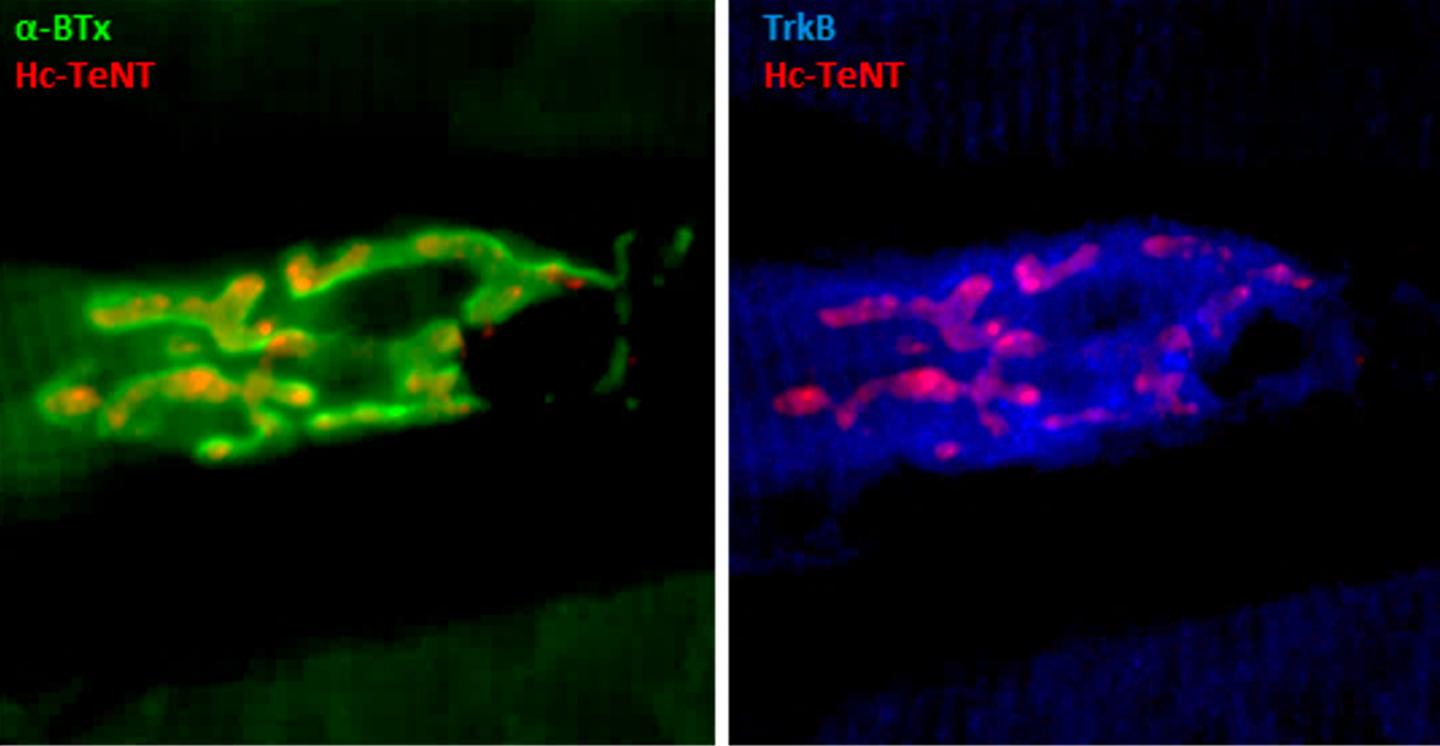
In a recent study coordinated by Professor Aguilera and conducted in collaboration with the research group led by Dr Thomas Scior of the Benemérita Universidad Autónoma de Puebla (BUAP) in Mexico, researchers demonstrated that Hc-TeTx is capable of inhibiting the transport of serotonin within the central nervous system, by binding to neurotrophin receptors, proteins that induce the survival of neurons. These results, published in the journal Molecules, suggest that the drug may not only serve in treating depression, but also be useful in treating neurodegenerative diseases, such as Parkinson’s disease or amyotrophic lateral sclerosis (ALS).

According to researchers, the advantages of introducing Hc-TeTx as a new drug are evident. A biweekly or monthly dosis would allow medical professionals to control the progress. Since it is a recombinant product, there would be no problems with drug safety, production or high costs. Furthermore, in neurodegenerative cases, Hc-TeTx would stop the development of the pathology and at the same time eliminate any disease-related depressions.

Researchers recently patented the therapeutic use of Hc-TeTx for the treatment of depression, Parkinson’s disease and amyotrophic lateral sclerosis, and are now looking for investors to be able to conduct clinical trials on humans. “This is an important advance in science, and even more so now when in addition to the high incidence in depression and alterations in behaviours, we see mental alterations as a result of COVID-19 and the negative environments of stress, self-isolation or fear”, Aguilera concludes.

###

Media Contact
Jose Aguilera
[email protected]

Related Journal Article

http://dx.doi.org/10.3390/molecules26133988

Tags: Medicine/Healthneurobiology
Share13Tweet8Share2ShareShareShare2

Related Posts

Pharmacogenomics Enhances Transplant Outcomes: Recent Insights

February 3, 2026

Probes Uncover Dynamics of Gαs Protein Signaling

February 3, 2026

Skin-to-Skin Care Benefits Infants with Kidney Failure

February 3, 2026

Why Undernutrition Policies Fail in Mozambique

February 3, 2026
Please login to join discussion

POPULAR NEWS

  • Enhancing Spiritual Care Education in Nursing Programs

    158 shares
    Share 63 Tweet 40
  • Robotic Ureteral Reconstruction: A Novel Approach

    81 shares
    Share 32 Tweet 20
  • Digital Privacy: Health Data Control in Incarceration

    63 shares
    Share 25 Tweet 16
  • Study Reveals Lipid Accumulation in ME/CFS Cells

    57 shares
    Share 23 Tweet 14

About

We bring you the latest biotechnology news from best research centers and universities around the world. Check our website.

Follow us

Recent News

Pharmacogenomics Enhances Transplant Outcomes: Recent Insights

Probes Uncover Dynamics of Gαs Protein Signaling

Skin-to-Skin Care Benefits Infants with Kidney Failure

Subscribe to Blog via Email

Enter your email address to subscribe to this blog and receive notifications of new posts by email.

Join 73 other subscribers
  • Contact Us

Bioengineer.org © Copyright 2023 All Rights Reserved.

Welcome Back!

Login to your account below

Forgotten Password?

Retrieve your password

Please enter your username or email address to reset your password.

Log In
No Result
View All Result
  • Homepages
    • Home Page 1
    • Home Page 2
  • News
  • National
  • Business
  • Health
  • Lifestyle
  • Science

Bioengineer.org © Copyright 2023 All Rights Reserved.