• HOME
  • NEWS
  • EXPLORE
    • CAREER
      • Companies
      • Jobs
    • EVENTS
    • iGEM
      • News
      • Team
    • PHOTOS
    • VIDEO
    • WIKI
  • BLOG
  • COMMUNITY
    • FACEBOOK
    • INSTAGRAM
    • TWITTER
Saturday, February 7, 2026
BIOENGINEER.ORG
No Result
View All Result
  • Login
  • HOME
  • NEWS
  • EXPLORE
    • CAREER
      • Companies
      • Jobs
        • Lecturer
        • PhD Studentship
        • Postdoc
        • Research Assistant
    • EVENTS
    • iGEM
      • News
      • Team
    • PHOTOS
    • VIDEO
    • WIKI
  • BLOG
  • COMMUNITY
    • FACEBOOK
    • INSTAGRAM
    • TWITTER
  • HOME
  • NEWS
  • EXPLORE
    • CAREER
      • Companies
      • Jobs
        • Lecturer
        • PhD Studentship
        • Postdoc
        • Research Assistant
    • EVENTS
    • iGEM
      • News
      • Team
    • PHOTOS
    • VIDEO
    • WIKI
  • BLOG
  • COMMUNITY
    • FACEBOOK
    • INSTAGRAM
    • TWITTER
No Result
View All Result
Bioengineer.org
No Result
View All Result
Home NEWS Science News Health

Capturing the huge impacts of tiny organisms

Bioengineer by Bioengineer
September 6, 2025
in Health
Reading Time: 2 mins read
0
IMAGE
Share on FacebookShare on TwitterShare on LinkedinShare on RedditShare on Telegram

Pitt chemical engineer receives $315K from NSF to replicate microbial systems

One of the main reasons the multitude of bacteria we encounter in daily life doesn’t harm us is because of the diverse, robust community of microbes on our skin and inside our bodies that prevent pathogens from taking hold.

Tagbo Niepa, assistant professor of chemical and petroleum engineering at the University of Pittsburgh Swanson School of Engineering, is developing a new technique for studying microbes in conditions that mimic their native environment, facilitating the growth of difficult microbial species and helping researchers to better understand them. The research was recently awarded $315,373 by the National Science Foundation.

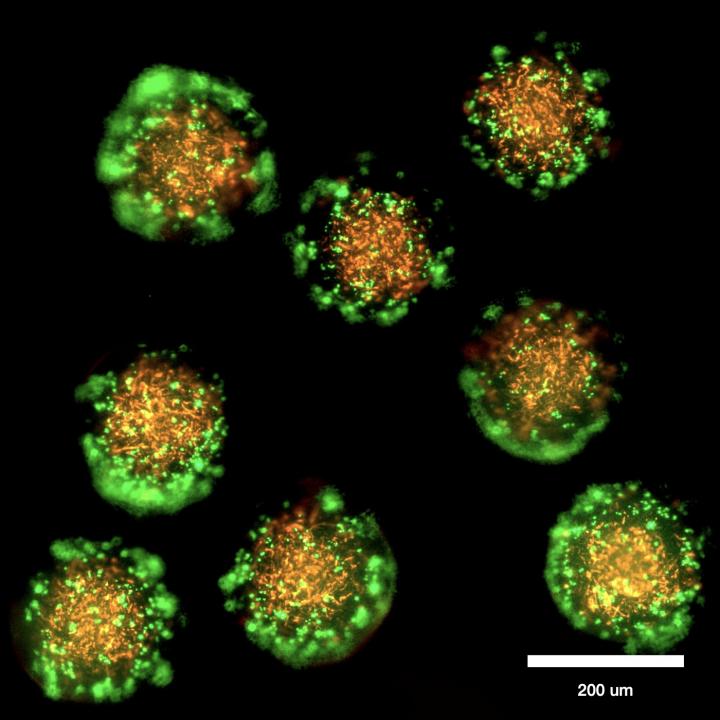
By encapsulating microbes isolated from various sources in a polymeric shell, researchers will be able to study microbes in environmental conditions.The nanocultures will eliminate growth rate bias that occurs in traditional cultures when species of microbes are competing for space, and the enclosure protects them from chemical or biological contaminants.

The proposed technology, which will give researchers insights into how synthetic microbial communities communicate and interact with native ones, could lead to advances in medicine, biotechnology, bioremediation and more.

“Not having a sufficient way to grow and examine these microbes has not only impeded the scientific discovery of antibiotic-like molecules but has also limited our ability to use genetically engineered beneficial microbes,” said Niepa. “There are microbes out there that could lead us to new types of antibiotics based on microbes we find in the soil, improve human health and performance by understanding the human microbiome, and more. We do not yet have a way to explore their full potential. That is the problem we are trying to solve.”

One potent application of the new technology is for the controlled delivery of healthy gut bacteria into the body. Antibiotic use, stress and illnesses can lead to microbial dysbiosis, or the imbalance of gut bacteria, which in turn can lead to ulcers, cancers, and other health problems. Niepa and his team are exploring ways to use the microcapsules, which can culture and store a multitude of microbes, as a delivery system for beneficial bacteria into the body to restore the gut microbiome. As part of the NSF project, the researchers will use the microcapsules to deliver a gut-benefiting community of microbes into mice to examine its efficacy.

“This research makes a substantial step toward microbial-based therapy against microbial dysbiosis. Beyond the health benefits, our project will facilitate a broader understanding of microbial diversity and offer relevant implications for biotechnology and bioremediation,” said Niepa. “Some of the smallest organisms have an enormous impact on human health and the health of our planet. We’re taking a step toward understanding all they can offer.”

The project, titled “Designing a Multifunctional Nanoculture System for High-throughput in situ Assessment of Microbial Communities,” will begin on July 1, 2021.

###

Media Contact
Maggie Pavlick
[email protected]

Original Source

https://news.engineering.pitt.edu/capturing-the-huge-impacts-of-tiny-organisms/

Tags: Biomedical/Environmental/Chemical EngineeringBiotechnologyGastroenterologyMedicine/HealthMicrobiologyTechnology/Engineering/Computer Science
Share12Tweet8Share2ShareShareShare2

Related Posts

Evaluating Pediatric Emergency Care Quality in Ethiopia

February 7, 2026

TPMT Expression Predictions Linked to Azathioprine Side Effects

February 7, 2026

Improving Dementia Care with Enhanced Activity Kits

February 7, 2026

Decoding Prostate Cancer Origins via snFLARE-seq, mxFRIZNGRND

February 7, 2026
Please login to join discussion

POPULAR NEWS

  • Robotic Ureteral Reconstruction: A Novel Approach

    Robotic Ureteral Reconstruction: A Novel Approach

    82 shares
    Share 33 Tweet 21
  • Digital Privacy: Health Data Control in Incarceration

    63 shares
    Share 25 Tweet 16
  • Study Reveals Lipid Accumulation in ME/CFS Cells

    57 shares
    Share 23 Tweet 14
  • Breakthrough in RNA Research Accelerates Medical Innovations Timeline

    53 shares
    Share 21 Tweet 13

About

We bring you the latest biotechnology news from best research centers and universities around the world. Check our website.

Follow us

Recent News

Evaluating Pediatric Emergency Care Quality in Ethiopia

TPMT Expression Predictions Linked to Azathioprine Side Effects

Improving Dementia Care with Enhanced Activity Kits

Subscribe to Blog via Email

Success! An email was just sent to confirm your subscription. Please find the email now and click 'Confirm' to start subscribing.

Join 73 other subscribers
  • Contact Us

Bioengineer.org © Copyright 2023 All Rights Reserved.

Welcome Back!

Login to your account below

Forgotten Password?

Retrieve your password

Please enter your username or email address to reset your password.

Log In
No Result
View All Result
  • Homepages
    • Home Page 1
    • Home Page 2
  • News
  • National
  • Business
  • Health
  • Lifestyle
  • Science

Bioengineer.org © Copyright 2023 All Rights Reserved.