• HOME
  • NEWS
  • EXPLORE
    • CAREER
      • Companies
      • Jobs
    • EVENTS
    • iGEM
      • News
      • Team
    • PHOTOS
    • VIDEO
    • WIKI
  • BLOG
  • COMMUNITY
    • FACEBOOK
    • INSTAGRAM
    • TWITTER
Saturday, February 7, 2026
BIOENGINEER.ORG
No Result
View All Result
  • Login
  • HOME
  • NEWS
  • EXPLORE
    • CAREER
      • Companies
      • Jobs
        • Lecturer
        • PhD Studentship
        • Postdoc
        • Research Assistant
    • EVENTS
    • iGEM
      • News
      • Team
    • PHOTOS
    • VIDEO
    • WIKI
  • BLOG
  • COMMUNITY
    • FACEBOOK
    • INSTAGRAM
    • TWITTER
  • HOME
  • NEWS
  • EXPLORE
    • CAREER
      • Companies
      • Jobs
        • Lecturer
        • PhD Studentship
        • Postdoc
        • Research Assistant
    • EVENTS
    • iGEM
      • News
      • Team
    • PHOTOS
    • VIDEO
    • WIKI
  • BLOG
  • COMMUNITY
    • FACEBOOK
    • INSTAGRAM
    • TWITTER
No Result
View All Result
Bioengineer.org
No Result
View All Result
Home NEWS Science News Chemistry

Unlabeled PFAS chemicals detected in makeup

Bioengineer by Bioengineer
September 6, 2025
in Chemistry
Reading Time: 2 mins read
0
IMAGE
Share on FacebookShare on TwitterShare on LinkedinShare on RedditShare on Telegram

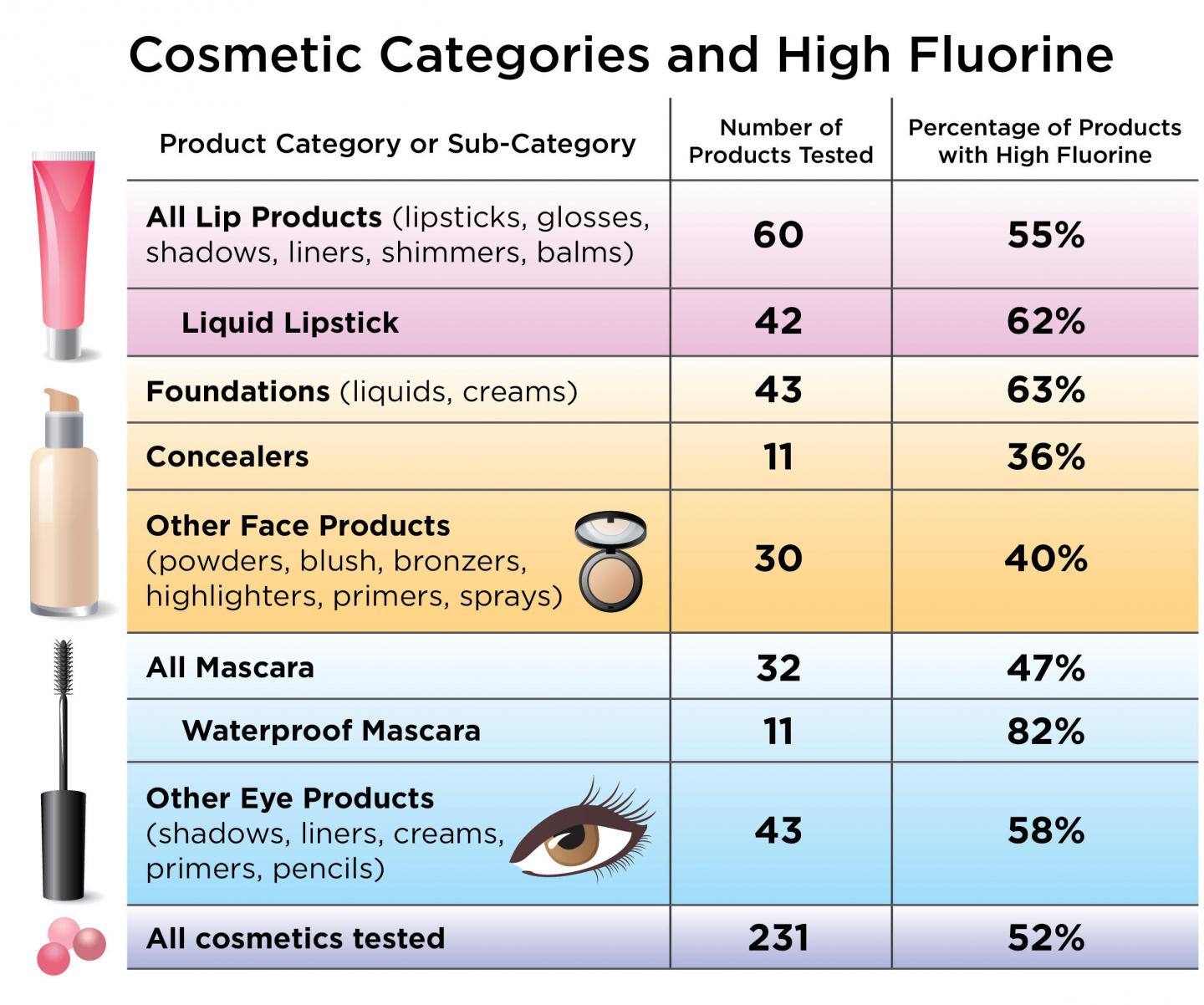
Makeup wearers may be absorbing and ingesting potentially toxic per- and polyfluoroalkyl substances (PFAS), according to a new study published today in Environmental Science & Technology Letters. The researchers found high fluorine levels–indicating the probable presence of PFAS–in most waterproof mascara, liquid lipsticks, and foundations tested. Some of the products with the highest fluorine levels underwent further analysis and were all confirmed to contain at least four PFAS of concern. The majority of products with high fluorine, including those confirmed to have PFAS, had no PFAS listed on the label.

“Lipstick wearers may inadvertently eat several pounds of lipstick in their lifetimes,” said Graham Peaslee, senior author of the study and professor of physics at the University of Notre Dame. “But unlike food, chemicals in lipstick and other makeup and personal care products are almost entirely unregulated in the U.S. and Canada. As a result, millions of people are unknowingly wearing PFAS and other harmful chemicals on their faces and bodies daily.”

Some PFAS have been associated with a wide range of serious health harms, from cancer to obesity to more severe COVID-19 outcomes, and they contaminate the drinking water of millions. Only a small fraction of the many thousands of PFAS have been tested for toxicity, but all PFAS are either extremely persistent in the environment or break down into extremely persistent PFAS.

In addition to PFAS being ingested from lip products, PFAS in cosmetics may be absorbed through the skin and tear ducts. On top of these direct exposure routes, PFAS can make their way into our drinking water, air, and food during the manufacture of makeup and after it’s washed down the drain.

The research team screened 231 cosmetic products purchased in the U.S. and Canada for fluorine. More than three-quarters of waterproof mascara, nearly two-thirds of foundations and liquid lipsticks, and more than half of eye and lip products had high fluorine concentrations.

All 29 products selected for targeted analysis contained detectable levels of at least four specific PFAS. This included PFAS that break down into other PFAS that are known to be highly toxic and environmentally harmful. Fluorotelomer methacrylates were also detected, indicating the breakdown of side-chain fluoropolymers which are marketed as a more “environmentally friendly” alternatives to individual PFAS.

Many of the products with PFAS were advertised as “wear-resistant” or “long-lasting.” Importantly, almost none of the products studied with targeted analysis had any PFAS listed on their ingredient labels. This makes it impossible for consumers to avoid PFAS-containing cosmetics by reading labels.

“PFAS are not necessary for makeup. Given their large potential for harm, I believe they should not be used in any personal care products,” said Arlene Blum, a co-author and executive director of the Green Science Policy Institute. “It’s past time to get the entire class of PFAS out of cosmetics and keep these harmful chemicals out of our bodies.”

###

Media Contact
Rebecca Fuoco, MPH
[email protected]

Related Journal Article

http://dx.doi.org/10.1021/acs.estlett.1c00240

Tags: Chemistry/Physics/Materials SciencesEcology/EnvironmentEnvironmental HealthMedicine/HealthPublic HealthToxicology
Share13Tweet8Share2ShareShareShare2

Related Posts

blank

Breakthrough in Environmental Cleanup: Scientists Develop Solar-Activated Biochar for Faster Remediation

February 7, 2026
blank

Cutting Costs: Making Hydrogen Fuel Cells More Affordable

February 6, 2026

Scientists Develop Hand-Held “Levitating” Time Crystals

February 6, 2026

Observing a Key Green-Energy Catalyst Dissolve Atom by Atom

February 6, 2026
Please login to join discussion

POPULAR NEWS

  • Robotic Ureteral Reconstruction: A Novel Approach

    Robotic Ureteral Reconstruction: A Novel Approach

    82 shares
    Share 33 Tweet 21
  • Digital Privacy: Health Data Control in Incarceration

    63 shares
    Share 25 Tweet 16
  • Study Reveals Lipid Accumulation in ME/CFS Cells

    57 shares
    Share 23 Tweet 14
  • Breakthrough in RNA Research Accelerates Medical Innovations Timeline

    53 shares
    Share 21 Tweet 13

About

We bring you the latest biotechnology news from best research centers and universities around the world. Check our website.

Follow us

Recent News

Evaluating Pediatric Emergency Care Quality in Ethiopia

TPMT Expression Predictions Linked to Azathioprine Side Effects

Improving Dementia Care with Enhanced Activity Kits

Subscribe to Blog via Email

Success! An email was just sent to confirm your subscription. Please find the email now and click 'Confirm' to start subscribing.

Join 73 other subscribers
  • Contact Us

Bioengineer.org © Copyright 2023 All Rights Reserved.

Welcome Back!

Login to your account below

Forgotten Password?

Retrieve your password

Please enter your username or email address to reset your password.

Log In
No Result
View All Result
  • Homepages
    • Home Page 1
    • Home Page 2
  • News
  • National
  • Business
  • Health
  • Lifestyle
  • Science

Bioengineer.org © Copyright 2023 All Rights Reserved.