• HOME
  • NEWS
  • EXPLORE
    • CAREER
      • Companies
      • Jobs
    • EVENTS
    • iGEM
      • News
      • Team
    • PHOTOS
    • VIDEO
    • WIKI
  • BLOG
  • COMMUNITY
    • FACEBOOK
    • INSTAGRAM
    • TWITTER
Thursday, July 2, 2026
BIOENGINEER.ORG
No Result
View All Result
  • Login
  • HOME
  • NEWS
  • EXPLORE
    • CAREER
      • Companies
      • Jobs
        • Lecturer
        • PhD Studentship
        • Postdoc
        • Research Assistant
    • EVENTS
    • iGEM
      • News
      • Team
    • PHOTOS
    • VIDEO
    • WIKI
  • BLOG
  • COMMUNITY
    • FACEBOOK
    • INSTAGRAM
    • TWITTER
  • HOME
  • NEWS
  • EXPLORE
    • CAREER
      • Companies
      • Jobs
        • Lecturer
        • PhD Studentship
        • Postdoc
        • Research Assistant
    • EVENTS
    • iGEM
      • News
      • Team
    • PHOTOS
    • VIDEO
    • WIKI
  • BLOG
  • COMMUNITY
    • FACEBOOK
    • INSTAGRAM
    • TWITTER
No Result
View All Result
Bioengineer.org
No Result
View All Result
Home NEWS Science News

Serenading Lusitanian toadfish drowned out by water traffic

Bioengineer by Bioengineer
September 6, 2025
in Science News
Reading Time: 2 mins read
0
IMAGE
Share on FacebookShare on TwitterShare on LinkedinShare on RedditShare on Telegram

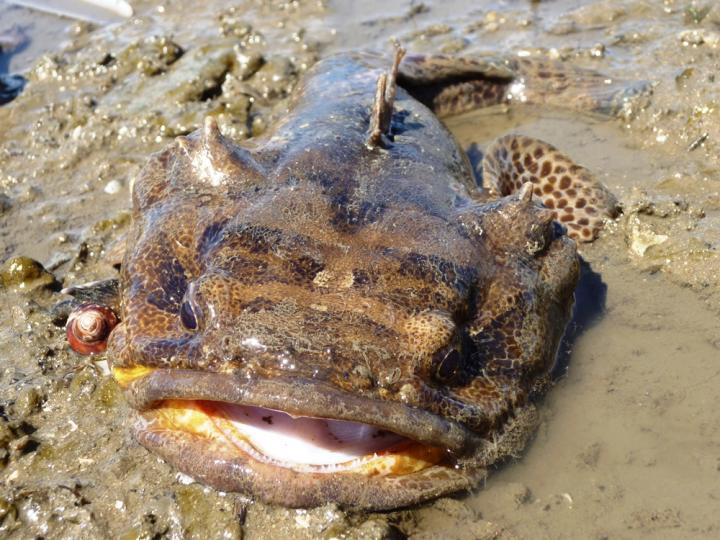
During spring, Lusitanian toadfish (Halobatrachus didactylus) suitors form choirs in Portugal’s Tagus estuary to serenade the females, vibrating their swim bladders to produce a call, known as a boatwhistle, which sounds like a vibrating cell phone. The males also listen in on each other to check whether anyone is intruding on their territory. But sadly, their performances are no longer conducted in hushed reverence. Revving motorboats and churning ferry propellors and engines fill the water with unwelcome noise, which made Clara Amorim, Daniel Alves, Manuel Vieira and Paulo Fonseca, from the Universidade de Lisboa, Portugal, wonder whether human noise pollution is playing havoc with the garrulous fish’s ability to communicate. They publish their discovery that toadfish serenades are being drowned out by water traffic that also disrupts their ability to croon together in Journal of Experimental Biology at https://journals.biologists.com/jeb.

‘We had previously measured how far toadfishes could communicate with each other’, says Alves, who worked with local fisherman to collect the vocal fish. Once the fish were comfortable in the lab, Alves and Fonseca tested their hearing by playing boatwhistles – which had been recorded at distances from 0.1-15 m – while logging the fishes’ brainwaves as they listened to the sound against a silent background. Then, the duo added the whine of an outboard motor or a rumbling ferryboat and rechecked the brainwaves, to find out whether the fish were still able to hear the serenades.

Unfortunately, the outboard motor almost completely drowned out the recordings of the males. One boatwhistle that had been clear up to 10.4 m away in absolute silence became inaudible over distances of more than 2.5 m and the range of another toadfish rumble fell to just 2.0 m. However, the ferryboat seemed to have less of an impact on the toadfishes’ hearing, cutting the range over which one boatwhistle could be heard by 4 m, to 6.3 m, while the other, which had been so badly affected by the outboard motor, could be heard over slightly longer distances (6.7 m). Water traffic is clearly affecting the ability of these vocal fish to hear one another, but does the sound of passing vessels affect how harmonising toadfish croon together?

To find out, Vieira, Amorim and Fonseca crossed the Tagus to a quiet toadfish breeding ground, providing the serenading residents with 12 custom-built concrete nests, each equipped with an underwater microphone to record their boatwhistles as they settled into duetting with nearby males to attract females. In peaceful waters, the neighbours coordinated well, slightly advancing or delaying their responses to each other’s calls depending on their proximity. However, when the scientists played recordings of passing ferries and motorboats to the courting males, the toadfishes’ coordination broke down entirely, with serenading duetters interjecting more randomly between their neighbour’s timed rumbles.

‘These results demonstrate that boat noise can severely reduce the distance at which the Lusitanian toadfish can communicate and affect how they produce sounds in their choruses’, says Vieira, who warns that noisy human water traffic could dramatically affect the Lusitanian toadfish’s love life.

###

Media Contact
Kathryn Knight
[email protected]

Related Journal Article

http://dx.doi.org/10.1242/jeb.234849

Tags: BiologyEcology/EnvironmentMarine/Freshwater BiologyPhysiology
Share13Tweet8Share2ShareShareShare2

Related Posts

Evolution-Inspired Biosensors Revolutionize Lipid Tracking in Real Time — Biology

Evolution-Inspired Biosensors Revolutionize Lipid Tracking in Real Time

July 2, 2026
Chromatin Loops Shield Forks from Replication Stress — Medicine

Chromatin Loops Shield Forks from Replication Stress

July 2, 2026

Linking Single-Cell Transcriptomes to Mouse Visual Circuits

July 2, 2026

Graz University of Technology Deciphers the Structural Secrets of MOF Thin Films

July 2, 2026
Please login to join discussion

POPULAR NEWS

  • Detection of EDCs in Breast Milk and Infant Urine Up to Six Months Highlights Early Exposure Risks

    77 shares
    Share 31 Tweet 19
  • Saying Goodbye to PGY-6: Pediatric Fellowship Realities

    103 shares
    Share 41 Tweet 26
  • New Drug Candidate Developed at McMaster Shows Potential for Treating Brain Cancer

    58 shares
    Share 23 Tweet 15
  • KTU Researchers Explore Ultrasound’s Role in Enhancing Blood Flow Beyond Diagnostics

    53 shares
    Share 21 Tweet 13

About

We bring you the latest biotechnology news from best research centers and universities around the world. Check our website.

Follow us

Recent News

Evolution-Inspired Biosensors Revolutionize Lipid Tracking in Real Time

Chromatin Loops Shield Forks from Replication Stress

Linking Single-Cell Transcriptomes to Mouse Visual Circuits

Subscribe to Blog via Email

Enter your email address to subscribe to this blog and receive notifications of new posts by email.

Join 82 other subscribers
  • Contact Us

Bioengineer.org © Copyright 2023 All Rights Reserved.

Welcome Back!

Login to your account below

Forgotten Password?

Retrieve your password

Please enter your username or email address to reset your password.

Log In
No Result
View All Result
  • Homepages
    • Home Page 1
    • Home Page 2
  • News
  • National
  • Business
  • Health
  • Lifestyle
  • Science

Bioengineer.org © Copyright 2023 All Rights Reserved.