• HOME
  • NEWS
  • EXPLORE
    • CAREER
      • Companies
      • Jobs
    • EVENTS
    • iGEM
      • News
      • Team
    • PHOTOS
    • VIDEO
    • WIKI
  • BLOG
  • COMMUNITY
    • FACEBOOK
    • INSTAGRAM
    • TWITTER
Thursday, March 26, 2026
BIOENGINEER.ORG
No Result
View All Result
  • Login
  • HOME
  • NEWS
  • EXPLORE
    • CAREER
      • Companies
      • Jobs
        • Lecturer
        • PhD Studentship
        • Postdoc
        • Research Assistant
    • EVENTS
    • iGEM
      • News
      • Team
    • PHOTOS
    • VIDEO
    • WIKI
  • BLOG
  • COMMUNITY
    • FACEBOOK
    • INSTAGRAM
    • TWITTER
  • HOME
  • NEWS
  • EXPLORE
    • CAREER
      • Companies
      • Jobs
        • Lecturer
        • PhD Studentship
        • Postdoc
        • Research Assistant
    • EVENTS
    • iGEM
      • News
      • Team
    • PHOTOS
    • VIDEO
    • WIKI
  • BLOG
  • COMMUNITY
    • FACEBOOK
    • INSTAGRAM
    • TWITTER
No Result
View All Result
Bioengineer.org
No Result
View All Result
Home NEWS Science News Biology

Deep and extreme: Microbes thrive in transition

Bioengineer by Bioengineer
May 24, 2021
in Biology
Reading Time: 3 mins read
0
IMAGE
Share on FacebookShare on TwitterShare on LinkedinShare on RedditShare on Telegram

IMAGE

Credit: © Caladan Oceanic LLC

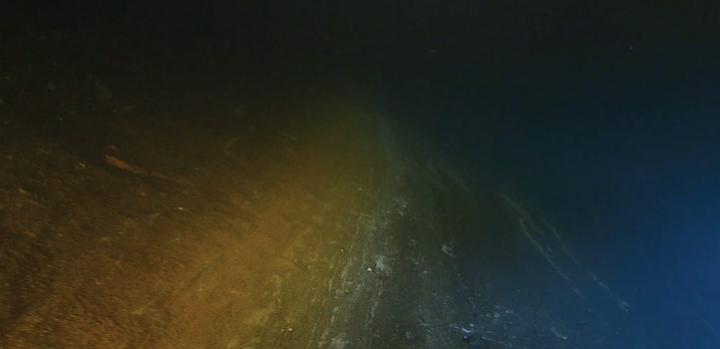
A diverse microbial community has adapted to an extremely salty environment deep in the Red Sea. The microbes, many unknown to science, occupy a one-meter-thick area overlying the Suakin Deep, an expansive 80-meter-deep brine lake, 2,771 meters below the central Red Sea. The chemical properties of this thin “brine-seawater interface,” along with the composition of microbial communities, change surprisingly rapidly across a sharp gradient.

“Our study sheds light on how microorganisms in the Suakin Deep’s brine-seawater interface make an oasis of life in the desert of the deep Red Sea,” says microbial ecologist Daniele Daffonchio, who led the study. Daffonchio and his colleagues at KAUST, with collaborators in Germany and Spain, found that microbial cell densities are more than double in this interface than in normal deep Red Sea water and the brine below.

The Suakin Deep is one of around 25 deep brine lakes in the Red Sea. Few studies have analyzed the thin brine-seawater interface above it, and none have taken into account how its properties change from top to bottom.

Daffonchio’s team used a sampler called a Niskin Rosette to analyze water every nine centimeters within this interface. This cylindrical apparatus holds 23 identical 90-centimeter-long 10-liter bottles, along with a detector that measures salinity, temperature and depth.

The sampler was deployed by KAUST’s research vessel with the bottles open until the detector signaled that the apparatus had reached the Suakin Deep’s brine-seawater interface. The bottles were then filled with interface water and remotely shut, and the apparatus then returned to the ship. This way, the water column in the bottles represented most of the water column in the interface. One-liter fractions of water, each corresponding to a different depth in the actual interface, were analyzed for their chemical and microbial contents.

The team found many types of microbial communities, which changed with variations in oxygen and salinity within the water column.

“Many of the microbes were new, with their closest relatives coming from hydrothermal vents at the bottom of the sea and from subsurface sediments,” says environmental microbiologist Grégoire Michoud, the study’s first author.

The team sequenced the genome of a microbe they called Candidatus Scalindua arabica, which was concentrated within a 20-centimeter-layer in the middle of the brine-seawater interface. The metabolic processes conducted by this and other microbes suggest this transition zone is a critical niche for nitrogen cycling.

Oceanic brine pools could be similar to extraterrestrial environments like the saline ocean that is expected to exist under the surface of Jupiter’s satellite Europa. “Knowledge of the microbial networks in extreme Earth environments could help us hypothesize how lifeforms on extraterrestrial bodies thrive and function,” explains Daffonchio. “These microbes could also harbor enzymes and other properties that could be useful in medical and biotechnology applications.”

The team plans to continue analyzing other Red Sea brine pools and their brine-seawater interfaces to examine how different conditions affect microbial content.

###

Media Contact
Michael Cusack
[email protected]

Original Source

https://discovery.kaust.edu.sa/en/article/1120/deep-and-extreme:-microbes-thrive-in-transition

Related Journal Article

http://dx.doi.org/10.1038/s41396-021-00931-z

Tags: BiodiversityBiologyCell BiologyEcology/EnvironmentEvolutionMarine/Freshwater BiologyMicrobiologyZoology/Veterinary Science
Share13Tweet8Share2ShareShareShare2

Related Posts

How to sway group opinions: Encourage opponents to stay undecided

How to sway group opinions: Encourage opponents to stay undecided

March 23, 2026
Deep Learning Model Maps How Individual Cells Shape Disease Outcomes

Deep Learning Model Maps How Individual Cells Shape Disease Outcomes

March 20, 2026

Removing only 15 female sharks annually could endanger the entire population, scientists warn

March 20, 2026

Scientists Urge Fragrance Industry to Transition from Sustainability Talk to Active Funding of Plant Conservation

March 20, 2026
Please login to join discussion

POPULAR NEWS

  • blank

    Revolutionary AI Model Enhances Precision in Detecting Food Contamination

    96 shares
    Share 38 Tweet 24
  • Imagine a Social Media Feed That Challenges Your Views Instead of Reinforcing Them

    1003 shares
    Share 397 Tweet 248
  • Uncovering Functions of Cavernous Malformation Proteins in Organoids

    54 shares
    Share 22 Tweet 14
  • Promising Outcomes from First Clinical Trials of Gene Regulation in Epilepsy

    51 shares
    Share 20 Tweet 13

About

We bring you the latest biotechnology news from best research centers and universities around the world. Check our website.

Follow us

Recent News

In-Sensor Cryptography Links Physical Process to Digital Identity

Can Psychosocial Factors Influence Cancer Risk?

Depression Factors in Elderly: Pre vs. Post-COVID Analysis

Subscribe to Blog via Email

Enter your email address to subscribe to this blog and receive notifications of new posts by email.

Join 78 other subscribers
  • Contact Us

Bioengineer.org © Copyright 2023 All Rights Reserved.

Welcome Back!

Login to your account below

Forgotten Password?

Retrieve your password

Please enter your username or email address to reset your password.

Log In
No Result
View All Result
  • Homepages
    • Home Page 1
    • Home Page 2
  • News
  • National
  • Business
  • Health
  • Lifestyle
  • Science

Bioengineer.org © Copyright 2023 All Rights Reserved.