• HOME
  • NEWS
  • EXPLORE
    • CAREER
      • Companies
      • Jobs
    • EVENTS
    • iGEM
      • News
      • Team
    • PHOTOS
    • VIDEO
    • WIKI
  • BLOG
  • COMMUNITY
    • FACEBOOK
    • INSTAGRAM
    • TWITTER
Saturday, March 28, 2026
BIOENGINEER.ORG
No Result
View All Result
  • Login
  • HOME
  • NEWS
  • EXPLORE
    • CAREER
      • Companies
      • Jobs
        • Lecturer
        • PhD Studentship
        • Postdoc
        • Research Assistant
    • EVENTS
    • iGEM
      • News
      • Team
    • PHOTOS
    • VIDEO
    • WIKI
  • BLOG
  • COMMUNITY
    • FACEBOOK
    • INSTAGRAM
    • TWITTER
  • HOME
  • NEWS
  • EXPLORE
    • CAREER
      • Companies
      • Jobs
        • Lecturer
        • PhD Studentship
        • Postdoc
        • Research Assistant
    • EVENTS
    • iGEM
      • News
      • Team
    • PHOTOS
    • VIDEO
    • WIKI
  • BLOG
  • COMMUNITY
    • FACEBOOK
    • INSTAGRAM
    • TWITTER
No Result
View All Result
Bioengineer.org
No Result
View All Result
Home NEWS Science News Biology

Who’s in this ocean? Tracking down species on the go using environmental DNA

Bioengineer by Bioengineer
May 21, 2021
in Biology
Reading Time: 3 mins read
0
IMAGE
Share on FacebookShare on TwitterShare on LinkedinShare on RedditShare on Telegram

IMAGE

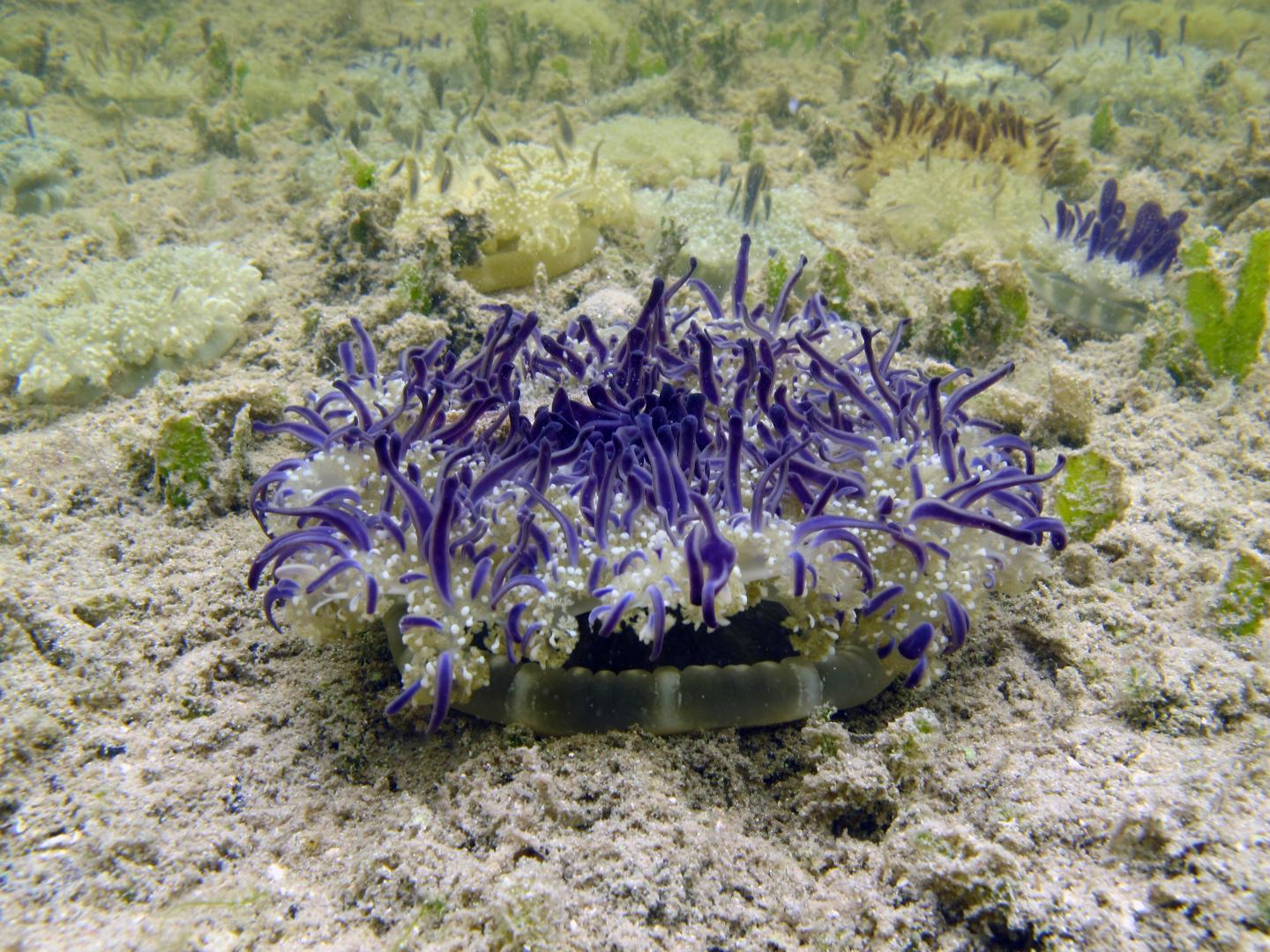
Credit: Andre Morandini

Sloughed off skin and bodily fluids are things most people would prefer to avoid.

But for marine biologist like Cheryl Lewis Ames, Associate Professor of Applied Marine Biology in the Graduate School of Agricultural Science at Tohoku University (Japan), such remnants of life have become a magical key to detecting the unseen.

Any organism living in the ocean will inevitably leave behind traces containing their DNA – environmental DNA (eDNA) – detectable in water samples collected from the ocean

Only recently has molecular sequencing technology become advanced enough to conduct eDNA analysis in the field to identify species that may be endangered, invasive or dangerous, and could otherwise go unnoticed.

Ames chose sampling sites in the Florida Keys (USA) where species of upside-jellyfish Cassiopea occur to test out their newly developed Fieldable eDNA sequencing kit – called FeDS.

Using eDNA for multiple species identification is a multistep process known as metabarcoding. Since the mixed DNA template must first be amplified using the polymerase chain reaction (PCR), metabarcoding experiments in the field have only recently been possible thanks to battery-operated thermocyclers and other portable devices.

Determining the identity of a species from small bits of DNA filtered from seawater requires the use of a Next Generation Sequencer (NGS), a machine that traditionally takes up the whole desktop counter in a laboratory and requires an electrical outlet. A novelty of the portable technology used in this study – Nanopore MinION — is that as pieces of DNA pass through a microscopic pore in the device, differences in electrical current determine the unique code of each DNA strand.

Instead of the typically large sequencing machines used to complete such a task, Ames and her team were testing a Nanopore system the size of a cellphone, powered by a laptop computer. A drop of the prepared eDNA mixture added to the portable sequencer reveals on the screen the genetic code of all the DNA passing through it in real-time.

Then, DNA sequences are searched against a huge database of sequences to determined which species are represented by the eDNA collected onsite that day. Upgraded “offline” versions of the necessary software and pre-downloading of the reference database to the laptop meant that the whole metabarcoding process could be conducted beyond the walls of a laboratory, away from internet connection.

Ames and the team detected 53 species of jellyfish including Cassiopea, the upside-down jellyfish, two venomous species of box jellyfish, many species with hydroid forms, and two species of stalked jellyfish which were previously unreported in the Florida Keys, indicating that the process could reveal species that would otherwise go unnoticed.

“My hope is that one day this system is used for sting mitigation, almost like a weather forecast app that also reports ‘jellyfish stings risk’ at certain beaches,” said Ames.

Ames has spent much of her time conducting research in areas where jelly stings are common, and warnings about whether venomous jellies are in the area could prevent countless injuries to swimmers. Besides practical purposes in fisheries and conservation, the fact that a sample of ocean water can reveal the organisms in the vicinity is truly a marvel.

###

Media Contact
Cheryl Ames
[email protected]

Original Source

https://www.tohoku.ac.jp/en/press/whos_in_this_ocean.html

Related Journal Article

http://dx.doi.org/10.3389/fmars.2021.640527

Tags: BiologyMarine/Freshwater Biology
Share12Tweet8Share2ShareShareShare2

Related Posts

How to sway group opinions: Encourage opponents to stay undecided

How to sway group opinions: Encourage opponents to stay undecided

March 23, 2026
Deep Learning Model Maps How Individual Cells Shape Disease Outcomes

Deep Learning Model Maps How Individual Cells Shape Disease Outcomes

March 20, 2026

Removing only 15 female sharks annually could endanger the entire population, scientists warn

March 20, 2026

Scientists Urge Fragrance Industry to Transition from Sustainability Talk to Active Funding of Plant Conservation

March 20, 2026
Please login to join discussion

POPULAR NEWS

  • blank

    Revolutionary AI Model Enhances Precision in Detecting Food Contamination

    96 shares
    Share 38 Tweet 24
  • Imagine a Social Media Feed That Challenges Your Views Instead of Reinforcing Them

    1004 shares
    Share 397 Tweet 248
  • Uncovering Functions of Cavernous Malformation Proteins in Organoids

    54 shares
    Share 22 Tweet 14
  • Promising Outcomes from First Clinical Trials of Gene Regulation in Epilepsy

    51 shares
    Share 20 Tweet 13

About

We bring you the latest biotechnology news from best research centers and universities around the world. Check our website.

Follow us

Recent News

In-Sensor Cryptography Links Physical Process to Digital Identity

Can Psychosocial Factors Influence Cancer Risk?

Depression Factors in Elderly: Pre vs. Post-COVID Analysis

Subscribe to Blog via Email

Enter your email address to subscribe to this blog and receive notifications of new posts by email.

Join 78 other subscribers
  • Contact Us

Bioengineer.org © Copyright 2023 All Rights Reserved.

Welcome Back!

Login to your account below

Forgotten Password?

Retrieve your password

Please enter your username or email address to reset your password.

Log In
No Result
View All Result
  • Homepages
    • Home Page 1
    • Home Page 2
  • News
  • National
  • Business
  • Health
  • Lifestyle
  • Science

Bioengineer.org © Copyright 2023 All Rights Reserved.