Proteins that enable the sense of touch in humans have an evolutionary cousin that helps plants grow their root systems
Credit: Seyed Ali Reza Mousavi, PhD / Scripps Research
LA JOLLA, CA–A family of proteins that sense mechanical force–and enable our sense of touch and many other important bodily functions–also are essential for proper root growth in some plants, according to a study led by scientists at Scripps Research and Howard Hughes Medical Institute (HHMI).
The discovery, published in the
“Our finding that PIEZO proteins work as transducers of mechanical forces in plants, as well as animals, suggests the broad importance of these proteins for living organisms on Earth,” says lead author Seyed Ali Reza Mousavi, PhD, a postdoctoral research associate in the Scripps Research laboratory of Ardem Patapoutian, PhD.
“It’s remarkable that evolution has utilized the same type of molecule for us to sense touch and for plant roots to sense the hardness of soil,” says Patapoutian, professor and Presidential Endowed Chair in Neurobiology at Scripps Research and an investigator at HHMI.
Patapoutian, the senior author of the study, is credited with the discovery of PIEZO proteins about a decade ago–an accomplishment that earned him the 2020 Kavli Prize in Neuroscience and many other awards. The discovery led to a host of additional findings that have shed light on how to a range of medical conditions, from heart failure to chronic pain.
Sensing physical force
PIEZO proteins have little resemblance to any other family of biological proteins. In mammals–the only large class of animals in which they have been studied much–they form striking, propeller-like structures in the outer membranes of cells.
When stretched or pressed beyond a threshold, these structures allow charged molecules, called ions, to flow into or out of their host cells.
The two PIEZO proteins in mammals, PIEZO1 and PIEZO2, underlie a wide variety of functions that require this conversion of mechanical force to cellular signals–functions including the sense of touch, the sense of body and limb positions that enables balance, the sense of bladder fullness and the regulation of blood pressure.
Patapoutian’s lab and others have found PIEZO-type proteins, with apparent mechanical sensor functions, in other animals including Drosophila fruit flies.
An important role in the plant kingdom
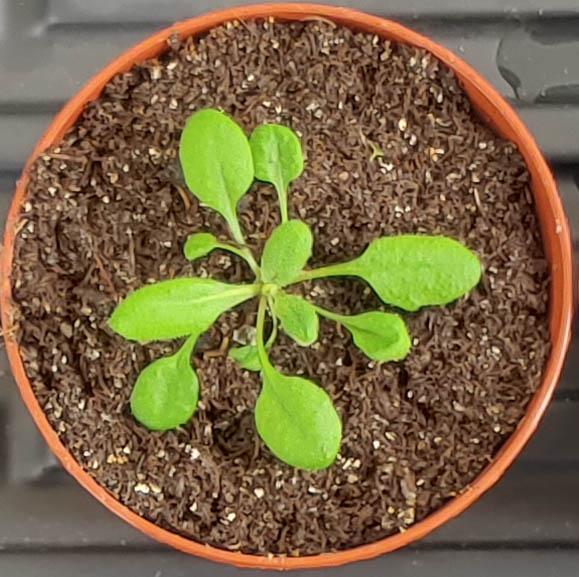
When in the long history of life on Earth did these unique, versatile proteins evolve? To help address that question, Mousavi and other members of Patapoutian’s team examined Arabidopsis thaliana, a weedy relative of the mustard plant that’s a standard lab model for plant biology research. Arabidopsis’s genome includes a gene encoding a PIEZO-type protein, hinting that these proteins work as mechanosensors in the plant kingdom, too.
The scientists first examined the locations in the plant where the protein, PZO1, is made, and found it concentrated in the root tips. Deleting the PZO1 gene, they observed that the Arabidopsis plants grew shorter roots. In a lengthy set of further experiments, they found that PZO1 in root tip cells responds to mechanical stimuli with ion flows–which establishes it as a mechanosensor like its mammalian counterparts.
Exactly how PZO1’s mechanosensing abilities help roots grow remains a mystery. But Mousavi, Patapoutian and colleagues suspect that it helps root tip cells sense and adjust themselves to the potentially strong mechanical forces they encounter as the root tries to penetrate soils–especially drier, harder soils.
“If the activity of PZO1 increases, it might help plants expand their root systems in dry conditions and get better access to water,” Mousavi says. If that proves to be the case, boosting PZO1 activity could be a way of increasing crop yields in difficult soil conditions, he says.
Mousavi is now trying to clarify PZO1’s precise function in Arabidopsis with experiments in real-world conditions. He also hopes to study the role of PIEZO-type proteins in food crops including maize and rice.
###
The study, “PIEZO ion channel is required for root mechanotransduction in Arabidopsis thaliana” was authored by Seyed Mousavi, Adrienne Dubin, Wei-Zheng Zeng, Adam Coombs, Khai Do, Darian Ghadiri, William Keenan, Chennan Ge, Yunde Zhao and Ardem Patapoutian.
Support for the research was provided by the Swiss National Science Foundation (P300PA_164695, P2LAP3_151727), the National Institutes of Health (GM114660, R01HL143297), HHMI and the China Scholarship Council.
Media Contact
Kelly Quigley
[email protected]
Original Source
https:/
Related Journal Article
http://dx.