• HOME
  • NEWS
  • EXPLORE
    • CAREER
      • Companies
      • Jobs
    • EVENTS
    • iGEM
      • News
      • Team
    • PHOTOS
    • VIDEO
    • WIKI
  • BLOG
  • COMMUNITY
    • FACEBOOK
    • INSTAGRAM
    • TWITTER
Friday, May 15, 2026
BIOENGINEER.ORG
No Result
View All Result
  • Login
  • HOME
  • NEWS
  • EXPLORE
    • CAREER
      • Companies
      • Jobs
        • Lecturer
        • PhD Studentship
        • Postdoc
        • Research Assistant
    • EVENTS
    • iGEM
      • News
      • Team
    • PHOTOS
    • VIDEO
    • WIKI
  • BLOG
  • COMMUNITY
    • FACEBOOK
    • INSTAGRAM
    • TWITTER
  • HOME
  • NEWS
  • EXPLORE
    • CAREER
      • Companies
      • Jobs
        • Lecturer
        • PhD Studentship
        • Postdoc
        • Research Assistant
    • EVENTS
    • iGEM
      • News
      • Team
    • PHOTOS
    • VIDEO
    • WIKI
  • BLOG
  • COMMUNITY
    • FACEBOOK
    • INSTAGRAM
    • TWITTER
No Result
View All Result
Bioengineer.org
No Result
View All Result
Home NEWS Science News

New snailfish genome reveals how they adapted to the pressures of deep-sea life

Bioengineer by Bioengineer
May 13, 2021
in Science News
Reading Time: 3 mins read
0
IMAGE
Share on FacebookShare on TwitterShare on LinkedinShare on RedditShare on Telegram

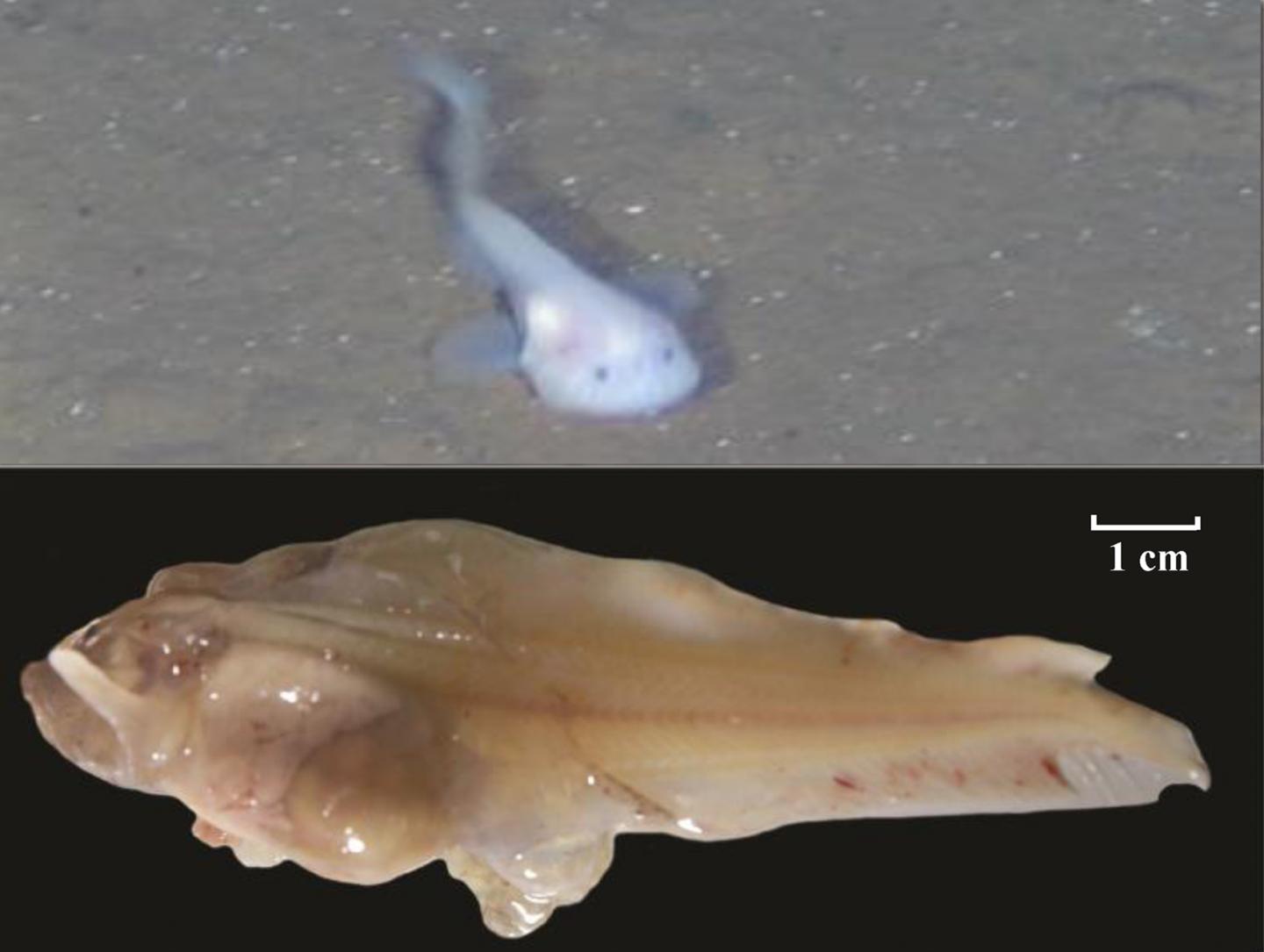
The genome contains extra genes for enzymes that help stabilize its proteins and DNA under high pressures
IMAGE

Credit: Mu Y et al., 2021, PLOS Genetics

A new whole genome sequence for the Yap hadal snailfish provides insights into how the unusual fish survives in some of the deepest parts of the ocean. Xinhua Chen of the Fujian Agriculture and Forestry University and Qiong Shi of the BGI Academy of Marine Sciences published their analysis of the new genome May 13th in the journal PLOS Genetics.

Animals living in deep-sea environments face many challenges, including high pressures, low temperatures, little food and almost no light. Fish are the only animals with a backbone that live in the hadal zone–defined as depths below 6,000 meters–and hadal snailfishes live in at least five separate marine trenches. Chen, Shi and their colleagues constructed a high-quality whole genome sequence from the Yap hadal snailfish to understand how it has adapted to life in the deep sea. The fish was captured from the Yap Trench in the western Pacific Ocean at a depth of about 7,000 meters.

Analysis of the new genome revealed multiple adaptations for living in a cold, dark, high-pressure environment. The snailfish carries extra genes for DNA repair, which may help keep its genome intact under high pressures. It also has five copies of a gene for an enzyme that takes a compound produced by bacteria in its gut and transforms it into one that stabilizes the structure of proteins under high hydrostatic pressure. The snailfish has also lost certain genes involved in vision, taste and smell, which are likely unnecessary in its dark, food-limited environment.

These new findings offer clues into the mechanisms that snailfish have evolved to survive in oceanic trenches. However, the researchers point out that further studies will be needed to confirm the functions of these genetic changes. Additionally, the high-quality genome sequence can serve as a resource for future in-depth investigations of snailfish and other animals living in the hadal zone.

Chen adds, “Many genes associated with DNA repair show evidence of positive selection and have expanded copy numbers in the genome of Yap hadal snailfish, which potentially reflect the difficulty of maintaining DNA integrity under high hydrostatic pressure. The five copies of the trimethylamine N-oxide (TMAO)-generating enzyme flavin-containing monooxygenase-3 gene (fmo3) and the abundance of trimethylamine (TMA)-generating bacteria in the gut of Yap hadal snailfish could provide enough TMAO to improve protein stability under hadal conditions.”

###

Peer-reviewed; Experimental study; Animals

In your coverage please use this URL to provide access to the freely available article in PLOS Genetics:

http://journals.plos.org/plosgenetics/article?id=10.1371/journal.pgen.1009530

Citation: Mu Y, Bian C, Liu R, Wang Y, Shao G, Li J, et al. (2021) Whole genome sequencing of a snailfish from the Yap Trench (~7,000 m) clarifies the molecular mechanisms underlying adaptation to the deep sea. PLoS Genet 17(5): e1009530. https://doi.org/10.1371/journal.pgen.1009530

Funding: This work was supported by grants from National Key R&D Program of China (2018YFD0900602; https://service.most.gov.cn) to Y.M., and National Program on the Key Basic Research Project (2015CB755903; https://service.most.gov.cn), China Agriculture Research System (CARS-47; http://www.cars.ren), China Ocean Mineral Resources R&D Association Program (DY135-B2-16; http://www.comra.org), and Special Fund for Marine Economic Development of Fujian Province (FJHJF-L-2019-2; https://hyyyj.fujian.gov.cn/) to X.C. The funders had no role in study design, data collection and analysis, decision to publish, or preparation of the manuscript.

Competing Interests: The authors have declared that no competing interests exist.

Media Contact
PLOS Genetics
[email protected]

Related Journal Article

http://dx.doi.org/10.1371/journal.pgen.1009530

Tags: BiologyEvolutionFisheries/AquacultureGenesGeneticsMarine/Freshwater Biology
Share12Tweet8Share2ShareShareShare2

Related Posts

Digital Health Fear Patterns in Older Cancer Patients

May 15, 2026

A*STAR Scientists Unveil Novel Technique to Decipher RNA Structure’s Impact on Health and Disease

May 15, 2026

Smart Hydrogels Revolutionize Information Security with Photo-Patterning and Multi-Stimuli Responsive Structural Colors

May 15, 2026

Unveiling the Unseen: POSTECH Team Creates AI Framework to Detect Hidden Defects in Metal 3D Printing

May 15, 2026
Please login to join discussion

POPULAR NEWS

  • Research Indicates Potential Connection Between Prenatal Medication Exposure and Elevated Autism Risk

    843 shares
    Share 337 Tweet 211
  • New Study Reveals Plants Can Detect the Sound of Rain

    729 shares
    Share 291 Tweet 182
  • Salmonella Haem Blocks Macrophages, Boosts Infection

    62 shares
    Share 25 Tweet 16
  • Breastmilk Balances E. coli and Beneficial Bacteria in Infant Gut Microbiomes

    58 shares
    Share 23 Tweet 15

About

We bring you the latest biotechnology news from best research centers and universities around the world. Check our website.

Follow us

Recent News

Digital Health Fear Patterns in Older Cancer Patients

A*STAR Scientists Unveil Novel Technique to Decipher RNA Structure’s Impact on Health and Disease

Smart Hydrogels Revolutionize Information Security with Photo-Patterning and Multi-Stimuli Responsive Structural Colors

Subscribe to Blog via Email

Enter your email address to subscribe to this blog and receive notifications of new posts by email.

Join 82 other subscribers
  • Contact Us

Bioengineer.org © Copyright 2023 All Rights Reserved.

Welcome Back!

Login to your account below

Forgotten Password?

Retrieve your password

Please enter your username or email address to reset your password.

Log In
No Result
View All Result
  • Homepages
    • Home Page 1
    • Home Page 2
  • News
  • National
  • Business
  • Health
  • Lifestyle
  • Science

Bioengineer.org © Copyright 2023 All Rights Reserved.