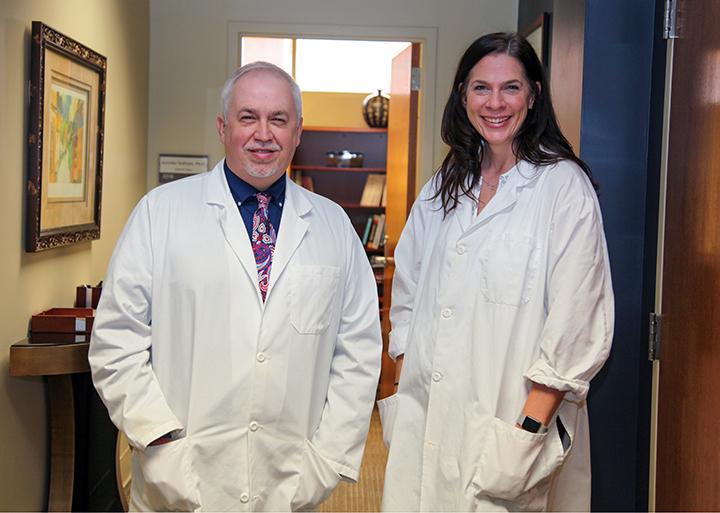
Credit: Kim Ratliff, Augusta University
Augusta University has received a $1.5 million grant from the National Institutes of Health to help support the graduate education of future scientists whose focus is cardiometabolic diseases — like hypertension and diabetes — which disproportionally affect minorities.
The training grant (1HL155011-01A1) will support four graduate students in its first year, and scale up to six students per year by year four of the five-year grant. It will offer aspiring PhDs and MD/PhDs the opportunity to learn from 43 federally funded scientists focusing on different aspects of cardometabolic disease related to minority health. Student recruitment has just started.
Graduate students will learn more about metabolic processes that initiate disease, how the diseases manifest in humans and the complications that drive sickness and death.
The training grant enhances the caliber of the educational experience The Graduate School at AU provides students as it provides more dollars to pay an annual stipend to the students who are a critical biomedical workforce at a research university, says Dr. Jennifer Sullivan, interim dean of The Graduate School.
It expands opportunities and interest in AU and the Medical College of Georgia for students and scientists alike, says Dr. David Stepp, vascular biologist and Leon Henri Charbonnier Endowed Chair in Physiology in the MCG Vascular Biology Center. The NIH grant is also another objective indicator of MCG’s nationally recognized research in cardiometabolic disease, Stepp says.
Stepp and Sullivan, a pharmacologist and physiologist in the MCG Department of Physiology, are co-directors of the Cardiometabolic Training Program. Both are NIH-funded investigators pursuing topics like gender differences in blood pressure regulation and the impact of high glucose in obesity.
Program faculty will include established investigators and educators across a variety of research disciplines. Faculty represent the MCG departments of Physiology, Pharmacology and Toxicology, Cellular Biology and Anatomy, Medicine, Pediatrics, Anesthesiology, as well as the Vascular Biology Center and Georgia Prevention Institute, Stepp says.
Heart disease is the most common cause of death in the United States and cardiovascular diseases like heart attack and stroke, as well as related cardiometabolic conditions like diabetes and obesity, are the top-funded research focus at MCG.
Cardiometabolic diseases are even more prevalent, and often more severe, in minorities, and the conditions tend to overlap and compound the severity of each other.
###
The Graduate School’s PhD in Biomedical Sciences Programs include Biochemistry and Cancer Biology, Cellular Biology and Anatomy, Genomic Medicine, Molecular Medicine, Oral Biology and Maxillofacial Pathology, Neuroscience, Pharmacology, Physiology and Vascular Biology. Seven of these graduate programs have faculty studying cardiometabolic disease, Stepp says.
Sullivan additionally is director of the first-year biomedical sciences program and has directed the first-year graduate course Experimental Therapeutics since 2007. Stepp regularly gives lectures to medical and graduate students and has directed The Graduate School’s Core Course in Integrated Pathophysiology and served on the council which oversees faculty development and curriculum for the graduate school.
Media Contact
Toni Baker
[email protected]