Credit: Satoru Konnai
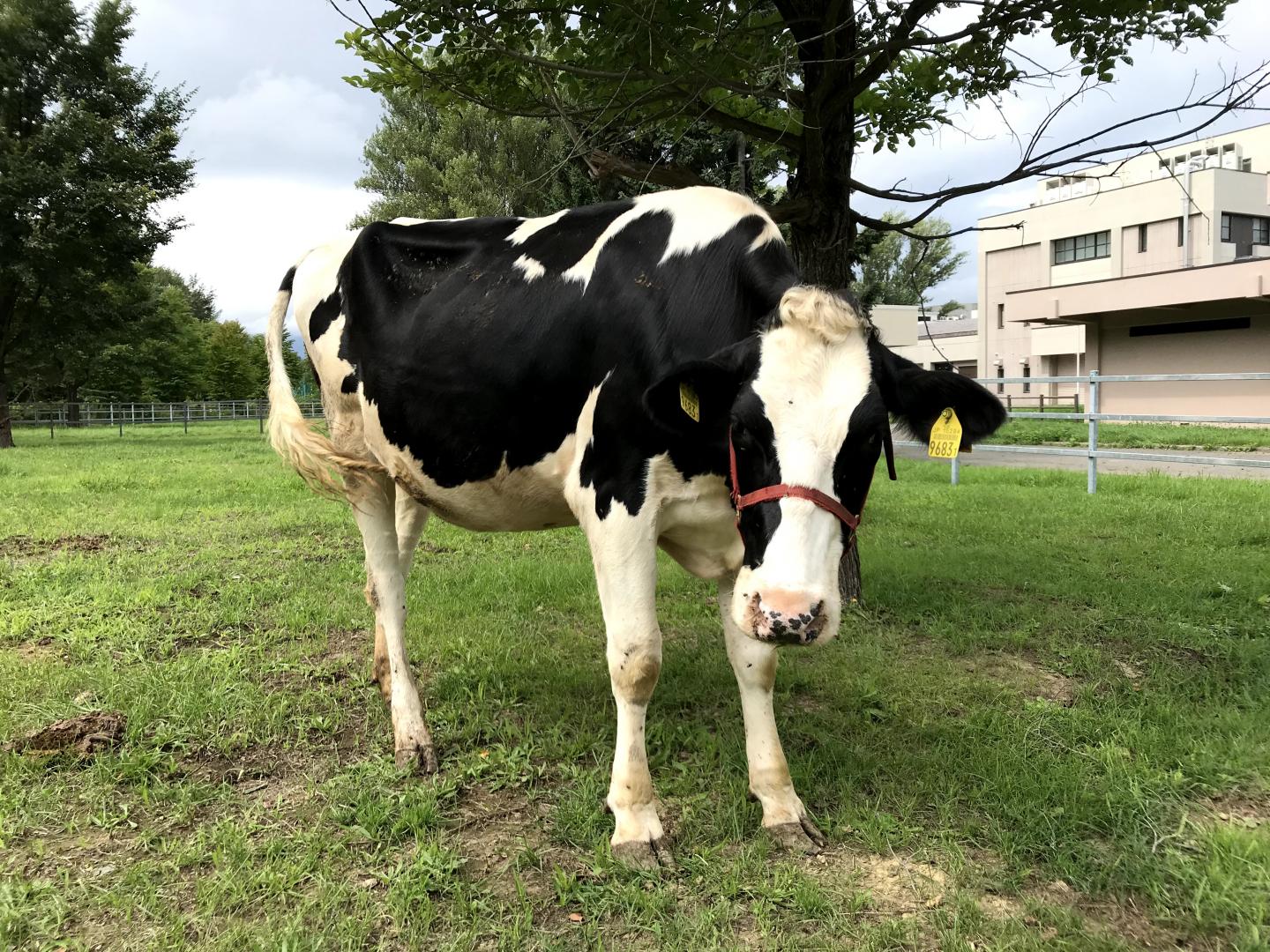
Scientists in Japan have developed and tested a novel probiotic formulation to control severe diarrhea in calves, ensuring their health and reducing mortality, and in turn reducing economic loss.
The health of calves is a crucial component in animal husbandry; diseases that affect calves cause economic losses to livestock farms either directly, due to death of the calves, or indirectly, due to weight loss that reduces productivity over the animals’ lifespans. In Japan, bovine rotavirus (BRV) and bovine cryptosporidiosis infections are major diseases that cause severe diarrhea in calves.
A team of scientists from Hokkaido, including Associate Professor Satoru Konnai of the Faculty of Veterinary Medicine at Hokkaido University, have developed a novel probiotic supplement and verified its efficacy as an antidiarrheal medication for calves. Their results have been published in the journal Veterinary Microbiology.
Diarrhea in calves (bovine diarrhea) is caused by a variety of pathogens, including bacteria, viruses and protists. Antibiotics are an extremely effective means of treating bacterial diarrhea, but they are ineffective when the cause is a virus, a protist or an antibiotic-resistant bacteria. There is a need for a novel treatment to prevent bovine diarrhea. Probiotic is a term used to describe microorganisms that have a beneficial effect on human health when consumed. There have been a number of peer reviewed studies on the effect of various probiotics in humans, showing that probiotics are effective in preventing a number of diseases.
Fermented milks (FMs) have been used as probiotics in animal husbandry as far back as the 1970s; however, the efficacy of these FMs has been inconsistent due to the wide variations in the manufacturing process. Furthermore, there have been cases where FMs themselves have been the source of diarrhea-causing pathogens. The scientists proposed that fermented milk replacers (FMRs) could be an ideal candidate for high-quality and safe probiotics in calves. They set out to develop a unified protocol to manufacture FMRs and evaluate their efficacy.
The scientists tested the efficacy of a novel FMR and a lactic acid-based milk replacer (LAB-MR) on newborn calves, compared to commercially milk replacers. In clinical studies, the calves were fed with the milk replacers throughout the experiment. The calves were then exposed to BRV on day 5; the efficacy of each treatment was evaluated 10 days after infection with BRV. The milk replacers were also subjected to field trials, on farms with a history of high prevalence of BRV and bovine cryptosporidiosis over the previous three years.
Their results showed that bovine diarrhea due to BRV was much less severe in calves fed with FMR or with LAB-MR. Further, tissue damage to the intestine was reduced, and milk intake during diarrhea was increased compared to calves on the commercial milk replacer. In the field trials, FMR feeding reduced the incidence of diarrhea in a dairy farm with a high incidence of enteritis as a result of mixed infection with BRV and bovine cryptosporidiosis. Interestingly, the lactobacillus strains in the LAB-MR did not ferment the milk replacer, indicating this strain can protect against diarrhea in calves without fermentation–there may be another mechanism by which LAB-MR protects against diarrhea.
###
Media Contact
Sohail Keegan Pinto
[email protected]
Original Source
https:/
Related Journal Article
http://dx.