Integrated power grids offer benefits, but also pose challenges best addressed by leveraging differences
Credit: Matthew Henry
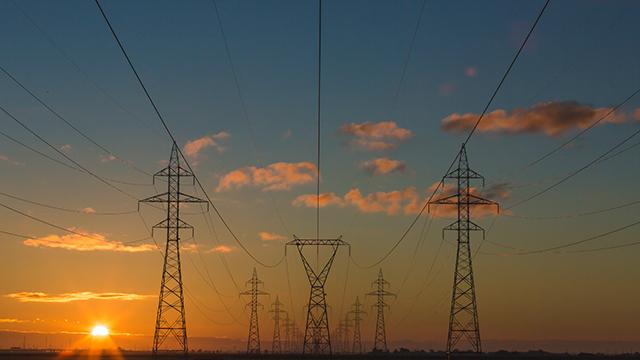
The recent power outages in Texas brought attention to its power grid being separated from the rest of the country. While it is not immediately clear whether integration with other parts of the national grid would have completely eliminated the need for rolling outages, the state’s inability to import significant amounts of electricity was decisive in the blackout.
A larger power grid has perks, but also has perils that researchers at Northwestern University are hoping to address to expedite integration and improvements to the system.
An obvious challenge in larger grids is that failures can propagate further — in the case of Texas, across state lines. Another is that all power generators need to be kept synchronized to a common frequency in order to transmit energy. The U.S. is served by three “separate” grids: The Eastern interconnection, the Western interconnection and the Texas interconnection, interlinked only by direct-current power lines. Any persistent deviation in frequencies within a region can lead to an outage.
As a result, researchers are searching for ways to stabilize the grid by looking for methods to mitigate deviations in the power generators’ frequencies.
The new Northwestern research shows that counter to assumptions held by some, there are stability benefits to heterogeneity in the power grid. Examining several power grids across the U.S. and Europe, a team led by Northwestern physicist Adilson Motter recently reported that generators operating on different frequencies return to their normal state more quickly when they are damped by “breakers” at different rates than generators around them.
The paper was published March 5 in the journal Nature Communications.
Motter is the Charles E. and Emma H. Morrison Professor in the department of physics and astronomy in the Weinberg College of Arts and Sciences. His research focuses on nonlinear phenomena in complex systems and networks.
Motter compares power grids to a choir: “It’s a little bit like a choir without a conductor. The generators have to listen to others and speak in sync. They react and respond to each other’s frequencies.”
Listen to an out-of-whack frequency, and the result can be a failure. Given the interconnected makeup of the system, a failure can propagate across the network. Historically, these malfunctions have been prevented by using active controllers. However, failures are often caused precisely by control and equipment errors. This points to a need to build additional stability within the design of the system. To achieve that, the team looked into leveraging the natural heterogeneities of the grid.
When the frequencies of the power generators are moved away from the synchronous state, they can swing around for a long time and even become more erratic. To mitigate these fluctuations, they came up with something akin to a door mechanism used to close a door the fastest, but without slamming.
“Mathematically, the problem of damping frequency deviations in a power generator is analogous to the problem of optimally damping a door to get it to close the fastest, which has a known solution in the case of a single door,” Motter said. “But it’s not a single door in this analogy. It’s a network of many doors that are coupled with each other, if you can imagine the doors as power generators.”
When creating an “optimal damping” effect, they discovered that rather than making each damper identical, damping the power generators in a way that is suitably different from each other can further optimize their ability to synchronize to the same frequency as quickly as possible. That is, suitably heterogenous damping across the network can lead to improved stability in the power grids studied by the team.
This discovery could have implications for future grid design as developers work to optimize technology and in considerations to further integrate now separated networks.
###
The paper is titled “Asymmetry underlies stability in power grids.” Additional co-authors include former postdoctoral researcher Ferenc Molnar and research professor Takashi Nishikawa.
The study was supported by Northwestern University’s Finite Earth Initiative (supported by Leslie and Mac McQuown) and ARPA-E Award No. DE-AR0000702 and also benefited from logistical support from the Northwestern Institute for Sustainability and Energy.
Media Contact
Lila Reynolds
[email protected]
Original Source
https:/
Related Journal Article
http://dx.