New EC-funded project will identify trends in taxonomic expertise across Europe to identify gaps in expert knowledge
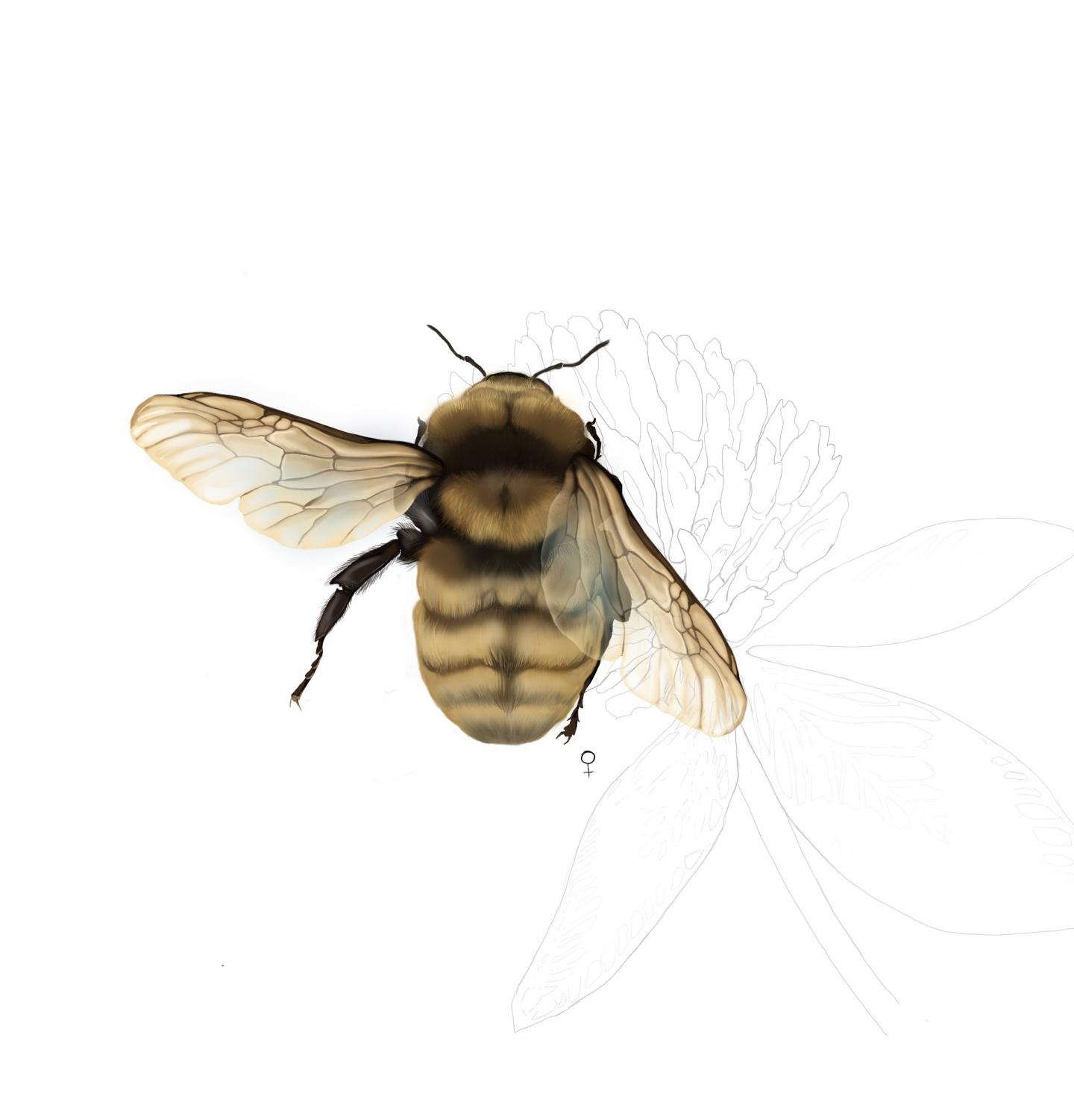
Credit: Denitza Peneva
Insects are the largest taxonomic group in the animal kingdom. Three out of four described animal species belong to the class Insecta. They are widely distributed in terrestrial and aquatic environments. Indispensable to the ecosystem, insects drive key processes such as pollination, decomposition, soil formation and supply an essential part of the food webs.
Yet, insect populations have been catastrophically plummeting. For example, recent studies have shown a decrease of 75% of insect biomass in German Nature Reserves in less than 30 years, and the situation is probably no less dramatic anywhere in Europe. According to the European Red List of threatened species, one in ten bee species and a quarter of all grasshopper species are at risk of extinction. As it becomes clear how dependent on insects our ecosystems and our economy are, people gradually realise the dramatic consequences of insect decline.
One less known aspect of this global crisis is on the agenda today: the shrinking number of insect taxonomists, the scientists on whose highly specialised skills we depend to obtain knowledge on the diversity of organisms. Without taxonomists, no study of species or ecosystems would be possible, as we would not be able to recognise what biodiversity we are losing.
Here is why the European Commission has funded a new project to embark on the pioneer task to assess the status of taxonomic expertise on insects in Europe. A “Red List” of taxonomists will be compiled for the first time for any group of organisms. The effort is being undertaken by a diverse and interdisciplinary team of experts, including the organisation uniting the most important and largest European natural science collections (CETAF) and the world’s authority on assessing the risk of extinction of organisms: IUCN (the International Union for Conservation of Nature).
As with typical European Red List (ERL) assessments, normally applied to species level, the project involves the collection and evaluation of the available information about the number, location, qualification and field of specialisation of insect taxonomists and the application of systematic criteria to assess the risk of their “extinction”. This concept has never been applied to scientists before, but by using the ERL analogy, the project aims to combine those groups of insects and those countries that bear the highest risk of losing the associated taxonomic expertise and potential gaps.
Bringing together individual scientists, research institutions and learned societies from across Europe, the project will compare the trends and pull up recommendations to overcoming the risks, preserving and further evolving the expert capacity of this scientific community. Unlike species extinctions, the loss of taxonomic knowledge is reversible, especially when the needs are clear and the necessary resources are invested in education, training, career development and recognition.
###
Additional information:
CETAF is the European organization of Natural History Museums, Botanic Gardens and Research Centers with their associated natural science collections comprising 71 of the largest taxonomic institutions from 22 European countries (18 EU, 1 EEA and 3 non-EU), gathering expertise of more than 5,000 researchers. Their collections contain a wide range of specimens including animals, plants, fungi and rocks, and genetic resources which are used for scientific research and exhibitions. CETAF aims to promote training, research collaborations and understanding in taxonomy and systematic biology as well as to facilitate access to our natural heritage by sharing the information derived from the collections.
IUCN (the International Union for Conservation of Nature) is a membership Union composed of both government and civil society organisations. It harnesses the experience, resources and reach of its more than 1,400 Member organisations and the input of more than 17,000 experts. This diversity and vast expertise makes IUCN the global authority on the status of the natural world and the measures needed to safeguard it.
Pensoft is an independent academic publishing company and technology provider, well known worldwide for its novel cutting-edge publishing tools, workflows and methods for text and data publishing of journals, books and conference materials. Through its Research and Technical Development department, the company is involved in various research and technology projects. Founded in 1992 “by scientists, for scientists” and initially focusing on book publishing, Pensoft is now a leading publisher of innovative open access journals in taxonomy and biodiversity science.
Media Contact
Iva Kostadinova
[email protected]