• HOME
  • NEWS
  • EXPLORE
    • CAREER
      • Companies
      • Jobs
    • EVENTS
    • iGEM
      • News
      • Team
    • PHOTOS
    • VIDEO
    • WIKI
  • BLOG
  • COMMUNITY
    • FACEBOOK
    • INSTAGRAM
    • TWITTER
Friday, May 15, 2026
BIOENGINEER.ORG
No Result
View All Result
  • Login
  • HOME
  • NEWS
  • EXPLORE
    • CAREER
      • Companies
      • Jobs
        • Lecturer
        • PhD Studentship
        • Postdoc
        • Research Assistant
    • EVENTS
    • iGEM
      • News
      • Team
    • PHOTOS
    • VIDEO
    • WIKI
  • BLOG
  • COMMUNITY
    • FACEBOOK
    • INSTAGRAM
    • TWITTER
  • HOME
  • NEWS
  • EXPLORE
    • CAREER
      • Companies
      • Jobs
        • Lecturer
        • PhD Studentship
        • Postdoc
        • Research Assistant
    • EVENTS
    • iGEM
      • News
      • Team
    • PHOTOS
    • VIDEO
    • WIKI
  • BLOG
  • COMMUNITY
    • FACEBOOK
    • INSTAGRAM
    • TWITTER
No Result
View All Result
Bioengineer.org
No Result
View All Result
Home NEWS Science News Biology

How to choose low glycaemic index (GI) foods? A GI “glossary” of Asian foods released

Bioengineer by Bioengineer
March 3, 2021
in Biology
Reading Time: 3 mins read
0
IMAGE
Share on FacebookShare on TwitterShare on LinkedinShare on RedditShare on Telegram

Singapore research team’s comprehensive study provides the glycaemic index values for a variety of foods that are consumed in non-Western countries, such as Singapore, Malaysia, Thailand, India, China, Japan, South Korea, Middle East and more.
IMAGE

Credit: Agency for Science, Technology and Research (A*STAR), Singapore Institute of Food and Biotechnology Innovation (SIFBI), Clinical Nutrition Research Centre (CNRC)

Professor Christiani Jeyakumar Henry, Senior Advisor of Singapore Institute of Food and Biotechnology Innovation (SIFBI), Agency for Science, Technology and Research (A*STAR) and his team have developed a Glycaemic Index (GI) glossary of non-Western foods. The research paper (attached PDF) was published in Nutrition & Diabetes on 6 Jan 2021: https://doi.org/10.1038/s41387-020-00145-w.

Observational studies have shown that the consumption of low glycaemic index (GI) foods is associated with a lower risk of type 2 diabetes mellitus (T2DM), significantly less insulin resistance and a lower prevalence of the metabolic syndrome. However, most published GI values focus on Western foods with minimal inclusion of other foods from non-Western countries, hence their application is of limited global use.

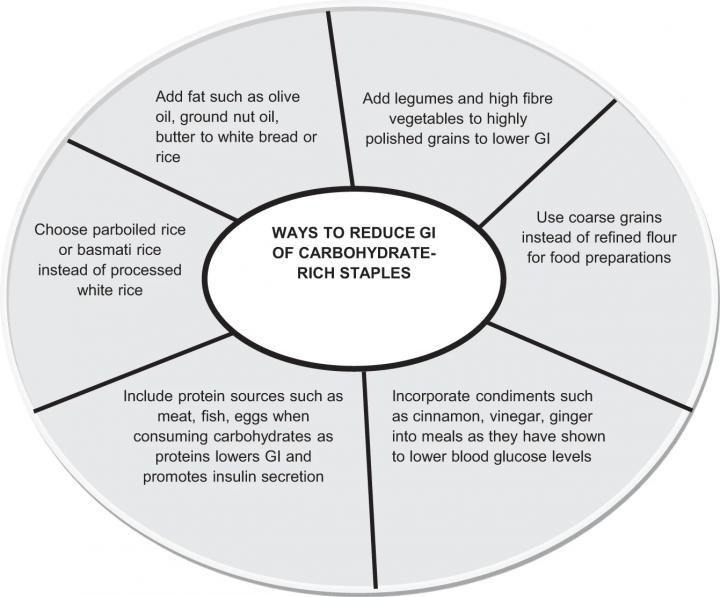
The team’s comprehensive study provides the GI values for a variety of foods that are consumed in non-Western countries, such as Singapore, Malaysia, Thailand, India, China, Japan, South Korea, Middle East and more. The review extends and expands on the current GI tables to widen its application globally. The GI data compiled consists of both single and mixed meals. This is a major advance to many GI tables that have focused on single foods. Mixed meals in Asia are complex in relation to ingredients used and taste. Given the complexity, the inclusion of the GI of mixed meals is a major advantage. It is hoped that this compendium will highlight ways to reduce the GI of carbohydrate-rich staples and enhance the use of GI tables for a worldwide audience.

###

About the Agency for Science, Technology and Research (A*STAR)

The Agency for Science, Technology and Research (A*STAR) is Singapore’s lead public sector agency that spearheads economic oriented research to advance scientific discovery and develop innovative technology. Through open innovation, we collaborate with our partners in both the public and private sectors to benefit society

As a Science and Technology Organisation, A*STAR bridges the gap between academia and industry. Our research creates economic growth and jobs for Singapore, and enhances lives by contributing to societal benefits such as improving outcomes in healthcare, urban living, and sustainability.

We play a key role in nurturing and developing a diversity of talent and leaders in our Agency and research entities, the wider research community and industry. A*STAR’s R&D activities span biomedical sciences and physical sciences and engineering, with research entities primarily located in Biopolis and Fusionopolis.

For ongoing news, visit http://www.a-star.edu.sg.

Media Contact
Claire Ng
[email protected]

Original Source

https://www.nature.com/articles/s41387-020-00145-w

Related Journal Article

http://dx.doi.org/10.1038/s41387-020-00145-w.

Tags: DiabetesDiet/Body WeightFood/Food ScienceMedicine/HealthMetabolism/Metabolic DiseasesNutrition/Nutrients
Share13Tweet8Share2ShareShareShare2

Related Posts

61 Newly Discovered Beetle Species Highlight How Much We Still Have to Learn About Biodiversity — Biology

61 Newly Discovered Beetle Species Highlight How Much We Still Have to Learn About Biodiversity

May 15, 2026
Supercomputer Simulations Uncover How Bacterial Enzyme Pumps Sodium Ions, Opening Doors to Novel Antibiotics — Biology

Supercomputer Simulations Uncover How Bacterial Enzyme Pumps Sodium Ions, Opening Doors to Novel Antibiotics

May 15, 2026

New Astrobiology Special Collection Highlights Emerging Evidence Supporting Land-Based Origins of Life

May 14, 2026

Revolutionizing Textiles: Engineered Protein Fibers Pave the Way for Sustainable, Recyclable Fabrics

May 14, 2026
Please login to join discussion

POPULAR NEWS

  • Research Indicates Potential Connection Between Prenatal Medication Exposure and Elevated Autism Risk

    843 shares
    Share 337 Tweet 211
  • New Study Reveals Plants Can Detect the Sound of Rain

    729 shares
    Share 291 Tweet 182
  • Salmonella Haem Blocks Macrophages, Boosts Infection

    62 shares
    Share 25 Tweet 16
  • Breastmilk Balances E. coli and Beneficial Bacteria in Infant Gut Microbiomes

    58 shares
    Share 23 Tweet 15

About

We bring you the latest biotechnology news from best research centers and universities around the world. Check our website.

Follow us

Recent News

Autism Subtypes Revealed Through Cross-Species Brain Mapping

Synthetic Cell Microreactor with Dual Dynamic DNA Pores

Key Drivers of Energy Policy Support in Europe

Subscribe to Blog via Email

Enter your email address to subscribe to this blog and receive notifications of new posts by email.

Join 82 other subscribers
  • Contact Us

Bioengineer.org © Copyright 2023 All Rights Reserved.

Welcome Back!

Login to your account below

Forgotten Password?

Retrieve your password

Please enter your username or email address to reset your password.

Log In
No Result
View All Result
  • Homepages
    • Home Page 1
    • Home Page 2
  • News
  • National
  • Business
  • Health
  • Lifestyle
  • Science

Bioengineer.org © Copyright 2023 All Rights Reserved.