Credit: Khademhosseini Lab
(LOS ANGELES) – Although one may think of psychedelic pharmaceuticals as being dangerous and detrimental, scientists have been conducting experiments and clinical trials on some of them and have obtained positive results when testing them for medical use. Research has shown that drugs such as MDMA (a type of methamphetamine), LSD and psilocybin (“magic mushrooms”) can be of benefit in treating severe pain, anxiety, depression and certain mental illnesses. Successful outcomes have been achieved when using psychedelics for treating conditions such as post-traumatic stress disorder and addictions to alcohol and smoking, for example. In many cases, these treatments have benefited individuals who had unsuccessfully tried to treat their conditions by other methods.
Experts have cautioned, however, that treatments using psychedelic pharmaceuticals must be administered under very carefully controlled conditions, with dosages precisely monitored and given in a prescribed manner. A drug delivery system that can fulfill these needs would offer a clear advantage over standard methods such as oral administration, injections or topical and nasal delivery.
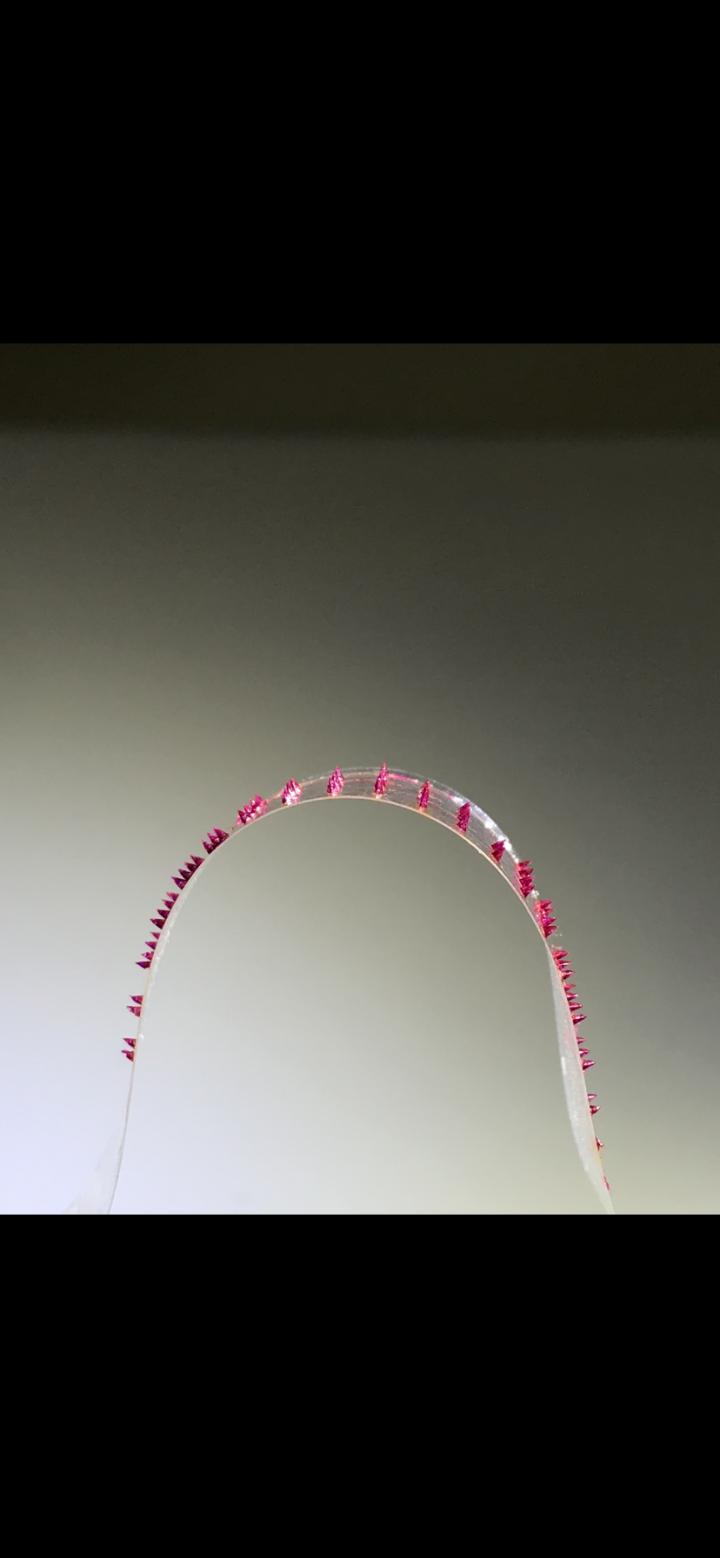
The Terasaki Institute for Biomedical Innovation (TIBI) offers a microneedle patch for drug delivery that can be finely tuned for dosage and timed release. The patch is made from a gelatinous substance and contains tiny microneedles on one surface which would include the drug or combination of drugs to be administered. Upon application to the skin, the microneedles penetrate the surface and then biodegrade, releasing their drug loads beneath the surface in a controlled manner.
The researchers at TIBI have designed their microneedle patches for a variety of uses, including drug delivery and for both gene and stem cell therapies. “Our microneedle technology enables one to deliver medications and treatments in a safe, easy, painless and minimally-invasive manner, said Ali Khademhosseini, Ph.D., TIBI’s director and CEO. “It also allows for controllable delivery, using materials that are highly biocompatible and biodegradable.”
TIBI has recently partnered with Pharma Ther, Inc., to develop microneedle patches specifically for delivery of psychedelic pharmaceuticals for medical needs. Pharma Ther is a specialty life sciences company focused on the research and development of psychedelic pharmaceuticals; they will work with TIBI to develop the patches for use of their products in alternative treatment approaches.
“We are excited to work with the Terasaki Institute and the inventors of the GelMA delivery technology, as it enables a solid foundation to expedite the product, and clinical development for a first-of-a-kind microdosing delivery system to treat serious unmet medical needs,” said Fabio Chianelli, CEO of PharmaTher. “Our focus is pursuing prescription-based psychedelic pharmaceuticals for FDA and international regulatory approval and unlocking the potential therapeutic value of these compounds via TIBI’s microneedle patch.”
###
PRESS CONTACT
Stewart Han,
[email protected]
+1 818-836-4393
Terasaki Institute for Biomedical Innovation
The Terasaki Institute for Biomedical Innovation (terasaki.org) is a non-profit research organization that invents and fosters practical solutions that restore or enhance the health of individuals. Research at the Terasaki Institute leverages scientific advancements that enable an understanding of what makes each person unique, from the macroscale of human tissues down to the microscale of genes, to create technological solutions for some of the most pressing medical problems of our time. We use innovative technology platforms to study human disease on the level of individual patients by incorporating advanced computational and tissue-engineering methods. Findings yielded by these studies are translated by our research teams into tailored diagnostic and therapeutic approaches encompassing personalized materials, cells and implants with unique potential and broad applicability to a variety of diseases, disorders and injuries.
The Institute is made possible through an endowment from the late Dr. Paul I. Terasaki, a pioneer in the field of organ transplant technology.
Media Contact
Stewart Han
[email protected]
Original Source
https:/