• HOME
  • NEWS
  • EXPLORE
    • CAREER
      • Companies
      • Jobs
    • EVENTS
    • iGEM
      • News
      • Team
    • PHOTOS
    • VIDEO
    • WIKI
  • BLOG
  • COMMUNITY
    • FACEBOOK
    • INSTAGRAM
    • TWITTER
Saturday, February 7, 2026
BIOENGINEER.ORG
No Result
View All Result
  • Login
  • HOME
  • NEWS
  • EXPLORE
    • CAREER
      • Companies
      • Jobs
        • Lecturer
        • PhD Studentship
        • Postdoc
        • Research Assistant
    • EVENTS
    • iGEM
      • News
      • Team
    • PHOTOS
    • VIDEO
    • WIKI
  • BLOG
  • COMMUNITY
    • FACEBOOK
    • INSTAGRAM
    • TWITTER
  • HOME
  • NEWS
  • EXPLORE
    • CAREER
      • Companies
      • Jobs
        • Lecturer
        • PhD Studentship
        • Postdoc
        • Research Assistant
    • EVENTS
    • iGEM
      • News
      • Team
    • PHOTOS
    • VIDEO
    • WIKI
  • BLOG
  • COMMUNITY
    • FACEBOOK
    • INSTAGRAM
    • TWITTER
No Result
View All Result
Bioengineer.org
No Result
View All Result
Home NEWS Science News

Turf wars: Ocean acidification and feedback loops lock in turf algal systems

Bioengineer by Bioengineer
February 18, 2021
in Science News
Reading Time: 2 mins read
0
IMAGE
Share on FacebookShare on TwitterShare on LinkedinShare on RedditShare on Telegram

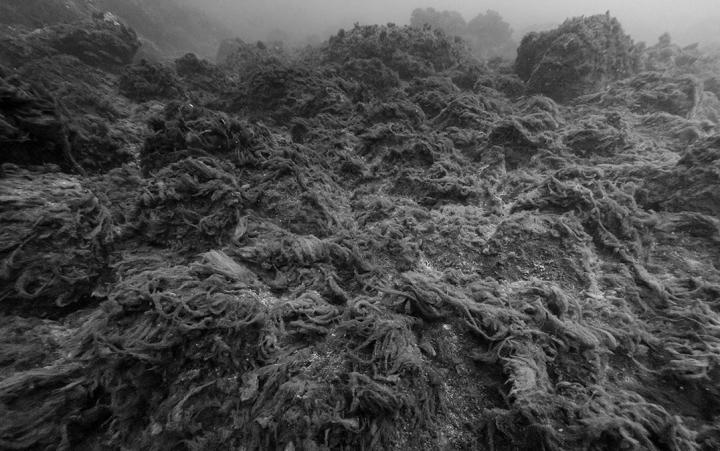
Researchers from the University of Tsukuba find that in the presence of ocean acidification, feedback loops keep degraded turf algal states stabilized, inhibiting the recruitment of coral and other algae
IMAGE

Credit: Copyright – Nicholas Floch

Tsukuba, Japan – It’s tough out there in the sea, as the widespread loss of complex marine communities is testament to. Researchers from Japan have discovered that ocean acidification favors degraded turf algal systems over corals and other algae, thanks to the help of feedback loops.

In a study published this month in Communications Biology, researchers from the University of Tsukuba have revealed that ocean acidification and feedback loops stabilize degraded turf algal systems, limiting the recruitment of coral and other algae.

Oceans are undergoing widespread changes as a result of human activities. These changes take the form of regime shifts – major, sudden and persistent changes in ecosystem structure and function. An example is the replacement of coral reefs and kelp forests with degraded turf algae communities. These shifts result in the loss of not only marine biodiversity, but also ecosystem services, which are of value to humans and contribute to their wellbeing.

“We looked at whether the turf algal state is being maintained by stabilizing feedback loops and hysteresis,” says lead author of the study Professor Ben P. Harvey. “We predicted that certain changes in the physical/chemical environment and microbial community may prevent other large algae species from establishing, and function as a feedback loop that supports turf algal persistence.”

Feedback loops (control mechanisms in a system) are important in regime shifts because of their ability to both stabilize and de-stabilize states in ecosystems. Hysteresis is the circumstance in which a system has passed a tipping point and moved into a new state, and the original state cannot simply be recovered by reversing the environmental conditions. Instead, the conditions must be reversed past the tipping point. Feedback loops are necessary for hysteresis to occur.

“We found that ocean acidification favors turf algae over corals and other large algae species” says Harvey. “Our results also suggest that hysteresis may be exhibited by this ecological shift – in which case it would be especially difficult to turn around.”

This work contributes to an understanding of the processes underlying coastal regime shifts. Knowledge of how marine ecosystems are stabilized by species interactions is needed to mitigate or reverse these shifts, which are predicted to increase as a result of local and global causes. Such work will help to provide for improved science-based adaptive management of these shifts to better conserve coastal ecosystem services.

###

The article, “Feedback mechanisms stabilise degraded turf algal systems at a CO2 seep site,” was published in Communications Biology at DOI: 10.1038/s42003-021-01712-2

Media Contact
Naoko Yamashina
[email protected]

Related Journal Article

http://dx.doi.org/10.1038/s42003-021-01712-2

Tags: BiodiversityBiologyClimate ChangeEcology/EnvironmentMarine/Freshwater Biology
Share12Tweet8Share2ShareShareShare2

Related Posts

Boosting Remote Healthcare: Stepped-Wedge Trial Insights

February 7, 2026

Barriers and Boosters of Seniors’ Physical Activity in Karachi

February 7, 2026

Evaluating Pediatric Emergency Care Quality in Ethiopia

February 7, 2026

TPMT Expression Predictions Linked to Azathioprine Side Effects

February 7, 2026
Please login to join discussion

POPULAR NEWS

  • Robotic Ureteral Reconstruction: A Novel Approach

    Robotic Ureteral Reconstruction: A Novel Approach

    82 shares
    Share 33 Tweet 21
  • Digital Privacy: Health Data Control in Incarceration

    63 shares
    Share 25 Tweet 16
  • Study Reveals Lipid Accumulation in ME/CFS Cells

    57 shares
    Share 23 Tweet 14
  • Breakthrough in RNA Research Accelerates Medical Innovations Timeline

    53 shares
    Share 21 Tweet 13

About

We bring you the latest biotechnology news from best research centers and universities around the world. Check our website.

Follow us

Recent News

Boosting Remote Healthcare: Stepped-Wedge Trial Insights

Barriers and Boosters of Seniors’ Physical Activity in Karachi

Evaluating Pediatric Emergency Care Quality in Ethiopia

Subscribe to Blog via Email

Enter your email address to subscribe to this blog and receive notifications of new posts by email.

Join 73 other subscribers
  • Contact Us

Bioengineer.org © Copyright 2023 All Rights Reserved.

Welcome Back!

Login to your account below

Forgotten Password?

Retrieve your password

Please enter your username or email address to reset your password.

Log In
No Result
View All Result
  • Homepages
    • Home Page 1
    • Home Page 2
  • News
  • National
  • Business
  • Health
  • Lifestyle
  • Science

Bioengineer.org © Copyright 2023 All Rights Reserved.