• HOME
  • NEWS
  • EXPLORE
    • CAREER
      • Companies
      • Jobs
    • EVENTS
    • iGEM
      • News
      • Team
    • PHOTOS
    • VIDEO
    • WIKI
  • BLOG
  • COMMUNITY
    • FACEBOOK
    • INSTAGRAM
    • TWITTER
Thursday, January 1, 2026
BIOENGINEER.ORG
No Result
View All Result
  • Login
  • HOME
  • NEWS
  • EXPLORE
    • CAREER
      • Companies
      • Jobs
        • Lecturer
        • PhD Studentship
        • Postdoc
        • Research Assistant
    • EVENTS
    • iGEM
      • News
      • Team
    • PHOTOS
    • VIDEO
    • WIKI
  • BLOG
  • COMMUNITY
    • FACEBOOK
    • INSTAGRAM
    • TWITTER
  • HOME
  • NEWS
  • EXPLORE
    • CAREER
      • Companies
      • Jobs
        • Lecturer
        • PhD Studentship
        • Postdoc
        • Research Assistant
    • EVENTS
    • iGEM
      • News
      • Team
    • PHOTOS
    • VIDEO
    • WIKI
  • BLOG
  • COMMUNITY
    • FACEBOOK
    • INSTAGRAM
    • TWITTER
No Result
View All Result
Bioengineer.org
No Result
View All Result
Home NEWS Science News

Fishes contribute roughly 1.65 billion tons of carbon in feces and other matter annually

Bioengineer by Bioengineer
February 18, 2021
in Science News
Reading Time: 2 mins read
0
IMAGE
Share on FacebookShare on TwitterShare on LinkedinShare on RedditShare on Telegram

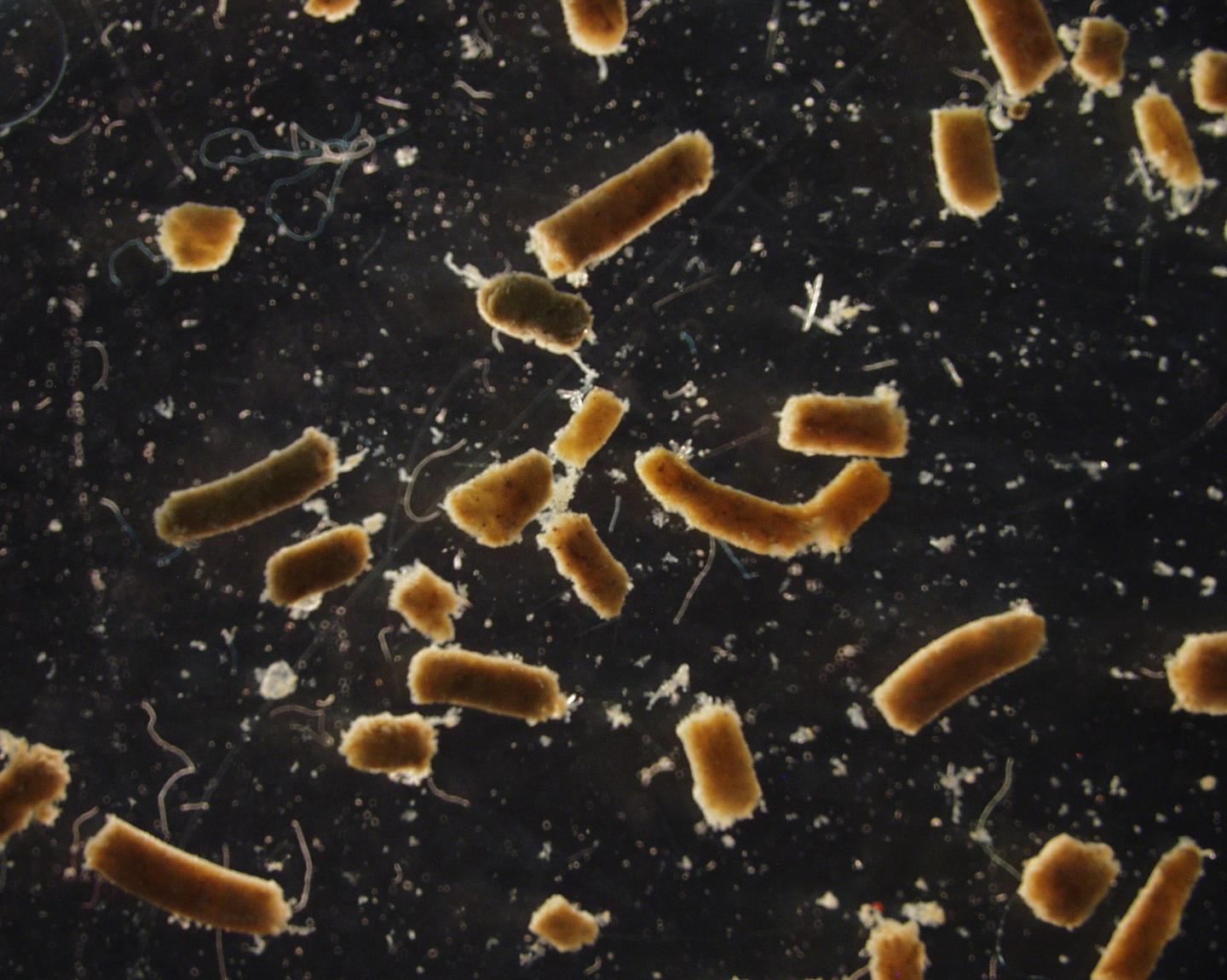
Study estimates fishes contribute about 16 percent of the sinking carbon in upper ocean waters
IMAGE

Credit: Grace Saba

Scientists have little understanding of the role fishes play in the global carbon cycle linked to climate change, but a Rutgers-led study found that carbon in feces, respiration and other excretions from fishes – roughly 1.65 billion tons annually – make up about 16 percent of the total carbon that sinks below the ocean’s upper layers.

Better data on this key part of the Earth’s biological pump will help scientists understand the impact of climate change and seafood harvesting on the role of fishes in carbon flux, according to the study – the first of its kind – in the journal Limnology and Oceanography. Carbon flux means the movement of carbon in the ocean, including from the surface to the deep sea – the focus of this study.

“Our study is the first to review the impact that fishes have on carbon flux,” said lead author Grace K. Saba, an assistant professor in the Center for Ocean Observing Leadership in the Department of Marine and Coastal Sciences in the School of Environmental and Biological Sciences at Rutgers University-New Brunswick. “Our estimate of the contribution by fish – about 16 percent – includes a large uncertainty, and scientists can improve it with future research. Forms of carbon from fish in ocean waters where sunlight penetrates – up to about 650 feet deep – include sinking fecal pellets, inorganic carbon particles (calcium carbonate minerals), dissolved organic carbon and respired carbon dioxide.”

The ocean plays a vital role in the Earth’s carbon cycle by exchanging carbon dioxide, a key greenhouse gas linked to global warming and climate change, with the atmosphere. Carbon dioxide absorbed by the ocean is taken up by phytoplankton (algae), small single-celled plants at the ocean’s surface. Through an important process called the biological pump, this organic carbon can go from the surface to ocean depths when algal material or fecal pellets from fishes and other organisms sink. The daily migration of fishes to and from the depths also contributes organic carbon particles, along with excreted and respired material. Another factor is mixing of ocean waters.

“Carbon that makes its way below the sunlit layer becomes sequestered, or stored, in the ocean for hundreds of years or more, depending on the depth and location where organic carbon is exported,” Saba said. “This natural process results in a sink that acts to balance the sources of carbon dioxide.”

###

Scientists at many institutions contributed to the study, which is a product of the Fish Carbon Working Group led by Saba since 2018 and funded by the Ocean Carbon and Biogeochemistry program, which is supported by the National Science Foundation and National Aeronautics and Space Administration.

Media Contact
Todd Bates
[email protected]

Original Source

https://www.rutgers.edu/news/fishes-contribute-roughly-165-billion-tons-carbon-feces-and-other-matter-annually

Related Journal Article

http://dx.doi.org/10.1002/lno.11709

Tags: BiologyClimate ChangeEcology/EnvironmentFisheries/AquacultureMarine/Freshwater BiologyOceanographyPollution/Remediation
Share12Tweet8Share2ShareShareShare2

Related Posts

blank

FACEing Advances: Single-Pixel Complex-Field Microscopy Beyond Visible

January 1, 2026

AI Classifies Tumor-Infiltrating Lymphocytes in Breast Cancer

January 1, 2026

Breakthroughs in 3D Photonic Waveguide Couplers

January 1, 2026

Transforming Allied Health: Effective Co-Designed Placement Models

January 1, 2026
Please login to join discussion

POPULAR NEWS

  • blank

    PTSD, Depression, Anxiety in Childhood Cancer Survivors, Parents

    111 shares
    Share 44 Tweet 28
  • NSF funds machine-learning research at UNO and UNL to study energy requirements of walking in older adults

    71 shares
    Share 28 Tweet 18
  • Exploring Audiology Accessibility in Johannesburg, South Africa

    52 shares
    Share 21 Tweet 13
  • SARS-CoV-2 Subvariants Affect Outcomes in Elderly Hip Fractures

    44 shares
    Share 18 Tweet 11

About

We bring you the latest biotechnology news from best research centers and universities around the world. Check our website.

Follow us

Recent News

FACEing Advances: Single-Pixel Complex-Field Microscopy Beyond Visible

AI Classifies Tumor-Infiltrating Lymphocytes in Breast Cancer

Breakthroughs in 3D Photonic Waveguide Couplers

Subscribe to Blog via Email

Enter your email address to subscribe to this blog and receive notifications of new posts by email.

Join 71 other subscribers
  • Contact Us

Bioengineer.org © Copyright 2023 All Rights Reserved.

Welcome Back!

Login to your account below

Forgotten Password?

Retrieve your password

Please enter your username or email address to reset your password.

Log In
No Result
View All Result
  • Homepages
    • Home Page 1
    • Home Page 2
  • News
  • National
  • Business
  • Health
  • Lifestyle
  • Science

Bioengineer.org © Copyright 2023 All Rights Reserved.