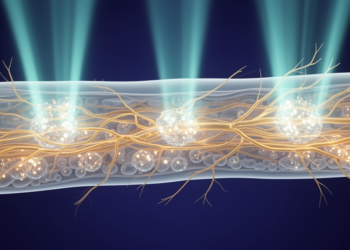
New strategy boosts the performance of membranes for filtering CO2 from industrial emissions

Credit: Chris LeBoutillier on Pexels
One of humanity’s biggest challenges right now is reducing our emissions of greenhouse gases into the atmosphere. Research groups worldwide are trying to find ways to efficiently separate carbon dioxide (CO2) from the mixture of gases emitted from industrial plants and power stations. Among the many strategies for accomplishing this, membrane separation is an attractive, inexpensive option; it involves using polymer membranes that selectively filter CO2 from a mix of gases.
Recent studies have focused on adding low amounts of metal-organic frameworks (MOFs) into polymer matrices to enhance their properties. MOFs are compounds made of a metallic center bonded to organic molecules in a very orderly fashion, producing porous crystals. When added to polymer membranes, MOFs can enhance their gas separation performance as well as their stability and tolerance to harsh conditions. However, one of the main issues of integrating MOFs into polymer membranes is finding compatible compounds with favorable interactions, such as covalent bonds. Unfortunately, those which have been tried require very expensive synthesis and materials.
To tackle this issue, an international team of scientists recently conducted a study that was published in ACS Applied Materials & Interfaces. Led by Professor Tae-Hyun Kim from Incheon National University, Korea, the scientists focused on incorporating a zirconium-based MOF called ‘UiO-66’ into a multi-polymer matrix they had previously developed. They achieved this by modifying the MOFs so that they would readily form covalent bonds with the main strands of the polymer matrix.
The scientists synthesized UiO-66-NB, which is UiO-66 with norbornene units, a small organic molecule. Through a simple synthesis process, norbornene units can become links in the main polymer chains of the matrix. In this way, the norbornene in UiO-66-NB incorporates the MOFs into the matrix, as Prof. Kim explains, “Instead of simply blending the MOFs and polymers, we found a new and efficient method for incorporating MOFs into the polymer matrix via covalent bonds; this strengthens the interactions at the interfaces of both compounds and creates defect-free polymer matrices.”
The characteristics and performance of the MOF-filled polymer membranes were outstanding: their permeability towards CO2 was enhanced without significantly compromising its selectivity. Their CO2/N2 separation performance approached the theoretical Robeson upper bound set in 2019. Additionally, the membranes were not only remarkably tolerant to harsh conditions such as high pressure or temperature switching, but also very stable over long periods of time of almost a year.
These achievements are a step in the right direction toward removing the barriers for commercialization that these polymer membranes face for industrial applications. Excited about the results, Prof. Kim remarks, “We believe our findings will open up new strategies to assess potential interfaces between MOFs and polymer matrices for high-performance gas separation.”
Let us hope this technology keeps evolving so that we can keep excess CO2 away from our atmosphere!
###
Reference
Authors: Iqubal Hossain (1), Asmaul Husna (1), Somboon Chaemchuen (2), Francis Verpoort (3), and Tae-Hyun Kim (1)
Title of original paper: Cross-Linked Mixed-Matrix Membranes Using Functionalized UiO-66-NH2 into PEG/PPG?PDMS-Based Rubbery Polymer for Efficient CO2 Separation
Journal: ACS Applied Materials & Interfaces
DOI: 10.1021/acsami.0c18415
Affiliations:
(1) Organic Material Synthesis Laboratory, Department of Chemistry, Incheon National University
(2) State Key Laboratory of Advanced Technology for Materials Synthesis and Processing, Wuhan University of Technology
(3) Department of Chemistry, Ghent University
About Incheon National University
Incheon National University (INU) is a comprehensive, student-focused university. It was founded in 1979 and given university status in 1988. One of the largest universities in South Korea, it houses nearly 14,000 students and 500 faculty members. In 2010, INU merged with Incheon City College to expand capacity and open more curricula. With its commitment to academic excellence and an unrelenting devotion to innovative research, INU offers its students real-world internship experiences. INU not only focuses on studying and learning but also strives to provide a supportive environment for students to follow their passion, grow, and, as their slogan says, be INspired.
Website: http://www.
About the author
Dr. Tae-Hyun Kim is a Chemistry Professor at Incheon National University (INU), Korea. He is also the director of the Research Institute of Basic Sciences at INU. Prof Kim received a Ph.D. in Chemistry from Cambridge University, UK and conducted his post-doctoral research at MIT, USA. Before joining INU, he was a senior research associate at Eastman Chemical Co., US. His research interests lie in the development of organic materials for various applications, including fuel cells, lithium batteries, water electrolysis, and gas separation. He has authored over 120 SCI journal articles and holds more than 50 patents. He loves teaching and communicating with his students.
Media Contact
Tae-Hyun Kim
tkim@inu.ac.kr
Original Source
http://www.
Related Journal Article
http://dx.