Emerging technologies harnessed to develop a faster, cheaper, and more accurate test for these hard-to-diagnose tumors, researchers report in The Journal of Molecular Diagnostics
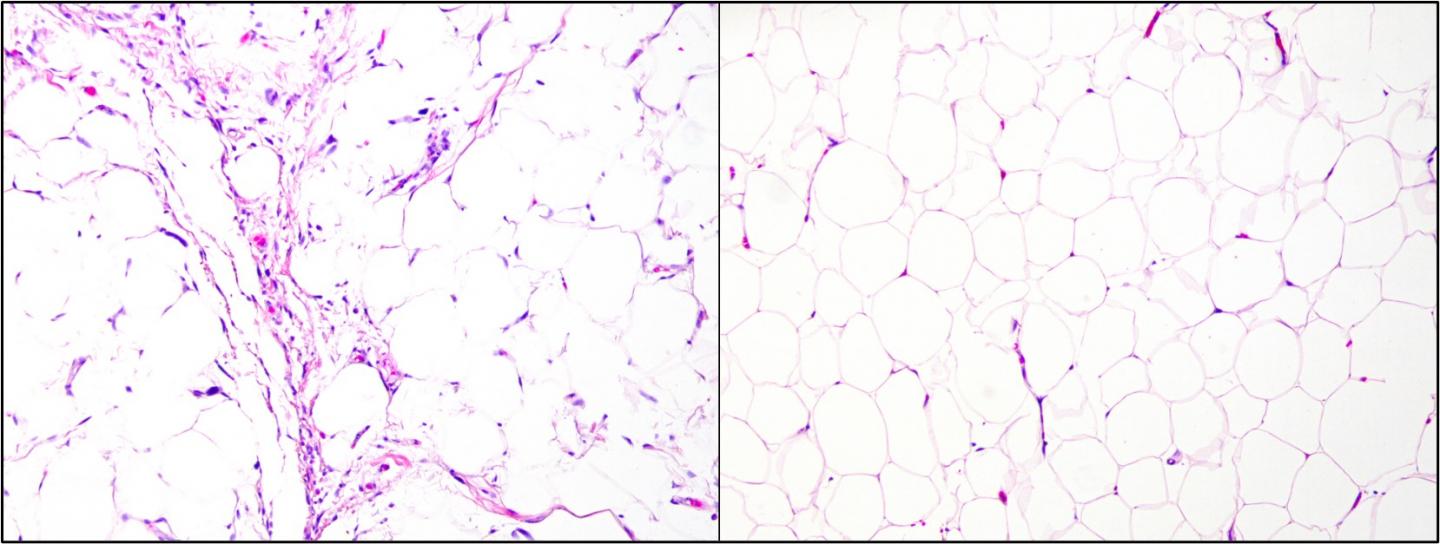
Credit: Tony Ng, MD, PhD, The University of British Columbia
Philadelphia, February 4, 2021 – Researchers have leveraged the latest advances in RNA technology and machine learning methods to develop a gene panel test that allows for highly accurate diagnosis of the most common types of liposarcoma. It quickly and reliably distinguishes benign lipomas from liposarcomas and can be performed in laboratories at a lower cost than current “gold standard” tests. The new assay is described in The Journal of Molecular Diagnosis, published by Elsevier.
“Liposarcomas are a type of malignant cancer that is difficult to diagnose because, even under a microscope, it is hard to differentiate liposarcomas from benign tumors or other types of cancer that need different treatments,” explains lead investigator Torsten Owen Nielsen, MD, PhD, Genetic Pathology Evaluation Centre, Department of Pathology and Laboratory Medicine, University of British Columbia, Vancouver, Canada. “Many liposarcomas look like their benign and relatively common counterparts, lipomas. Diagnostic delay and uncertainty cause severe stress for patients, and misdiagnosis can have many consequences including delayed or inadequate treatment or unnecessary surgical procedures and long-term postoperative follow up.”
Among the current recommended diagnostic tests for liposarcomas, immunohistochemistry (IHC) is inaccurate and hard to interpret, and fluorescence in situ hybridization (FISH) is relatively expensive, as well as labor- and equipment-intensive. In this study, investigators explored whether NanoString technology, ideal for analyzing even poor-quality RNA, could allow for more rapid and cost-efficient diagnosis of liposarcomas through gene expression.
The investigators utilized data from the Cancer Genome Atlas, a catalog of genetic information from over 20,000 cancer samples, to identify the 20 most common genes that are overexpressed in liposarcomas. Probes for these genes were designed by NanoString bioinformatics and run on a set of “training samples” that included lipomas and liposarcomas. Analysis of the NanoString results showed clear separation of lipoma from liposarcoma cases.
A machine learning model was developed to determine the probability that a given sample was positive for liposarcoma and was then applied to 45 retrospective cases to determine boundaries for positive and negative predictions. The test was subsequently applied in a real-world clinical setting. A molecular technologist with no knowledge of the clinical, histologic, IHC, or FISH information about the cases was asked to identify each sample as liposarcoma or not liposarcoma from the NanoString test results. The same samples were examined by specialist pathologists using standard testing.
The retrospective and prospective cases probed by the NanoString assay had a 93 percent success rate and agreed with standard tests 97.8 percent of the time. Results from the NanoString assay were available in 36 hours, whereas it took between one to two weeks to get FISH results. NanoString costs amounted to US$270 per case, factoring in reagents, labor, and equipment maintenance.
Advances in biotechnology have shown great promise in other cancers such as breast cancer. “We applied these new technologies to improve patient care in areas where existing diagnostic methods were inaccurate, slow, or costly and saw substantial improvements. There is no patent on this test; anyone can apply the method we describe, and we are happy to help others get set up to run it at their own institution,” says Dr. Nielsen.
First author Xiu Qing (Jenny) Wang, a fourth year medical student at the University of British Columbia, adds that accurate and fast diagnosis can be critical for patients who are dealing with what are often difficult and quite large tumors. “I am proud to be part of a team that has made significant progress in bringing this test closer to clinical reality.”
This group previously published a NanoString-based assay for sarcomas bearing diagnostic fusion oncogenes, which is now in clinical use. However, the most common type of liposarcoma carries a different type of mutation (gene amplifications) and so was not covered. Thus, the current study not only expands the types of sarcoma that can be diagnosed accurately with NanoString-based diagnostics, but also shows how a different category of mutation can be detected. This strategy may help develop diagnostics for other types of cancer.
###
Media Contact
Eileen Leahy
[email protected]
Original Source
https:/
Related Journal Article
http://dx.