Credit: NIH
WHAT:
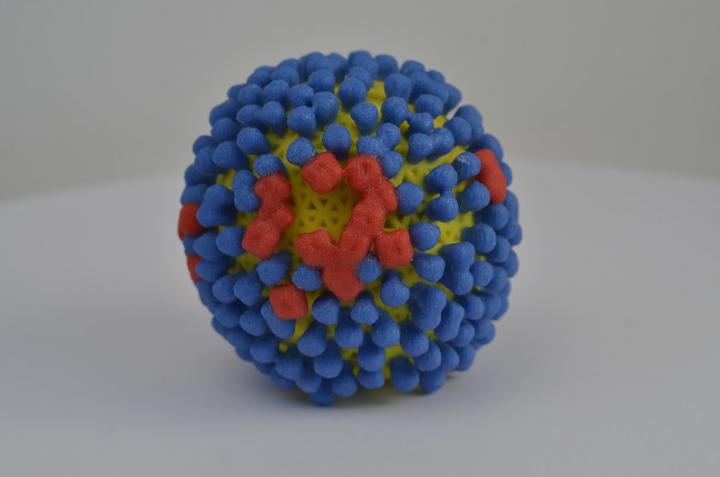
An experimental single-dose, intranasal influenza vaccine was safe and produced a durable immune response when tested in a Phase 1 study published in the Journal of Clinical Investigation. The investigational vaccine, called Ad4-H5-VTN, is a recombinant, replicating adenovirus vaccine designed to spur antibodies to hemagglutinin, a protein found on the surface of influenza viruses that attaches to human cells.
The investigational vaccine was developed by Emergent Biosolutions Inc., (Gaithersburg, Maryland). It was administered intranasally (28 study participants), as an oral capsule (10 participants) and via a tonsillar swab (25 participants) to healthy men and non-pregnant women ages 18 to 49 years.
The participants who received the vaccine intranasally or via tonsillar swab showed significantly higher H5-specific neutralizing antibody levels compared to the group receiving the vaccine capsule orally. The participants who received the intranasal vaccine shed viral DNA for two-to-four weeks, but virus could be cultured for a median of only one day. Participants had evidence of H5-specific CD4+ and CD8+ T-cell responses. Additionally, volunteers who received the intranasal vaccine had high levels of serum neutralizing antibodies at 26 weeks after vaccination, and this level was unchanged at three to five years after a single intranasal dose of the vaccine. The duration of viral shedding correlated with a high magnitude of neutralizing antibody response at week 26. In addition, the intranasal vaccine induced a mucosal antibody response in the nose, mouth, and rectum.
The study authors speculate that replication-competent vector vaccines may have advantages over other types of vaccines because they can express viral proteins at higher levels and for longer durations. Additionally, this type of vaccine induces a mucosal immune response that is critical for limiting transmission of viruses that infect mucosal tissues.
The vaccine platform could be highly adaptable for use against other viruses including HIV and SARS-CoV-2, according to the authors.
###
ARTICLE:
K Matsuda et al. A Replication Competent Adenovirus-Vectored Influenza Vaccine Induces Durable Systemic and Mucosal Immunity. Journal of Clinical Investigation DOI: 10.1172/JCI140794 (2021).
WHO:
Mark Connors, M.D., chief of the HIV-specific Immunity Section in NIAID’s Laboratory of Immunoregulation and principal investigator for the Phase 1 study, is available for interviews.
CONTACT:
To schedule interviews, please contact NIAID News Office, (301) 402-1663, niaidnews.niaid.nih.gov.
NIAID conducts and supports research–at NIH, throughout the United States, and worldwide–to study the causes of infectious and immune-mediated diseases, and to develop better means of preventing, diagnosing and treating these illnesses. News releases, fact sheets and other NIAID-related materials are available on the NIAID website.
About the National Institutes of Health (NIH):
NIH, the nation’s medical research agency, includes 27 Institutes and Centers and is a component of the U.S. Department of Health and Human Services. NIH is the primary federal agency conducting and supporting basic, clinical, and translational medical research, and is investigating the causes, treatments, and cures for both common and rare diseases. For more information about NIH and its programs, visit http://www.
Media Contact
NIAID Office of Communications
[email protected]
Related Journal Article
http://dx.