• HOME
  • NEWS
  • EXPLORE
    • CAREER
      • Companies
      • Jobs
    • EVENTS
    • iGEM
      • News
      • Team
    • PHOTOS
    • VIDEO
    • WIKI
  • BLOG
  • COMMUNITY
    • FACEBOOK
    • INSTAGRAM
    • TWITTER
Saturday, February 7, 2026
BIOENGINEER.ORG
No Result
View All Result
  • Login
  • HOME
  • NEWS
  • EXPLORE
    • CAREER
      • Companies
      • Jobs
        • Lecturer
        • PhD Studentship
        • Postdoc
        • Research Assistant
    • EVENTS
    • iGEM
      • News
      • Team
    • PHOTOS
    • VIDEO
    • WIKI
  • BLOG
  • COMMUNITY
    • FACEBOOK
    • INSTAGRAM
    • TWITTER
  • HOME
  • NEWS
  • EXPLORE
    • CAREER
      • Companies
      • Jobs
        • Lecturer
        • PhD Studentship
        • Postdoc
        • Research Assistant
    • EVENTS
    • iGEM
      • News
      • Team
    • PHOTOS
    • VIDEO
    • WIKI
  • BLOG
  • COMMUNITY
    • FACEBOOK
    • INSTAGRAM
    • TWITTER
No Result
View All Result
Bioengineer.org
No Result
View All Result
Home NEWS Science News Health

“Genetic SD-card”: Scientists obtained new methods to improve the genome editing system

Bioengineer by Bioengineer
February 2, 2021
in Health
Reading Time: 2 mins read
0
IMAGE
Share on FacebookShare on TwitterShare on LinkedinShare on RedditShare on Telegram

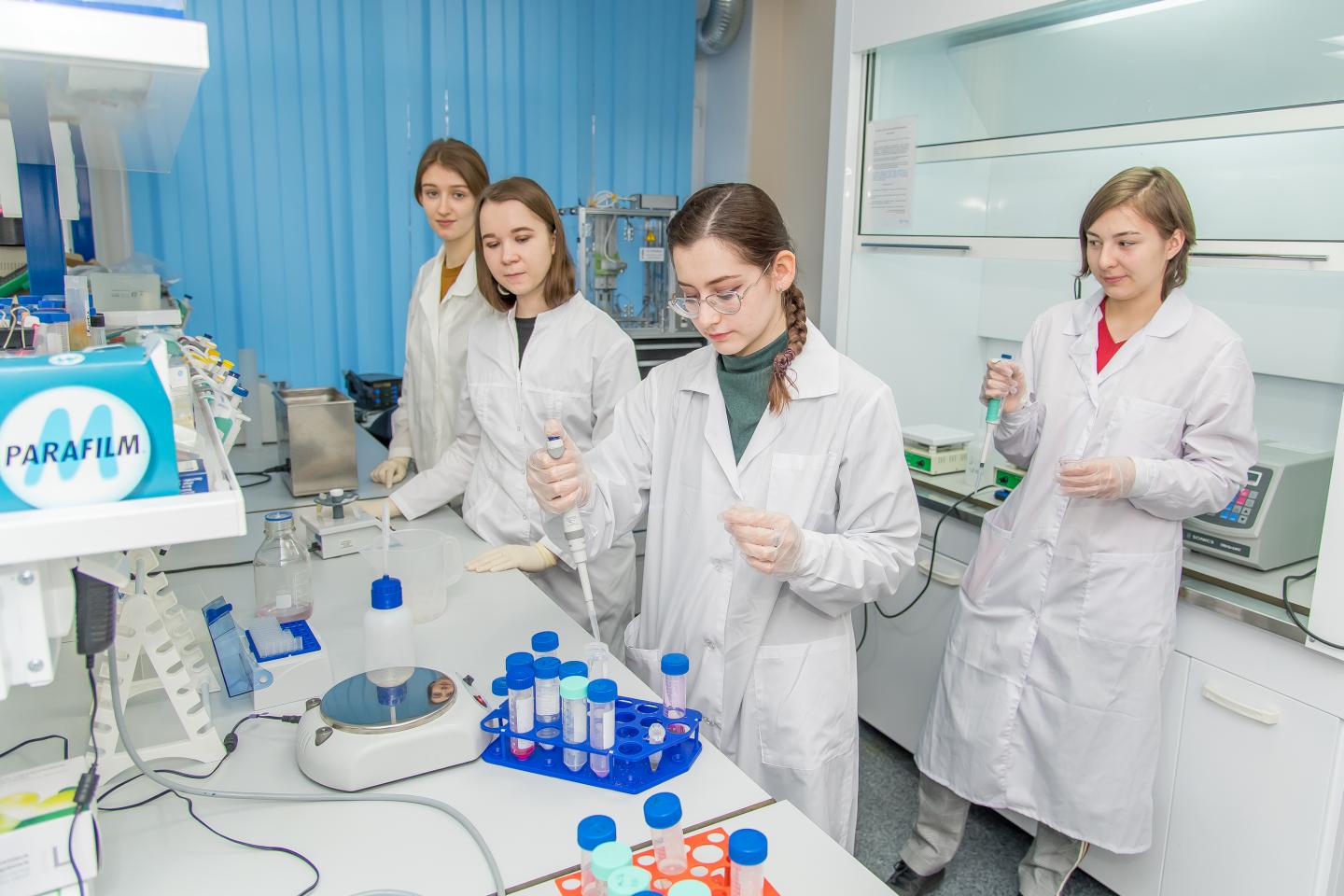
Researchers take a step in the development of genome editing technology.
IMAGE

Credit: Peter the Great St.Petersburg Polytechnic University

Researchers from Peter the Great St.Petersburg Polytechnic University (SPbPU) in collaboration with colleagues from Belgium take a step in the development of genome editing technology. Currently it is possible to deliver genetic material of different sizes and structures to organs and tissues. This is the key to eliminating DNA defects and treating more patients. The project is guided by Professor Gleb Sukhorukov and supported by the Russian Science Foundation. Research results were published in Particle & Particle Systems Characterization journal.

An international research group developed a polymer carrier with a number of unique properties, several types of genetic material can be loaded in its structure. In particular, the scientists managed to load genetic material of various sizes and structures into “universal containers”. From small interfering RNAs (siRNAs) to messenger RNAs (mRNAs). The efficiency of delivery was demonstrated on human stem cells.

“Nowadays most of the vaccines, including those for COVID-19, are made on the basis of mRNA. This is a kind of “genetic SD-card” with information which activates human immune system, thus teaches it how to deal with the “enemy proteins” of the virus. Typically, for medical purposes, different types of carriers are used to deliver specific molecules, we proved that it is possible to deliver genetic materials of different sizes using one type of carrier. This technology opens up new horizons for the development of non-viral delivery systems”, – notes Alexander Timin, head of the Laboratory for microencapsulation and controlled delivery of biologically active compounds at St. Petersburg Polytechnic University.

Scientists added that the micron-scaled carrier with incorporated genetic material can be delivered by systemic administration, or locally (directly into the tumor focus for cancer).

“The study is conducted jointly with the Raisa Gorbacheva Memorial Research Institute of Children Oncology, Hematology and Transplantation, which provided the patients’mesenchymal stem cells (cells building organs and tissues) for the experiments. In the future, we plan to conduct experiments on tumor-bearing laboratory animals in order to find out how the genetic material delivered to the tumor will be managed, “- said Igor Radchenko, director of the “RASA-Polytech” center.

###

The Raisa Gorbacheva Memorial Research Institute of Children Oncology, Hematology and Transplantation is interested in the early implementation of these developments in order to fulfill the recommendations and medical protocols that will be introduced into medical practice.

Media Contact
Raisa Bestugina
[email protected]

Related Journal Article

http://dx.doi.org/10.1002/ppsc.202000228

Tags: BioinformaticsBiomechanics/BiophysicsBiotechnologyClinical TrialsDiagnosticsGeneticsMedicine/HealthPublic HealthVaccines
Share12Tweet8Share2ShareShareShare2

Related Posts

Decoding Prostate Cancer Origins via snFLARE-seq, mxFRIZNGRND

February 7, 2026

Digital Health Perspectives from Baltic Sea Experts

February 7, 2026

Exploring Decision-Making in Dementia Caregivers’ Mobility

February 7, 2026

Succinate Receptor 1 Limits Blood Cell Formation, Leukemia

February 7, 2026
Please login to join discussion

POPULAR NEWS

  • Robotic Ureteral Reconstruction: A Novel Approach

    Robotic Ureteral Reconstruction: A Novel Approach

    82 shares
    Share 33 Tweet 21
  • Digital Privacy: Health Data Control in Incarceration

    63 shares
    Share 25 Tweet 16
  • Study Reveals Lipid Accumulation in ME/CFS Cells

    57 shares
    Share 23 Tweet 14
  • Breakthrough in RNA Research Accelerates Medical Innovations Timeline

    53 shares
    Share 21 Tweet 13

About

We bring you the latest biotechnology news from best research centers and universities around the world. Check our website.

Follow us

Recent News

Decoding Prostate Cancer Origins via snFLARE-seq, mxFRIZNGRND

Digital Health Perspectives from Baltic Sea Experts

Florida Cane Toad: Complex Spread and Selective Evolution

Subscribe to Blog via Email

Enter your email address to subscribe to this blog and receive notifications of new posts by email.

Join 73 other subscribers
  • Contact Us

Bioengineer.org © Copyright 2023 All Rights Reserved.

Welcome Back!

Login to your account below

Forgotten Password?

Retrieve your password

Please enter your username or email address to reset your password.

Log In
No Result
View All Result
  • Homepages
    • Home Page 1
    • Home Page 2
  • News
  • National
  • Business
  • Health
  • Lifestyle
  • Science

Bioengineer.org © Copyright 2023 All Rights Reserved.