Previously unknown enzymatic function of EBNA1 viral protein may instruct new approaches for EBV-associated cancer
Credit: The Wistar Institute
PHILADELPHIA — (Jan. 21, 2021) — Researchers at The Wistar Institute have discovered a new enzymatic function of the Epstein-Barr Virus (EBV) protein EBNA1, a critical factor in EBV’s ability to transform human cells and cause cancer. Published in Cell, this study provides new indications for inhibiting EBNA1 function, opening up fresh avenues for development of therapies to treat EBV-associated cancers.
EBV establishes life-long, latent infection in B lymphocytes, which can contribute to development of different cancer types, including Burkitt’s lymphoma, nasopharyngeal carcinoma (NPC) and Hodgkin’s lymphoma.
The Epstein-Barr Nuclear Antigen 1 (EBNA1) serves as an attractive therapeutic target for these cancers because it is expressed in all EBV-associated tumors, performs essential activities for tumorigenesis and there are no similar proteins in the human body.
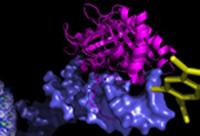
“We discovered an enzymatic activity of EBNA1 that was never described before, despite the intense research efforts to characterize this protein,” said Paul M. Lieberman, Ph.D., Hilary Koprowski, M.D., Endowed Professor, leader of the Gene Expression & Regulation Program at Wistar, and corresponding author of the study. “We found that EBNA1 has the cryptic ability to cross-link and nick a single strand of DNA at the terminal stage of DNA replication. This may have important implications for other viral and cellular DNA binding proteins that have similar cryptic enzyme-like activities.”
Lieberman and colleagues also found that one specific EBNA1 amino acid called Y518 is essential for this process to occur and, consequently, for viral DNA persistence in the infected cells.
They created a mutant EBNA1 protein in which the critical amino acid was substituted with another and showed that this mutant could not form covalent binding with DNA and perform the endonuclease activity responsible for generating single strand cuts.
In latently infected cells, the EBV genome is maintained as a circular DNA molecule, or episome, that is replicated by cellular enzymes along with the cell’s chromosomes. When the cell divides, the two episomal genomes segregate into the two daughter cells.
While it was known that EBNA1 mediates replication and partitioning of the episome during division of the host cell, the exact mechanism was not clear. The new study sheds light on the process and describes how the newly discovered enzymatic activity of EBNA1 is required to complete replication of the viral genome and maintenance of the episomal form.
“Our findings suggest that one could create small molecules to ‘trap’ the protein bound to DNA and potentially block replication termination and episome maintenance, similar to known inhibitors of topoisomerases,” said Jayaraju Dheekollu, Ph.D., first author on the study and staff scientist in the Lieberman Lab. “Such inhibitors may be used to inhibit EBV-induced transformation and treat EBV-associated malignancies.”
###
Co-authors: Andreas Wiedmer, Kasirajan Ayyanathan, Julianna S. Deakyne, and Troy E. Messick from The Wistar Institute. K.A. is currently employed at University of Pennsylvania and J.S.D. is currently employed at GlaxoSmithKline.
Work supported by: National Institutes of Health (NIH) grants RO1 CA093606, RO1 423 DE017336, P30 CA010815, and T32 CA09171. Core support for The Wistar Institute was provided by the Cancer Center Support Grant P30CA010815.
Publication information: Cell Cycle-Dependent EBNA1-DNA Cross-Linking Promotes Replication Termination at oriP and Viral Episome Maintenance, Cell (2021). Online publication.
The Wistar Institute is an international leader in biomedical research with special expertise in cancer, immunology, infectious disease research, and vaccine development. Founded in 1892 as the first independent nonprofit biomedical research institute in the United States, Wistar has held the prestigious Cancer Center designation from the National Cancer Institute since 1972. The Institute works actively to ensure that research advances move from the laboratory to the clinic as quickly as possible. wistar.org.
Media Contact
Darien Sutton
[email protected]
Original Source
https:/
Related Journal Article
http://dx.