• HOME
  • NEWS
  • EXPLORE
    • CAREER
      • Companies
      • Jobs
    • EVENTS
    • iGEM
      • News
      • Team
    • PHOTOS
    • VIDEO
    • WIKI
  • BLOG
  • COMMUNITY
    • FACEBOOK
    • INSTAGRAM
    • TWITTER
Saturday, February 7, 2026
BIOENGINEER.ORG
No Result
View All Result
  • Login
  • HOME
  • NEWS
  • EXPLORE
    • CAREER
      • Companies
      • Jobs
        • Lecturer
        • PhD Studentship
        • Postdoc
        • Research Assistant
    • EVENTS
    • iGEM
      • News
      • Team
    • PHOTOS
    • VIDEO
    • WIKI
  • BLOG
  • COMMUNITY
    • FACEBOOK
    • INSTAGRAM
    • TWITTER
  • HOME
  • NEWS
  • EXPLORE
    • CAREER
      • Companies
      • Jobs
        • Lecturer
        • PhD Studentship
        • Postdoc
        • Research Assistant
    • EVENTS
    • iGEM
      • News
      • Team
    • PHOTOS
    • VIDEO
    • WIKI
  • BLOG
  • COMMUNITY
    • FACEBOOK
    • INSTAGRAM
    • TWITTER
No Result
View All Result
Bioengineer.org
No Result
View All Result
Home NEWS Science News Chemistry

UC researcher urges caution using remdesivir to treat COVID-19

Bioengineer by Bioengineer
December 30, 2020
in Chemistry
Reading Time: 2 mins read
0
IMAGE
Share on FacebookShare on TwitterShare on LinkedinShare on RedditShare on Telegram

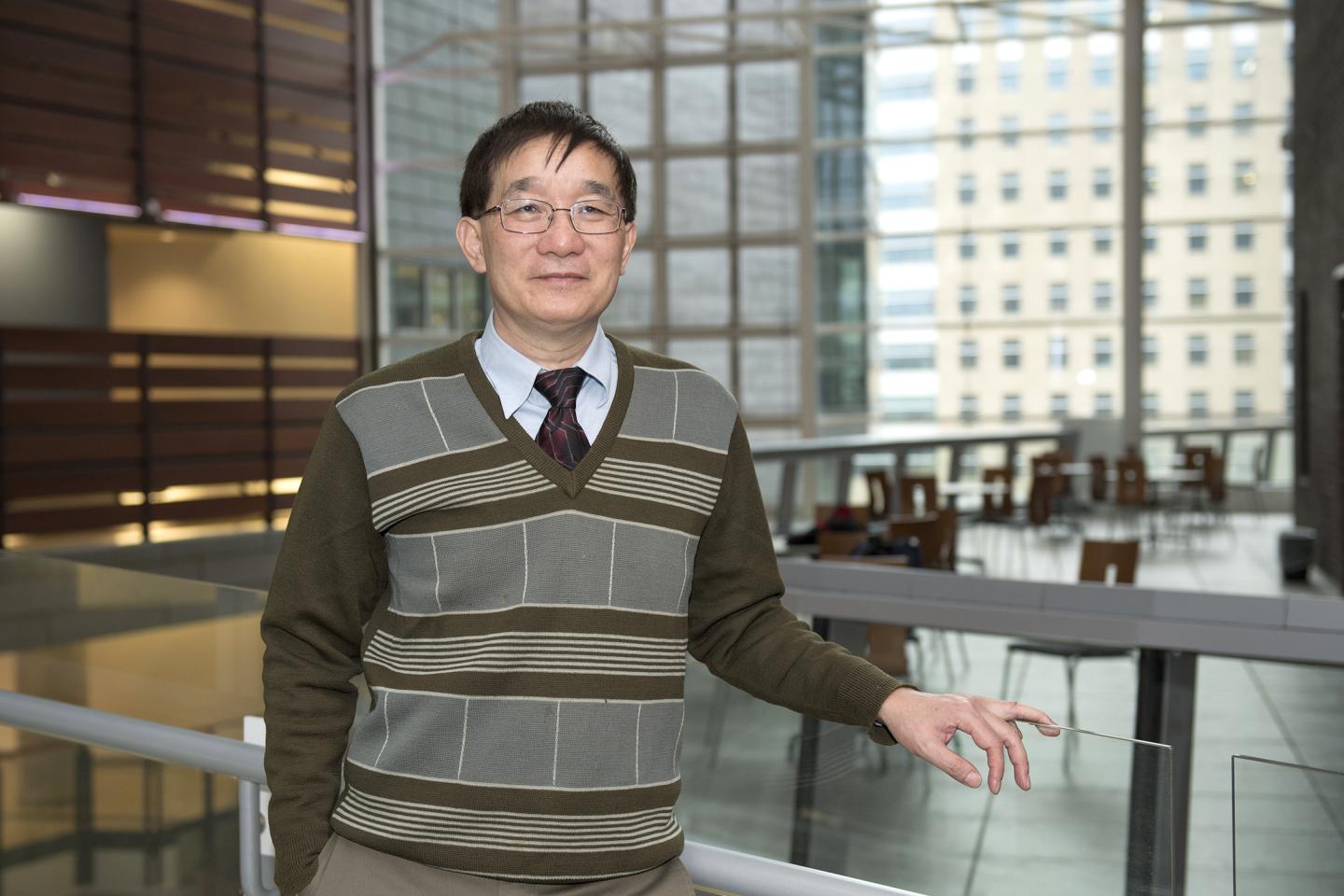
Pharmaceutical scientist sees potential problems with remdesivir as a COVID-19 treatment
IMAGE

Credit: University of Cincinnati

While the world has its eyes on vaccines to stop the spread of coronavirus, therapeutics are still necessary to treat hospitalized patients. One of these treatments, remdesivir, is the first and only antiviral agent of its kind that the U.S. Food and Drug Administration (FDA) has approved so far for COVID-19.

Research at the University of Cincinnati, however, contends that this antiviral drug is being used too indiscriminately when treating patients hospitalized with the virus. The study is published in the journal Fundamental & Clinical Pharmacology.

The FDA approved remdesivir, marketed as Veklury, for emergency use authorization in May 2020 to treat COVID-19 and granted full approval for treatment in October 2020. The World Health Organization came out in November 2020 with a conditional recommendation advising against its use entirely citing: “More research is needed, especially to provide higher certainty of evidence for specific groups of patients.”

In the UC study, lead author Bingfang Yan, a pharmaceutical scientist, and his UC graduate students Yue Shen and William Eades, found that the drug permanently stops the activity of an enzyme called CES-2, which is found in the intestine, liver and kidney and is needed for the breakdown of many medications.

“This enzyme normally breaks down and activates medicines in certain antivirals or inactivates other medicines such in certain anticoagulants,” says Yan, professor at the James L. Winkle College of Pharmacy. On the other hand, he says this breakdown increases the toxicity of many more medications such as with heart medicines and anticancer drugs.

An antiviral is a drug against viruses and an anticoagulant is a drug that hinders the clotting of blood.
What further complicates the issue, Yan says, is that when delivered through an IV, remdesivir does not treat the virus unless the body has additional specific enzymes, which are not found in all patients. It can also cause other antiviral drugs, such as those used for HIV/AIDs and hepatitis C, to not work properly.

Remdesivir is only administered through the veins in a hospital setting, with the FDA typically recommending a dose of once a day, for approximately 10 days, and “intravenous injection of remdesivir can cause safety concerns because of high initial concentrations of the drug in the system,” says Yan, noting, “If physicians use it, they have to use it with caution.”

He adds, “Clearly, the treatment should be used for the right patients and in the proper dosages with care when used in combination with other medications.”

###

Yan’s UC laboratory studies how drugs are metabolized in the body to see if certain people should or should not use the drug or use it at a different dose. He has, for decades, been supported by the National Institutes of Health.

Media Contact
Angela Koenig
[email protected]

Related Journal Article

http://dx.doi.org/10.1111/fcp.12643

Tags: Clinical TrialsCritical Care/Emergency MedicineInfectious/Emerging DiseasesMedicine/HealthMetabolism/Metabolic DiseasesPharmaceutical SciencePharmaceutical SciencesPublic HealthToxicologyVirology
Share13Tweet8Share2ShareShareShare2

Related Posts

blank

Breakthrough in Environmental Cleanup: Scientists Develop Solar-Activated Biochar for Faster Remediation

February 7, 2026
blank

Cutting Costs: Making Hydrogen Fuel Cells More Affordable

February 6, 2026

Scientists Develop Hand-Held “Levitating” Time Crystals

February 6, 2026

Observing a Key Green-Energy Catalyst Dissolve Atom by Atom

February 6, 2026
Please login to join discussion

POPULAR NEWS

  • Robotic Ureteral Reconstruction: A Novel Approach

    Robotic Ureteral Reconstruction: A Novel Approach

    82 shares
    Share 33 Tweet 21
  • Digital Privacy: Health Data Control in Incarceration

    63 shares
    Share 25 Tweet 16
  • Study Reveals Lipid Accumulation in ME/CFS Cells

    57 shares
    Share 23 Tweet 14
  • Breakthrough in RNA Research Accelerates Medical Innovations Timeline

    53 shares
    Share 21 Tweet 13

About

We bring you the latest biotechnology news from best research centers and universities around the world. Check our website.

Follow us

Recent News

Improving Dementia Care with Enhanced Activity Kits

Decoding Prostate Cancer Origins via snFLARE-seq, mxFRIZNGRND

Digital Health Perspectives from Baltic Sea Experts

Subscribe to Blog via Email

Enter your email address to subscribe to this blog and receive notifications of new posts by email.

Join 73 other subscribers
  • Contact Us

Bioengineer.org © Copyright 2023 All Rights Reserved.

Welcome Back!

Login to your account below

Forgotten Password?

Retrieve your password

Please enter your username or email address to reset your password.

Log In
No Result
View All Result
  • Homepages
    • Home Page 1
    • Home Page 2
  • News
  • National
  • Business
  • Health
  • Lifestyle
  • Science

Bioengineer.org © Copyright 2023 All Rights Reserved.