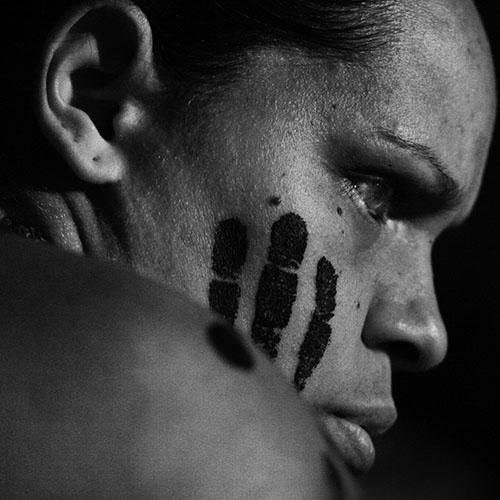
Credit: Photo by Steve Evans
More than a decade after committing $130+ billion to Closing the Gap, there has been little improvement in health outcomes experienced by Aboriginal and Torres Strait Islander populations.
A significant life expectancy gap remains, with cardiovascular disease the leading cause of death for Aboriginal and Torres Strait Islander women, responsible for almost 20 per cent of this gap.
So where have things gone wrong?
A new study led by University of South Australia PhD candidate Katharine McBride in partnership with Aboriginal women suggests the answer may lie partially in the Government’s failure to approach health from an Aboriginal perspective.
“Current strategies to address heart disease in Aboriginal and Torres Strait Islander communities are framed within a western context and focus on bad behaviour and a deficit approach,” McBride says.
“These policies fail to take into account the unique world view of our first nations women, centred on spirit, culture and community.”
The study explored the perspectives of 28 Aboriginal women from five different communities across central and southern Australia, with the work overseen by an Aboriginal Women’s Advisory Group. Via yarning circles, women identified 10 attributes which either kept their heart strong or put it at risk, and the drivers of these.
“Identity as an Aboriginal woman, having a healthy body and life, connectedness within family and community and health knowledge all strengthen the heart, according to the Aboriginal women in our study. Stress, grief, racism, government policies and financial hardship were recognised as weakening the heart.”
The government’s strategy, focusing solely on clinical and behavioural cardiovascular risk factors, fails to recognise the Aboriginal conceptualisation of health which is centred on strength, resilience and connectedness, according to McBride.
The research team, which included Aboriginal women with lived and professional experience of heart disease, recommends a new model of health delivery and care in partnership with Aboriginal and Torres Strait Islander women and communities.
“Aboriginal women are leaders and nurturers of community. They have described what is needed to have a healthy heart; hopefully the government will heed the message,” McBride says.
Her paper, titled “Good Heart: Telling Stories of Cardiovascular Protective and Risk Factors for Aboriginal Women,” is published in Heart, Lung and Circulation.
###
Notes to Editors
Cardiovascular disease (CVD) is the largest contributor to preventable morbidity and mortality in Aboriginal and Torres Strait Islander peoples. Although age?standardised CVD mortality has fallen by 40% over the past few decades, CVD still accounts for a quarter of Aboriginal and Torres Strait Islander deaths overall and 21% of all premature years of life lost. CVD events and CVD?related mortality in the Aboriginal and Torres Strait Islander population occur, on average, about 10-20 years earlier than in non?Indigenous Australians.
Whilst Aboriginal men have a higher burden of heart disease in comparison to women (68.3% to 41.7% respectively), women do have a higher proportion of some heart, stroke and vascular diseases, and the gap between men and women is much less for Aboriginal and Torres Strait Islander people
This information is supplied by the Aboriginal and Torres Strait Islander Cardiac Health Information website.
Media Contact
Candy Gibson
[email protected]
Original Source
https:/
Related Journal Article
http://dx.