• HOME
  • NEWS
  • EXPLORE
    • CAREER
      • Companies
      • Jobs
    • EVENTS
    • iGEM
      • News
      • Team
    • PHOTOS
    • VIDEO
    • WIKI
  • BLOG
  • COMMUNITY
    • FACEBOOK
    • INSTAGRAM
    • TWITTER
Sunday, August 16, 2026
BIOENGINEER.ORG
No Result
View All Result
  • Login
  • HOME
  • NEWS
  • EXPLORE
    • CAREER
      • Companies
      • Jobs
        • Lecturer
        • PhD Studentship
        • Postdoc
        • Research Assistant
    • EVENTS
    • iGEM
      • News
      • Team
    • PHOTOS
    • VIDEO
    • WIKI
  • BLOG
  • COMMUNITY
    • FACEBOOK
    • INSTAGRAM
    • TWITTER
  • HOME
  • NEWS
  • EXPLORE
    • CAREER
      • Companies
      • Jobs
        • Lecturer
        • PhD Studentship
        • Postdoc
        • Research Assistant
    • EVENTS
    • iGEM
      • News
      • Team
    • PHOTOS
    • VIDEO
    • WIKI
  • BLOG
  • COMMUNITY
    • FACEBOOK
    • INSTAGRAM
    • TWITTER
No Result
View All Result
Bioengineer.org
No Result
View All Result
Home NEWS Science News

Genetic exchange discovered in anciently asexual rotifers

Bioengineer by Bioengineer
December 18, 2020
in Science News
Reading Time: 2 mins read
0
IMAGE
Share on FacebookShare on TwitterShare on LinkedinShare on RedditShare on Telegram

IMAGE

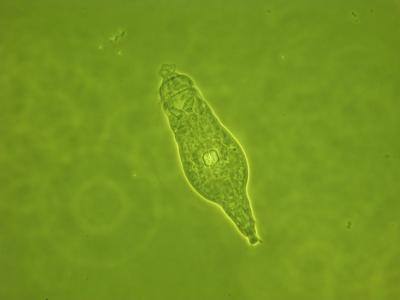
Credit: E.A. Mnatsakanova and O.A. Vakhrusheva/Skoltech

Skoltech’s evolutionary biologists discovered recombination in bdelloid rotifers, microscopic freshwater invertebrates, which have long been regarded as ‘an evolutionary scandal’ due to their presumed ancient asexuality. The existence of such anciently asexual groups calls into question the hypothesis that sexual reproduction is indispensable for long-term evolutionary success of species. However, the recent study published in Nature Communications provides evidence of recombination and genetic exchange in bdelloids.

Sexual reproduction which involves recombination and exchange of genetic material between individuals of the same species is thought to be essential for the long-term survival of species. Although transitions to asexual reproduction are quite frequent in eukaryotes, they typically result in rapid extinction. On these grounds, transition to asexual reproduction is usually regarded as an evolutionary dead end. However, there are a few notable exceptions to this rule, such as bdelloid rotifers which were long assumed to have switched to asexual reproduction several tens of millions of years ago.

An international team of scientists led by Georgii Bazykin, a professor at the Skoltech Center for Life Sciences (CLS), and Alexey Kondrashov, a professor at Moscow State University (MSU), obtained whole-genome sequencing data for several individuals of Adineta vaga and found evidence suggesting recombination in this bdelloid species.

The scientists analyzed whole genomes of 11 A. vaga individuals revealing signatures of recombination and interindividual genetic exchange.

“We have shown that variation within the population of A. vaga is inconsistent with strict clonality and lack of recombination. Bdelloid rotifers are frequently referred to as ‘an evolutionary scandal’. However, our results suggest that the status of bdelloid rotifers as an ancient asexual group should probably be reconsidered. Our findings underscore the importance of recombination for the long-term evolutionary success of species. Although some data hint at the existence of meiosis in bdelloid rotifers, mechanisms of genetic exchange in this group of species remain obscure and are subject to further research,” comments Olga Vakhrusheva, the lead author and a junior research scientist at Skoltech.

###

Media Contact
Ilyana Zolotareva
[email protected]

Related Journal Article

http://dx.doi.org/10.1038/s41467-020-19614-y

Tags: BiodiversityBioinformaticsBiologyBiotechnologyComputer ScienceEvolutionGeneticsMarine/Freshwater BiologyPopulation Biology
Share12Tweet8Share2ShareShareShare2

Related Posts

KAIST develops semiconductor neuron that harnesses noise to selectively process signals

KAIST develops semiconductor neuron that harnesses noise to selectively process signals

August 16, 2026
Imagining natural and extra robotic thumbs together strengthens kinesthetic sensorimotor networks

Imagining natural and extra robotic thumbs together strengthens kinesthetic sensorimotor networks

August 16, 2026

PARP1 Drives Neuropathic Pain Through GPX4-Dependent Ferroptosis in Injured Mice’s Sensory Neurons

August 15, 2026

Strubbelig–NHL3 Receptor Complex Helps Arabidopsis Respond to Cellulose Deficiency

August 15, 2026
Please login to join discussion

POPULAR NEWS

  • KAIST develops semiconductor neuron that harnesses noise to selectively process signals

    29 shares
    Share 12 Tweet 7
  • Imagining natural and extra robotic thumbs together strengthens kinesthetic sensorimotor networks

    29 shares
    Share 12 Tweet 7
  • PARP1 Drives Neuropathic Pain Through GPX4-Dependent Ferroptosis in Injured Mice’s Sensory Neurons

    29 shares
    Share 12 Tweet 7
  • Strubbelig–NHL3 Receptor Complex Helps Arabidopsis Respond to Cellulose Deficiency

    29 shares
    Share 12 Tweet 7

About

We bring you the latest biotechnology news from best research centers and universities around the world. Check our website.

Follow us

Recent News

KAIST develops semiconductor neuron that harnesses noise to selectively process signals

Imagining natural and extra robotic thumbs together strengthens kinesthetic sensorimotor networks

PARP1 Drives Neuropathic Pain Through GPX4-Dependent Ferroptosis in Injured Mice’s Sensory Neurons

Subscribe to Blog via Email

Success! An email was just sent to confirm your subscription. Please find the email now and click 'Confirm' to start subscribing.

Join 85 other subscribers
  • Contact Us

Bioengineer.org © Copyright 2023 All Rights Reserved.

Welcome Back!

Login to your account below

Forgotten Password?

Retrieve your password

Please enter your username or email address to reset your password.

Log In
No Result
View All Result
  • Homepages
    • Home Page 1
    • Home Page 2
  • News
  • National
  • Business
  • Health
  • Lifestyle
  • Science

Bioengineer.org © Copyright 2023 All Rights Reserved.