• HOME
  • NEWS
  • EXPLORE
    • CAREER
      • Companies
      • Jobs
    • EVENTS
    • iGEM
      • News
      • Team
    • PHOTOS
    • VIDEO
    • WIKI
  • BLOG
  • COMMUNITY
    • FACEBOOK
    • INSTAGRAM
    • TWITTER
Wednesday, June 24, 2026
BIOENGINEER.ORG
No Result
View All Result
  • Login
  • HOME
  • NEWS
  • EXPLORE
    • CAREER
      • Companies
      • Jobs
        • Lecturer
        • PhD Studentship
        • Postdoc
        • Research Assistant
    • EVENTS
    • iGEM
      • News
      • Team
    • PHOTOS
    • VIDEO
    • WIKI
  • BLOG
  • COMMUNITY
    • FACEBOOK
    • INSTAGRAM
    • TWITTER
  • HOME
  • NEWS
  • EXPLORE
    • CAREER
      • Companies
      • Jobs
        • Lecturer
        • PhD Studentship
        • Postdoc
        • Research Assistant
    • EVENTS
    • iGEM
      • News
      • Team
    • PHOTOS
    • VIDEO
    • WIKI
  • BLOG
  • COMMUNITY
    • FACEBOOK
    • INSTAGRAM
    • TWITTER
No Result
View All Result
Bioengineer.org
No Result
View All Result
Home NEWS Science News Health

Participation in competitive sport in adolescence brings midlife health benefits to women

Bioengineer by Bioengineer
December 7, 2020
in Health
Reading Time: 2 mins read
0
IMAGE
Share on FacebookShare on TwitterShare on LinkedinShare on RedditShare on Telegram

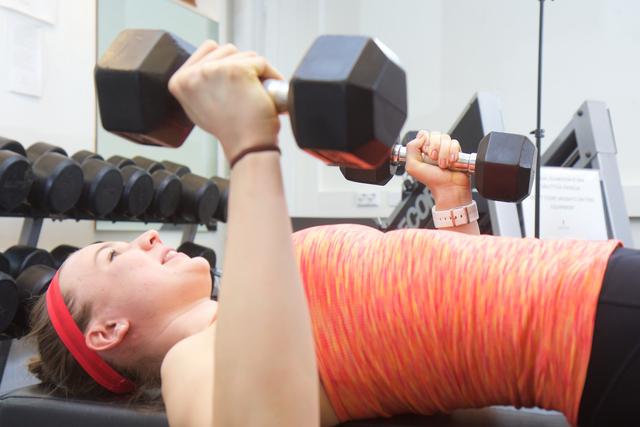
Higher lean mass and bone density and better physical performance at midlife were associated with competitive sport participation at the age of 13 to 16 years
IMAGE

Credit: University of Jyväskylä

Females who participate in competitive sport during adolescence have better fitness at midlife than do females with no competitive sport background in adolescence, reveals a study conducted at the University of Jyväskylä. Higher lean mass and bone density and better physical performance at midlife were associated with competitive sport participation at the age of 13 to 16 years. The study also found that bone density was lower if the woman has had her first period at age 14 years or older.

The findings emphasize the link between adolescence competitive sport participation, and body composition, bone health and physical performance later in life.

“The relationship between adolescent participation in competitive sport and midlife health benefits were seen even if we took midlife physical activity into account,” says Suvi Ravi, a PhD student and the corresponding author at the Faculty of Sport and Health Sciences.

“We also investigated if individuals engaged in competitive sport in adolescence had more musculoskeletal problems than those with no competitive sport background in adolescence, but did not found any association between those factors,” Ravi explains.

Another main finding of the study was that women whose period had occurred at age 14 years or older had lower bone density than women whose period had started at age 12 or younger. In women under menopausal age, this association was found even if physical activity in adolescence and at midlife was taken into account.

“It seems that a later age for a female’s first period is associated with lower bone density regardless of competitive sport participation in adolescence,” Ravi says. “It is known that some female athletes have their first period well above the average menarcheal age, so it is important to pay attention to girls whose menarche is delayed. Nowadays it is thought that menarche is belated if periods have not occurred by the age of 15 years.”

This study was part of the Estrogenic Regulation of Muscle Apoptosis (ERMA) study conducted at the University of Jyväskylä and Gerontology Research Center and led by Academy Research Fellow Eija Laakkonen. Nearly 1,100 (n = 1098) women between the ages of 47 and 55 participated in this part of the ERMA project where the associations between adolescence physical activity, age at menarche and midlife characteristics were investigated.

###

Media Contact
Suvi Ravi
[email protected]

Original Source

https://www.jyu.fi/en/current/archive/2020/12/participation-in-competitive-sport-in-adolescence-brings-midlife-health-benefits-to-women

Related Journal Article

http://dx.doi.org/10.3390/jcm9123797

Tags: BehaviorDiet/Body WeightExerciseGynecologyMedicine/HealthMetabolism/Metabolic DiseasesOrthopedic MedicinePublic HealthSports/Recreation
Share12Tweet8Share2ShareShareShare2

Related Posts

Acute Psychedelic Effects on Brain Entropy Revealed

June 24, 2026

Global Drop in Intimate Partner Violence Linked to Shifts in Attitudes and Behavior

June 24, 2026

Epiblast Diversification Fuels Early Blood Formation

June 24, 2026

Neutrophil S100A8/A9 Hinders Megakaryocyte Maturation

June 24, 2026
Please login to join discussion

POPULAR NEWS

  • Saying Goodbye to PGY-6: Pediatric Fellowship Realities

    103 shares
    Share 41 Tweet 26
  • Multi-Hospital Study Reveals Long Covid Burden Is Twice as High as Current Estimates

    92 shares
    Share 36 Tweet 23
  • Detection of EDCs in Breast Milk and Infant Urine Up to Six Months Highlights Early Exposure Risks

    77 shares
    Share 31 Tweet 19
  • New Drug Candidate Developed at McMaster Shows Potential for Treating Brain Cancer

    58 shares
    Share 23 Tweet 15

About

We bring you the latest biotechnology news from best research centers and universities around the world. Check our website.

Follow us

Recent News

Decades of Data Reveal Which Orcas Call Puget Sound Home

Introducing a Revolutionary Pixel Technology

Plasma Technology Extends Catalyst Lifespan in Hydrogen Production

Subscribe to Blog via Email

Enter your email address to subscribe to this blog and receive notifications of new posts by email.

Join 82 other subscribers
  • Contact Us

Bioengineer.org © Copyright 2023 All Rights Reserved.

Welcome Back!

Login to your account below

Forgotten Password?

Retrieve your password

Please enter your username or email address to reset your password.

Log In
No Result
View All Result
  • Homepages
    • Home Page 1
    • Home Page 2
  • News
  • National
  • Business
  • Health
  • Lifestyle
  • Science

Bioengineer.org © Copyright 2023 All Rights Reserved.