• HOME
  • NEWS
  • EXPLORE
    • CAREER
      • Companies
      • Jobs
    • EVENTS
    • iGEM
      • News
      • Team
    • PHOTOS
    • VIDEO
    • WIKI
  • BLOG
  • COMMUNITY
    • FACEBOOK
    • INSTAGRAM
    • TWITTER
Saturday, February 7, 2026
BIOENGINEER.ORG
No Result
View All Result
  • Login
  • HOME
  • NEWS
  • EXPLORE
    • CAREER
      • Companies
      • Jobs
        • Lecturer
        • PhD Studentship
        • Postdoc
        • Research Assistant
    • EVENTS
    • iGEM
      • News
      • Team
    • PHOTOS
    • VIDEO
    • WIKI
  • BLOG
  • COMMUNITY
    • FACEBOOK
    • INSTAGRAM
    • TWITTER
  • HOME
  • NEWS
  • EXPLORE
    • CAREER
      • Companies
      • Jobs
        • Lecturer
        • PhD Studentship
        • Postdoc
        • Research Assistant
    • EVENTS
    • iGEM
      • News
      • Team
    • PHOTOS
    • VIDEO
    • WIKI
  • BLOG
  • COMMUNITY
    • FACEBOOK
    • INSTAGRAM
    • TWITTER
No Result
View All Result
Bioengineer.org
No Result
View All Result
Home NEWS Science News Chemistry

Worms reveal why melatonin promotes sleep

Bioengineer by Bioengineer
November 13, 2020
in Chemistry
Reading Time: 2 mins read
0
IMAGE
Share on FacebookShare on TwitterShare on LinkedinShare on RedditShare on Telegram

Research in C. elegans shows how melatonin activates the BK channel in the brain
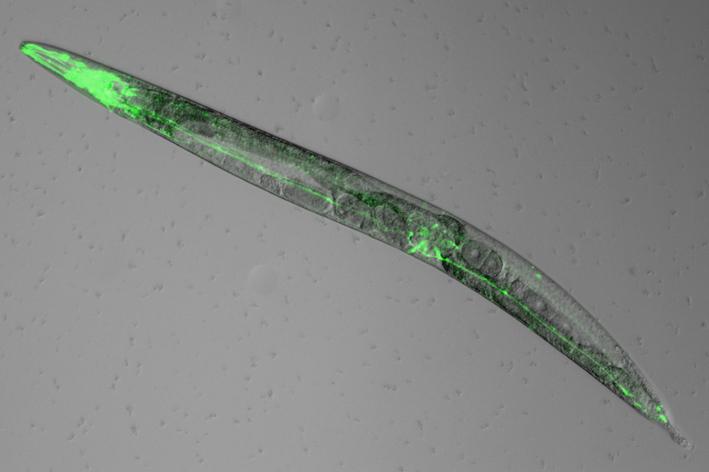
IMAGE

Credit: Bojun Chen/UConn Health

Melatonin is used as a dietary supplement to promote sleep and get over jet lag, but nobody really understands how it works in the brain. Now, researchers at UConn Health show that melatonin helps worms sleep, too, and they suspect they’ve identified what it does in us.

Our bodies produce melatonin in darkness. It’s technically a hormone, but you can readily buy melatonin as a supplement in pharmacies, nutrition stores, and other retail shops. It’s widely used by adults and often in children as well.

Melatonin binds to melatonin receptors in the brain to produce its sleep-promoting effects. Think of a receptor as a keyhole, and melatonin as the key. The two keyholes for melatonin are called MT1 and MT2 in human brain cells. But scientists didn’t really know what happens when the keyhole is unlocked. Now UConn Health School of Medicine neuroscientists Zhao-Wen Wang and Bojun Chen and their colleagues have identified that process through their work with C. elegans worms, as reported in PNAS on Sept. 21. When melatonin fits into the MT1 receptor in the worm’s brain, it opens a potassium channel known as the BK channel.

A major function of the BK channel in neurons is to limit the release of neurotransmitters, which are chemical substances used by neurons to talk to each other. In their search for factors related to the BK channel, the Wang and Chen labs found that a melatonin receptor is needed for the BK channel to limit neurotransmitter release. They subsequently found that melatonin promotes sleep in worms by activating the BK channel through the melatonin receptor. Worms that lack either melatonin secretion, the melatonin receptor, or the BK channel spend less time in sleep.

But wait–worms sleep?

Indeed they do, says Chen. There’s actually been quite a lot of research on worm sleep, and researchers found that sleep is similar between worms and mammals like humans and mice.

Wang and Chen next plan to see if the melatonin-MT1-BK relationship holds in mice. The BK channel is involved in all kinds of bodily happenings, from epilepsy to high blood pressure. By learning more about the relationships between the BK channel, sleep, and behavioral changes, the researchers hope both to understand melatonin better and also help people who suffer from other diseases related to the BK channel.

###

Media Contact
Kim Krieger
[email protected]

Related Journal Article

http://dx.doi.org/10.1073/pnas.2010928117

Tags: BehaviorBiochemistryCell BiologyMedicine/HealthMicrobiologyneurobiologyPharmaceutical ChemistryPharmaceutical SciencePhysiology
Share12Tweet8Share2ShareShareShare2

Related Posts

blank

Breakthrough in Environmental Cleanup: Scientists Develop Solar-Activated Biochar for Faster Remediation

February 7, 2026
blank

Cutting Costs: Making Hydrogen Fuel Cells More Affordable

February 6, 2026

Scientists Develop Hand-Held “Levitating” Time Crystals

February 6, 2026

Observing a Key Green-Energy Catalyst Dissolve Atom by Atom

February 6, 2026
Please login to join discussion

POPULAR NEWS

  • Robotic Ureteral Reconstruction: A Novel Approach

    Robotic Ureteral Reconstruction: A Novel Approach

    82 shares
    Share 33 Tweet 21
  • Digital Privacy: Health Data Control in Incarceration

    63 shares
    Share 25 Tweet 16
  • Study Reveals Lipid Accumulation in ME/CFS Cells

    57 shares
    Share 23 Tweet 14
  • Breakthrough in RNA Research Accelerates Medical Innovations Timeline

    53 shares
    Share 21 Tweet 13

About

We bring you the latest biotechnology news from best research centers and universities around the world. Check our website.

Follow us

Recent News

Digital Health Perspectives from Baltic Sea Experts

Florida Cane Toad: Complex Spread and Selective Evolution

Exploring Decision-Making in Dementia Caregivers’ Mobility

Subscribe to Blog via Email

Enter your email address to subscribe to this blog and receive notifications of new posts by email.

Join 73 other subscribers
  • Contact Us

Bioengineer.org © Copyright 2023 All Rights Reserved.

Welcome Back!

Login to your account below

Forgotten Password?

Retrieve your password

Please enter your username or email address to reset your password.

Log In
No Result
View All Result
  • Homepages
    • Home Page 1
    • Home Page 2
  • News
  • National
  • Business
  • Health
  • Lifestyle
  • Science

Bioengineer.org © Copyright 2023 All Rights Reserved.