• HOME
  • NEWS
  • EXPLORE
    • CAREER
      • Companies
      • Jobs
    • EVENTS
    • iGEM
      • News
      • Team
    • PHOTOS
    • VIDEO
    • WIKI
  • BLOG
  • COMMUNITY
    • FACEBOOK
    • INSTAGRAM
    • TWITTER
Tuesday, June 30, 2026
BIOENGINEER.ORG
No Result
View All Result
  • Login
  • HOME
  • NEWS
  • EXPLORE
    • CAREER
      • Companies
      • Jobs
        • Lecturer
        • PhD Studentship
        • Postdoc
        • Research Assistant
    • EVENTS
    • iGEM
      • News
      • Team
    • PHOTOS
    • VIDEO
    • WIKI
  • BLOG
  • COMMUNITY
    • FACEBOOK
    • INSTAGRAM
    • TWITTER
  • HOME
  • NEWS
  • EXPLORE
    • CAREER
      • Companies
      • Jobs
        • Lecturer
        • PhD Studentship
        • Postdoc
        • Research Assistant
    • EVENTS
    • iGEM
      • News
      • Team
    • PHOTOS
    • VIDEO
    • WIKI
  • BLOG
  • COMMUNITY
    • FACEBOOK
    • INSTAGRAM
    • TWITTER
No Result
View All Result
Bioengineer.org
No Result
View All Result
Home NEWS Science News

NYUAD researchers develop protocol for a more accurate COVID-19 testing technique

Bioengineer by Bioengineer
November 9, 2020
in Science News
Reading Time: 2 mins read
0
IMAGE
Share on FacebookShare on TwitterShare on LinkedinShare on RedditShare on Telegram

Cost-effective technique can detect lower viral loads and reduce false-negative rates
IMAGE

Credit: NYUAD

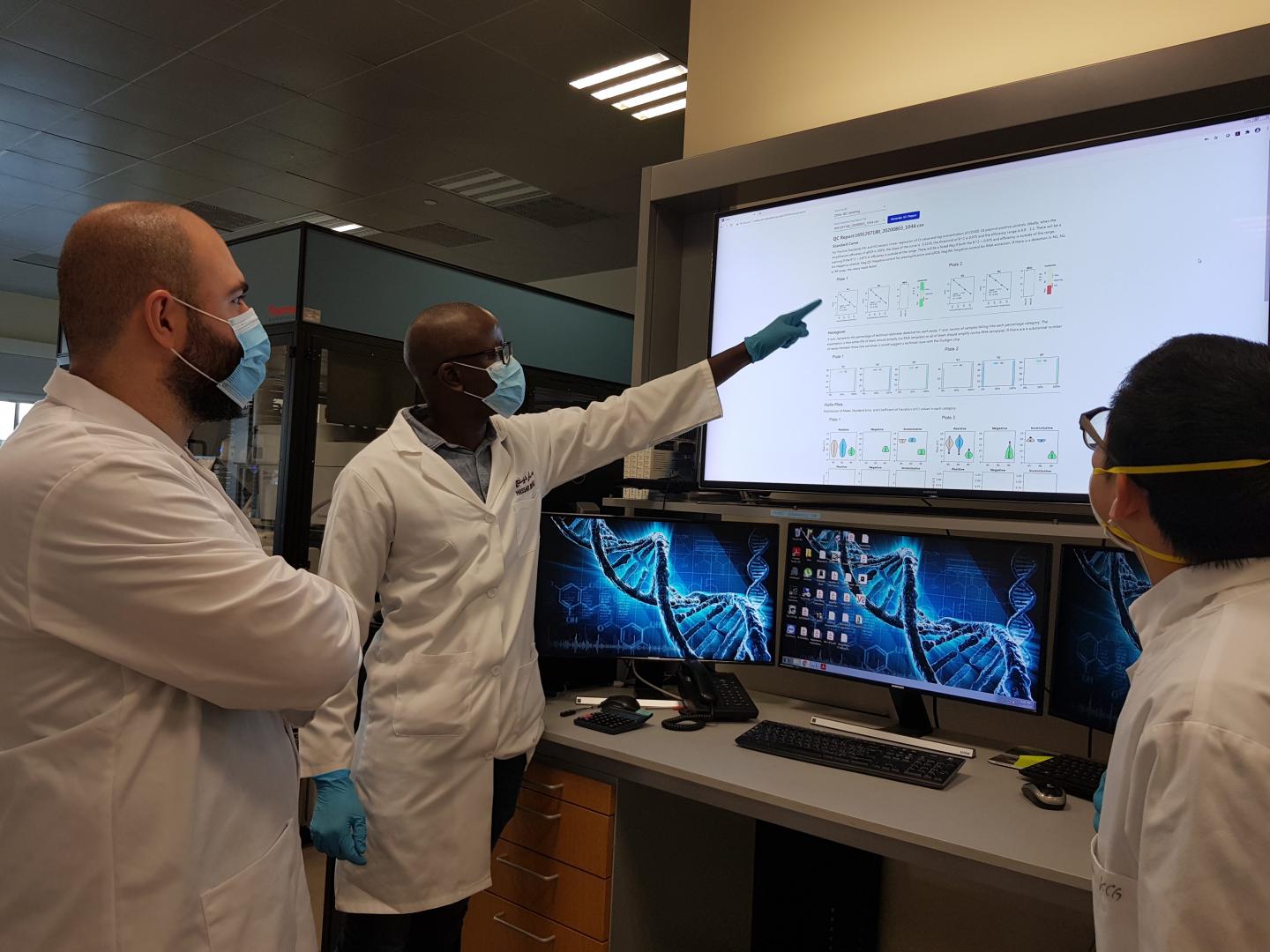
Abu Dhabi – One critical barrier in efforts to control the COVID-19 pandemic has been the relatively high false-negative rate of the most commonly-used Reverse Transcription Polymerase Chain Reaction (RT-PCR) testing methods.

Often, these methods are not able to detect lower viral loads, which are typically present in asymptomatic individuals but below the limit of detection (LoD) of standard one- or two-step RT-PCR methods. Researchers from NYU Abu Dhabi’s Biology Program and Center for Genomics and Systems Biology (CGSB) have implemented a new three-step testing approach that promises to significantly – and cost-effectively — improve testing accuracy.

Rather than combining the RT and qPCR reactions, the NYUAD researchers, led by Professor of Biology at NYU and NYUAD Kris Gunsalus and Assistant Professor of Biology at NYUAD Youssef Idaghdour employed a technique involving sequential RT, cDNA preamplification, and qPCR, using a microfluidics platform.

The researchers demonstrated reliable ultra-sensitive and quantitative detection of low SARS-CoV-2 viral loads (less than one copy/microliter) using synthetic viral RNA, clinical nasopharyngeal swab samples and saliva samples, including samples previously diagnosed as negative by clinical diagnostic testing. Their findings, reported in the journal Processes are that this microfluidic RT-PCR assay is a sensitive, quantitative, and cost-effective detection strategy which could markedly reduce the false negative rate of clinical diagnostic tests – a potentially valuable tool in SARS-CoV-2 active screening and early detection programs.

“By adding a pre-amplification step and using microfluidic technology, we have demonstrated that this sensitive detection method can detect low viral loads, which is critical to enabling the most effective public health responses to the COVID-19 pandemic,” said Idaghdour. “Our three-step approach can significantly reduce the false negative rate of standard RT-PCR-based diagnostic tests for SARS-CoV2 and other viral infections. This would allow public health officials to more readily identify and trace asymptomatic individuals, enhance the accuracy of air and environmental sampling for SARS-CoV-2, expand accurate detection to saliva testing and help curtail the spread of the virus.”

About NYU Abu Dhabi

NYU Abu Dhabi is the first comprehensive liberal arts and science campus in the Middle East to be operated abroad by a major American research university. NYU Abu Dhabi has integrated a highly-selective liberal arts, engineering and science curriculum with a world center for advanced research and scholarship enabling its students to succeed in an increasingly interdependent world and advance cooperation and progress on humanity’s shared challenges. NYU Abu Dhabi’s high-achieving students have come from more than 115 nations and speak over 115 languages. Together, NYU’s campuses in New York, Abu Dhabi, and Shanghai form the backbone of a unique global university, giving faculty and students opportunities to experience varied learning environments and immersion in other cultures at one or more of the numerous study-abroad sites NYU maintains on six continents.

###

Media Contact
Adam Pockriss
[email protected]

Tags: Biomedical/Environmental/Chemical EngineeringEpidemiologyInfectious/Emerging DiseasesMedicine/HealthPublic Health
Share12Tweet8Share2ShareShareShare2

Related Posts

Scientists Unlock How Jellyfish Heal Wounds in Minutes — Biology

Scientists Unlock How Jellyfish Heal Wounds in Minutes

June 30, 2026
Boosted B Cell Priming Yields Broad HIV Antibodies — Medicine

Boosted B Cell Priming Yields Broad HIV Antibodies

June 30, 2026

Refining Therapeutic Hypothermia for Neonatal Brain Injury

June 30, 2026

Vacancy-Guided Dual Sites Boost Sunlight-Driven Conversion of CO2 into Ethylene

June 30, 2026
Please login to join discussion

POPULAR NEWS

  • Saying Goodbye to PGY-6: Pediatric Fellowship Realities

    103 shares
    Share 41 Tweet 26
  • Detection of EDCs in Breast Milk and Infant Urine Up to Six Months Highlights Early Exposure Risks

    77 shares
    Share 31 Tweet 19
  • New Drug Candidate Developed at McMaster Shows Potential for Treating Brain Cancer

    58 shares
    Share 23 Tweet 15
  • KTU Researchers Explore Ultrasound’s Role in Enhancing Blood Flow Beyond Diagnostics

    53 shares
    Share 21 Tweet 13

About

BIOENGINEER.ORG

We bring you the latest biotechnology news from best research centers and universities around the world. Check our website.

Follow us

Recent News

Scientists Unlock How Jellyfish Heal Wounds in Minutes

Boosted B Cell Priming Yields Broad HIV Antibodies

Refining Therapeutic Hypothermia for Neonatal Brain Injury

Subscribe to Blog via Email

Enter your email address to subscribe to this blog and receive notifications of new posts by email.

Join 82 other subscribers
  • Contact Us

Bioengineer.org © Copyright 2023 All Rights Reserved.

Welcome Back!

Login to your account below

Forgotten Password?

Retrieve your password

Please enter your username or email address to reset your password.

Log In
No Result
View All Result
  • Homepages
    • Home Page 1
    • Home Page 2
  • News
  • National
  • Business
  • Health
  • Lifestyle
  • Science

Bioengineer.org © Copyright 2023 All Rights Reserved.