• HOME
  • NEWS
  • EXPLORE
    • CAREER
      • Companies
      • Jobs
    • EVENTS
    • iGEM
      • News
      • Team
    • PHOTOS
    • VIDEO
    • WIKI
  • BLOG
  • COMMUNITY
    • FACEBOOK
    • INSTAGRAM
    • TWITTER
Friday, June 26, 2026
BIOENGINEER.ORG
No Result
View All Result
  • Login
  • HOME
  • NEWS
  • EXPLORE
    • CAREER
      • Companies
      • Jobs
        • Lecturer
        • PhD Studentship
        • Postdoc
        • Research Assistant
    • EVENTS
    • iGEM
      • News
      • Team
    • PHOTOS
    • VIDEO
    • WIKI
  • BLOG
  • COMMUNITY
    • FACEBOOK
    • INSTAGRAM
    • TWITTER
  • HOME
  • NEWS
  • EXPLORE
    • CAREER
      • Companies
      • Jobs
        • Lecturer
        • PhD Studentship
        • Postdoc
        • Research Assistant
    • EVENTS
    • iGEM
      • News
      • Team
    • PHOTOS
    • VIDEO
    • WIKI
  • BLOG
  • COMMUNITY
    • FACEBOOK
    • INSTAGRAM
    • TWITTER
No Result
View All Result
Bioengineer.org
No Result
View All Result
Home NEWS Science News

Expensive gene therapies raise challenges and opportunities: Expert panel report

Bioengineer by Bioengineer
November 3, 2020
in Science News
Reading Time: 2 mins read
0
IMAGE
Share on FacebookShare on TwitterShare on LinkedinShare on RedditShare on Telegram

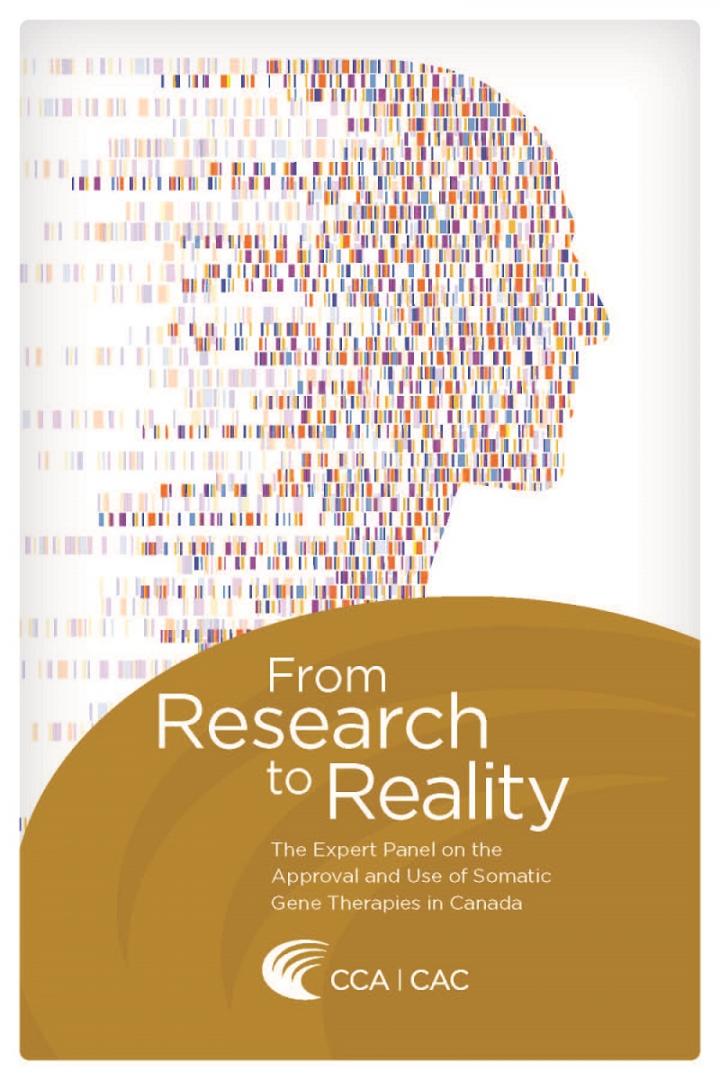
New CCA expert panel report
IMAGE

Credit: Council of Canadian Academies (CCA)

Gene therapies are being approved for use in Canada, but could strain healthcare budgets and exacerbate existing treatment inequities across the country. However, there are opportunities to control spending, streamline approvals and support fair access through innovation, coordination and collaboration, according to a new expert panel report from the Council of Canadian Academies (CCA).

“Rapid scientific advances mean potentially life-changing treatments are approaching the clinic at an accelerated pace,” said Janet Rossant, PhD, C.C., FRSC, and Chair of the Expert Panel. “These new therapies, however, pose a number of challenges in terms of their introduction into the Canadian healthcare system and ensuring access to those who would most benefit.”

The National Research Council of Canada asked the CCA to examine the key legal, regulatory, ethical, social and policy challenges specific to the approval and use of somatic gene and engineered cell therapies in Canada.

Somatic gene and engineered cell therapies treat disease by removing or modifying existing genetic material in a patient, or introducing new genetic material, without passing these changes to future generations. Most treat rare genetic disorders and cancers, however they can cost more than $1 million and have limited evidence of long-term safety and durability.

From Research to Reality describes the stages involved in the approval and use of gene therapies in Canada, and examines the challenges associated with regulatory oversight, manufacturing, access, and affordability. It also identifies emerging solutions that can capitalize on Canadian strengths in research, manufacturing and health-care accessibility.

“The approval and use of gene therapies challenges payers, regulators, industry, patients and families,” said Eric M. Meslin, PhD, FCAHS, President and CEO of the CCA. “This report covers many of these challenges as well as possible paths forward, and will help to support evidence-informed decision making in Canada.”

###

From Research to Reality will be featured at Breaking Through, the 2020 Gairdner International Ontario Symposium on Thursday, December 3, 2020. Information and registration is available at http://www.breaking-through.ca.

Visit http://www.cca-reports.ca to download the report.

Media Contact
Heather Ennis
[email protected]

Tags: BiologyBiotechnologyBusiness/EconomicsGene TherapyHealth CareHealth Care Systems/ServicesMedical/Scientific EthicsMedicine/HealthTechnology/Engineering/Computer Science
Share12Tweet8Share2ShareShareShare2

Related Posts

Tracking Lanthanide-Labeled Microplastics in Plants

June 25, 2026

POSTECH Researchers Slash Cost of Reconstituted Cell-Free Systems by 95%

June 25, 2026

AI and Physics Collaborate to Design Advanced Hydrogen Storage Materials

June 25, 2026

Natural Hallucinogens: Evolution’s Ecological Tools, Not Mere Chemical Byproducts

June 25, 2026
Please login to join discussion

POPULAR NEWS

  • Saying Goodbye to PGY-6: Pediatric Fellowship Realities

    103 shares
    Share 41 Tweet 26
  • Multi-Hospital Study Reveals Long Covid Burden Is Twice as High as Current Estimates

    92 shares
    Share 36 Tweet 23
  • Detection of EDCs in Breast Milk and Infant Urine Up to Six Months Highlights Early Exposure Risks

    77 shares
    Share 31 Tweet 19
  • New Drug Candidate Developed at McMaster Shows Potential for Treating Brain Cancer

    58 shares
    Share 23 Tweet 15

About

We bring you the latest biotechnology news from best research centers and universities around the world. Check our website.

Follow us

Recent News

Tracking Lanthanide-Labeled Microplastics in Plants

POSTECH Researchers Slash Cost of Reconstituted Cell-Free Systems by 95%

AI and Physics Collaborate to Design Advanced Hydrogen Storage Materials

Subscribe to Blog via Email

Success! An email was just sent to confirm your subscription. Please find the email now and click 'Confirm' to start subscribing.

Join 82 other subscribers
  • Contact Us

Bioengineer.org © Copyright 2023 All Rights Reserved.

Welcome Back!

Login to your account below

Forgotten Password?

Retrieve your password

Please enter your username or email address to reset your password.

Log In
No Result
View All Result
  • Homepages
    • Home Page 1
    • Home Page 2
  • News
  • National
  • Business
  • Health
  • Lifestyle
  • Science

Bioengineer.org © Copyright 2023 All Rights Reserved.