• HOME
  • NEWS
  • EXPLORE
    • CAREER
      • Companies
      • Jobs
    • EVENTS
    • iGEM
      • News
      • Team
    • PHOTOS
    • VIDEO
    • WIKI
  • BLOG
  • COMMUNITY
    • FACEBOOK
    • INSTAGRAM
    • TWITTER
Saturday, February 7, 2026
BIOENGINEER.ORG
No Result
View All Result
  • Login
  • HOME
  • NEWS
  • EXPLORE
    • CAREER
      • Companies
      • Jobs
        • Lecturer
        • PhD Studentship
        • Postdoc
        • Research Assistant
    • EVENTS
    • iGEM
      • News
      • Team
    • PHOTOS
    • VIDEO
    • WIKI
  • BLOG
  • COMMUNITY
    • FACEBOOK
    • INSTAGRAM
    • TWITTER
  • HOME
  • NEWS
  • EXPLORE
    • CAREER
      • Companies
      • Jobs
        • Lecturer
        • PhD Studentship
        • Postdoc
        • Research Assistant
    • EVENTS
    • iGEM
      • News
      • Team
    • PHOTOS
    • VIDEO
    • WIKI
  • BLOG
  • COMMUNITY
    • FACEBOOK
    • INSTAGRAM
    • TWITTER
No Result
View All Result
Bioengineer.org
No Result
View All Result
Home NEWS Science News Chemistry

Ants swallow their own acid to protect themselves from germs

Bioengineer by Bioengineer
November 3, 2020
in Chemistry
Reading Time: 3 mins read
0
IMAGE
Share on FacebookShare on TwitterShare on LinkedinShare on RedditShare on Telegram

IMAGE

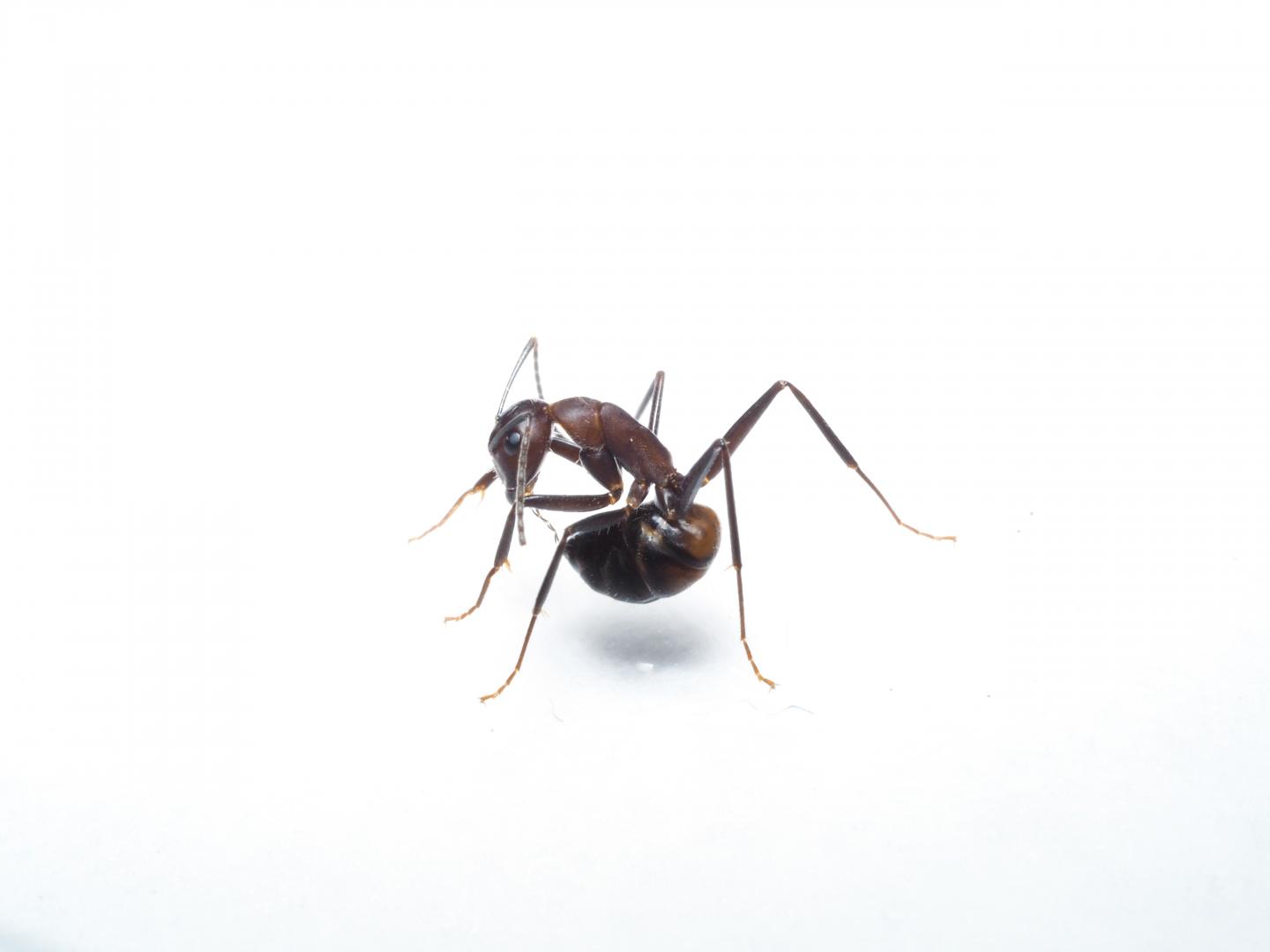
Credit: Simon Tragust

Ants use their own acid to disinfect themselves and their stomachs. A team from Martin Luther University Halle-Wittenberg (MLU) and the University of Bayreuth has found that formic acid kills harmful bacteria in the animal’s food, thereby reducing the risk of disease. At the same time, the acid significantly influences the ant’s intestinal flora. The new study was published in the journal eLife.

Formic acid is one of the simplest organic acids. It is produced in a special gland in the abdomen of numerous species of ant. “There was a long-standing assumption that the acid only served to ward off predators, for example insects and birds,” says Dr Simon Tragust from the Institute of Biology at MLU, who co-led the new study alongside Professor Heike Feldhaar from Bayreuth. A couple of years ago he was able to show that ants also use the acid in brood care, for example, to disinfect their brood and prevent the spread of harmful fungi.

The new study was based on an observation of the animals’ behaviour. “Whenever ants swallow food or water, they start cleaning their hindquarters afterwards,” says Tragust. The researcher wanted to figure out why they do that. “For one thing, the behaviour didn’t seem to be linked to digestion, because ants do this even after they have only ingested water,” he adds.

Through several experiments the team was able to show that ants disinfect themselves on the inside. “When the ants were able to access the acid, their chances of survival increased significantly after eating food enriched with pathogenic bacteria,” explains Tragust. What’s more, the beneficial effect was not limited to an individual animal. Ants pass food from their mouth to the mouths to their nest mates. “This is a major potential source of infection,” says Tragust. If the ant passing on the food has previously ingested the acid, the receiving ant had a lower risk of falling ill. According to Tragust, this behaviour might reduce the spread of infection within the ant colony.

The results of the new study also explain why some ants have very few bacteria in their digestive tracts; those that are present are primarily acid-resistant microbes. “Acid swallowing acts as a filter mechanism, structuring the ant’s microbiome,” explains Tragust. Ants are one of just a handful of animals with extremely acidic stomachs. “Otherwise this is only known to occur in humans and a few other vertebrates,” says Tragust. Unlike ants, stomach acid in humans is produced directly in the stomach, but the effects are the same: The acid kills germs in the food and influences the microbiome of the gut.

Incidentally, how formic acid precisely works is still a mystery, but it and other organic acids have long been used as additives in animal feed to kill harmful germs.

###

Study: Tragust S. et al. Formicine ants swallow their highly acidic poison for gut microbial selection and control. eLife (2020). doi: 10.7554/eLife.60287

https://doi.org/10.7554/eLife.60287

Media Contact
Tom Leonhardt
[email protected]

Original Source

https://pressemitteilungen.pr.uni-halle.de/index.php?modus=pmanzeige&pm_id=5137

Related Journal Article

http://dx.doi.org/10.7554/eLife.60287

Tags: BiochemistryBiologyChemistry/Physics/Materials SciencesEntomologyZoology/Veterinary Science
Share12Tweet8Share2ShareShareShare2

Related Posts

blank

Breakthrough in Environmental Cleanup: Scientists Develop Solar-Activated Biochar for Faster Remediation

February 7, 2026
blank

Cutting Costs: Making Hydrogen Fuel Cells More Affordable

February 6, 2026

Scientists Develop Hand-Held “Levitating” Time Crystals

February 6, 2026

Observing a Key Green-Energy Catalyst Dissolve Atom by Atom

February 6, 2026
Please login to join discussion

POPULAR NEWS

  • Robotic Ureteral Reconstruction: A Novel Approach

    Robotic Ureteral Reconstruction: A Novel Approach

    82 shares
    Share 33 Tweet 21
  • Digital Privacy: Health Data Control in Incarceration

    63 shares
    Share 25 Tweet 16
  • Study Reveals Lipid Accumulation in ME/CFS Cells

    57 shares
    Share 23 Tweet 14
  • Breakthrough in RNA Research Accelerates Medical Innovations Timeline

    53 shares
    Share 21 Tweet 13

About

We bring you the latest biotechnology news from best research centers and universities around the world. Check our website.

Follow us

Recent News

Phage-Antibiotic Combo Beats Resistant Peritoneal Infection

Boosting Remote Healthcare: Stepped-Wedge Trial Insights

Barriers and Boosters of Seniors’ Physical Activity in Karachi

Subscribe to Blog via Email

Enter your email address to subscribe to this blog and receive notifications of new posts by email.

Join 73 other subscribers
  • Contact Us

Bioengineer.org © Copyright 2023 All Rights Reserved.

Welcome Back!

Login to your account below

Forgotten Password?

Retrieve your password

Please enter your username or email address to reset your password.

Log In
No Result
View All Result
  • Homepages
    • Home Page 1
    • Home Page 2
  • News
  • National
  • Business
  • Health
  • Lifestyle
  • Science

Bioengineer.org © Copyright 2023 All Rights Reserved.