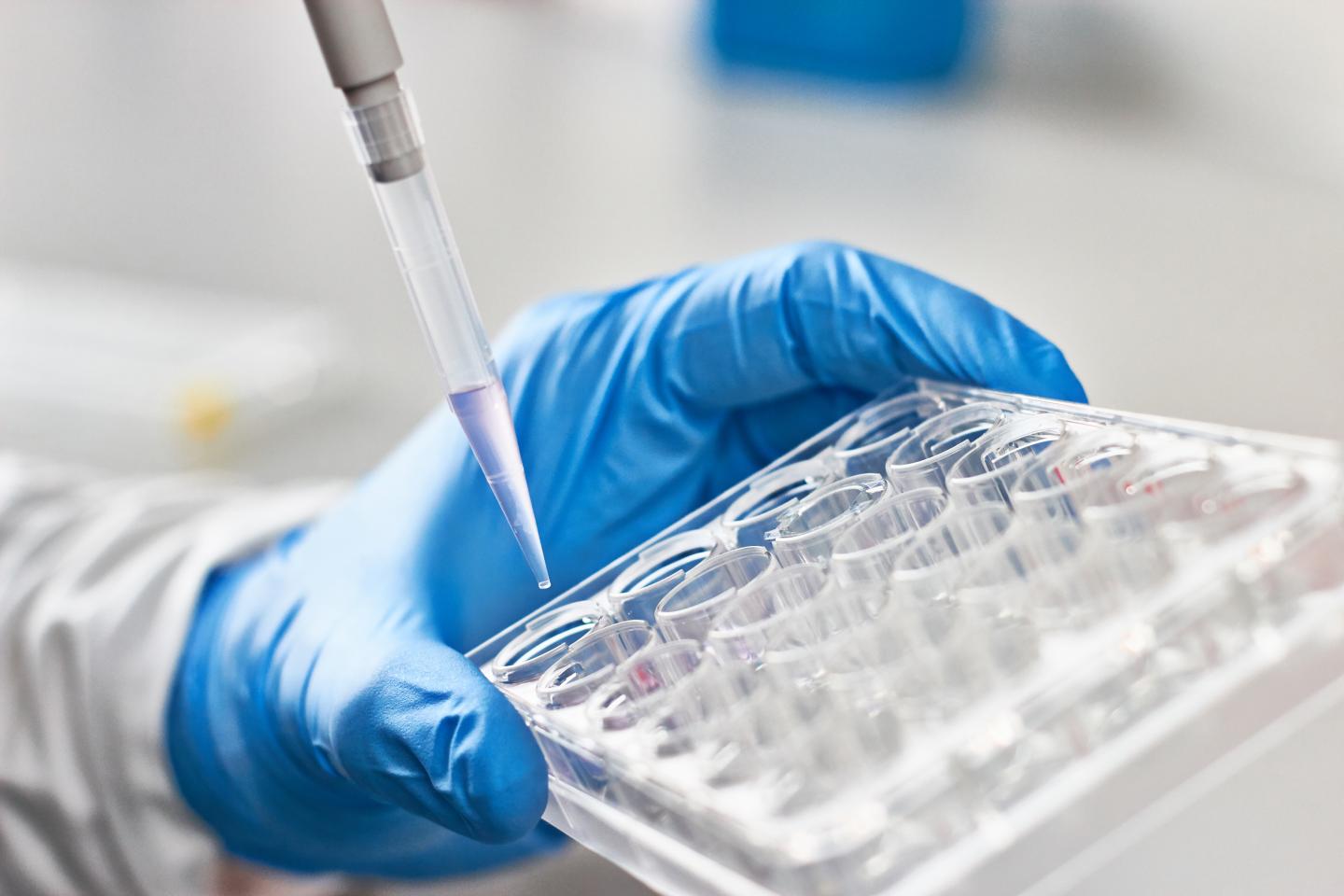
Credit: Catalin Rusnac
Researchers have made a breakthrough genetic discovery into the cause of a spectrum of severe neurological conditions.
A research study, led by the Murdoch Children’s Research Institute (MCRI) and gracing the cover of and published in the October edition of Human Mutation, found two new mutations in the KIF1A gene cause rare nerve disorders.
MCRI researcher Dr Simranpreet Kaur said mutations in the KIF1A gene caused ‘traffic jams’ in brain cells, called neurons, triggering a devastating range of progressive brain disorders. KIF1A-Associated Neurological Disorders (KAND) affects about 300 children worldwide.
“KAND symptoms often appear at birth or early childhood, have varying severity and can result in death within five years of life. Because clinical features overlap with other neurological disorders, children can be misdiagnosed or remain undiagnosed for a long period of time,” she said.
“Our study will lead to more diagnoses by expanding the mutation pool further, finding new KIF1A gene mistakes that cause KAND and related disorders.”
The study looked at a genetically undiagnosed girl with Rett syndrome, a severe neurodevelopmental disorder that predominantly affects females and causes developmental delay, speech problems and loss of hand skills and three others with a severe neurodevelopmental disorder who showed few Rett syndrome-like features and carried defects in the KIF1A gene.
Dr Kaur said using advanced genetic techniques, the research team identified that the girl with Rett syndrome, a disorder previously not associated with KAND, also had a previously undiscovered mutation in the KIF1A gene.
She said this ended an arduous diagnostic journey of 15 years for the girl.
“We used a range of testing methods to show that the girl had a mutation which disrupted her KIF1A gene that subsequently affected the function of KIF1A in the brain,” she said. “The three other study participants, who had clinical features overlapping with Rett syndrome, all had mutations that reduced KIF1A function. This suggests that KIF1A defects contributed towards the development of features overlapping with Rett syndrome.”
MCRI Professor John Christodoulou said the study had opened up opportunities to explore personalised therapies for those with KAND that could potentially have a critical impact on affected children and their families.
Professor Christodoulou said he also recommended genetic testing of the KIF1A gene be standard for genetically undiagnosed Rett syndrome individuals.
“Due to the considerable overlap of clinical symptoms of Rett syndrome patients with other neurodevelopmental disorders, it can be challenging to establish a precise genetic diagnosis,” he said.
“However, recent advances in next?generation sequencing have allowed us to identify new mutations in a growing list of genes known to cause intellectual disability, severe epilepsy and/or autistic behaviors where individuals have similarities to Rett syndrome, therefore providing a definitive genetic diagnosis for patients and closure for affected families.”
###
Researchers from the University of Melbourne, University of Michigan Medical School, Monash University, University of Sydney, Children’s Hospital at Westmead, University of Naples Federico II, Telethon Institute of Genetics and Medicine in Italy, University of Campania Luigi Vanvitelli, Columbia University Irving Medical Center, University of New South Wales, Garvan Institute of Medical Research, Deakin University, Copenhagen University Hospital and the Victorian Clinical Genetics Services also contributed to the study. Parent led organisation, KIF1A.org also worked collaboratively to provide resources to support this study. KIF1A.org will also support the ongoing translational therapeutic based research for KAND at MCRI.
Publication: Simranpreet Kaur, Nicole J. Van Bergen, Kristen J. Verhey, Cameron J. Nowell, Breane Budaitis, Yang Yue, Carolyn Ellaway, Nicola Brunetti?Pierri, Gerarda Cappuccio, Irene Bruno, Lia Boyle, Vincenzo Nigro, Annalaura Torella, Tony Roscioli, Mark J. Cowley, Sean Massey, Rhea Sonawane, Matthew D. Burton, Bitten Schonewolf?Greulich, Zeynep Tu?mer, Wendy K. Chung, Wendy A. Gold and John Christodoulou. ‘Expansion of the phenotypic spectrum of de novo missense variants in kinesin family member 1A (KIF1A),’ Human Mutation. DOI: 10.1002/humu.24079
Available for interview:
Dr Simran Kaur, MCRI Research Officer
Professor John Christodoulou, MCRI Theme Director of Genetics
The research conducted at the Murdoch Children’s Research Institute was supported by the Victorian Government’s Operational Infrastructure Support Program. S.K was the recipient of the Research Training Program scholarship. Work in the laboratory of K.J.V was supported by grants (R01GM070862 and R35GM131744) from the United States’ National Institutes of Health (NIH). B.B was supported by a Graduate Research Fellowship from the National Science Foundation under Grant No. DGE 1256260, the Rackham Predoctoral Fellowship, and the Endowment for the Development of Graduate Education Student Fellowship. The research work performed in W.K.C’s lab was supported by KIF1A.org and Grant R01NS114636 from NIH. L.B was supported by the Grant TL1TR001875.
Media Contact
Bridie Byrne
[email protected]
Original Source
https:/
Related Journal Article
http://dx.