• HOME
  • NEWS
  • EXPLORE
    • CAREER
      • Companies
      • Jobs
    • EVENTS
    • iGEM
      • News
      • Team
    • PHOTOS
    • VIDEO
    • WIKI
  • BLOG
  • COMMUNITY
    • FACEBOOK
    • INSTAGRAM
    • TWITTER
Saturday, February 7, 2026
BIOENGINEER.ORG
No Result
View All Result
  • Login
  • HOME
  • NEWS
  • EXPLORE
    • CAREER
      • Companies
      • Jobs
        • Lecturer
        • PhD Studentship
        • Postdoc
        • Research Assistant
    • EVENTS
    • iGEM
      • News
      • Team
    • PHOTOS
    • VIDEO
    • WIKI
  • BLOG
  • COMMUNITY
    • FACEBOOK
    • INSTAGRAM
    • TWITTER
  • HOME
  • NEWS
  • EXPLORE
    • CAREER
      • Companies
      • Jobs
        • Lecturer
        • PhD Studentship
        • Postdoc
        • Research Assistant
    • EVENTS
    • iGEM
      • News
      • Team
    • PHOTOS
    • VIDEO
    • WIKI
  • BLOG
  • COMMUNITY
    • FACEBOOK
    • INSTAGRAM
    • TWITTER
No Result
View All Result
Bioengineer.org
No Result
View All Result
Home NEWS Science News Biology

Laundry lint can cause significant tissue damage within marine mussels

Bioengineer by Bioengineer
October 2, 2020
in Biology
Reading Time: 3 mins read
0
IMAGE
Share on FacebookShare on TwitterShare on LinkedinShare on RedditShare on Telegram

IMAGE

Credit: University of Plymouth

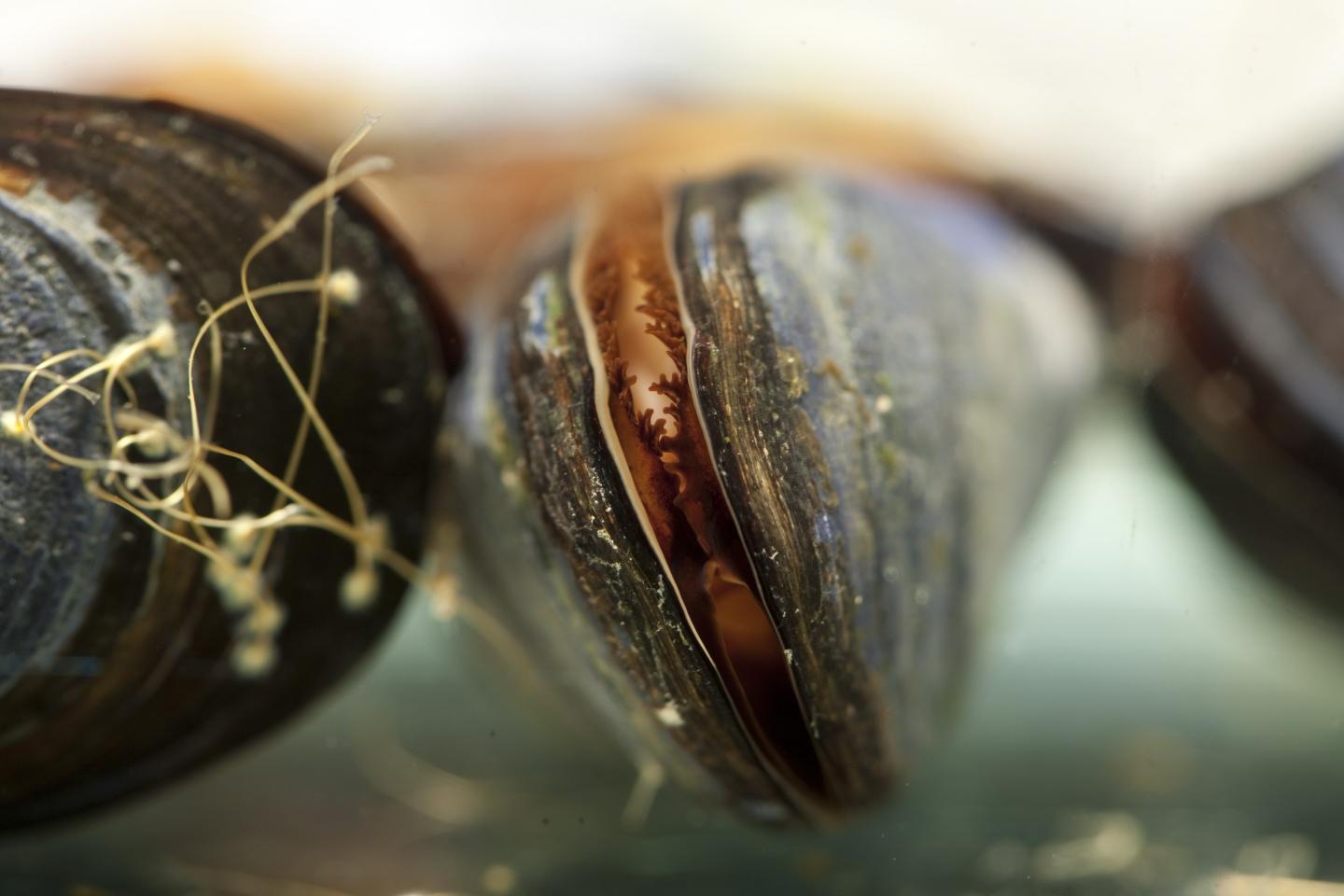
Microscopic fibres created during the laundry cycle can cause damage to the gills, liver and DNA of marine species, according to new research.

Scientists at the University of Plymouth exposed the Mediterranean mussel (Mytilus galloprovincialis), found in various locations across the world, to differing quantities of tumble dryer lint.

They demonstrated that increasing the amount of lint resulted in significant abnormality within the mussels’ gills, specifically leading to damage of tissues including deformity, extensive swelling and loss of cilia. In the liver, the presence of lint led to atrophy or deformities leading to loss of definition in digestive tubules.

The increasing concentration of fibres also led to a reduction in the mussels’ ability to filter food particles from the seawater and a significant increase in DNA strand breaks in the blood cells.

Scientists say the precise causes of the effects are not wholly clear, but are likely to arise from the fibres themselves and chemicals present within them.

They say the findings are unlikely to solely apply to lint, as its properties are consistent with other textiles and fibres found commonly in waste water and throughout the marine environment.

The study, published in the journal Chemosphere, was conducted by academics in the School of Biological and Marine Sciences and School of Geography, Earth and Environmental Sciences.

Dr Andrew Turner, Associate Professor of Environmental Sciences, was the study’s senior author and has previously conducted research highlighting the chemicals – including bromine, iron and zinc – found within lint.

He said: “The laundering of clothes and other textiles is among the most significant sources of synthetic microfibers within the environment. However, despite their known presence in a range of species, there have been very few studies looking in detail at their impact. This study shows for the first time what harm they can cause, and it is particularly interesting to consider that it is not just the fibres themselves which create issues but also the cocktail of more harmful chemicals which they can mobilise.”

Co-author Awadhesh Jha, Professor in Genetic Toxicology and Ecotoxicology, added: “Mytilus species are commonly used to monitor water quality in coastal areas, and the damage shown to them in this study is a cause for significant concern. Given their genetic similarity to other species and the fact they are found all over the world, we can also assume these effects will be replicated in other shellfish and marine species. Damage to DNA and impairment of the filter feeding abilities would have potential impact on the health of the organisms and the ecosystem. That is particularly significant as we look in the future to increase our reliance on aquaculture as a global source of food.”

This study is the latest research by the University in the field, with it being awarded a Queen’s Anniversary Prize for Higher and Further Education in 2020 for its ground-breaking research and policy impact on microplastics pollution in the oceans.

That research has included work showing that washing clothes releases thousands of microplastic particles into environment, and that devices fitted to washing machines can reduce the fibres produced in laundry cycle by up to 80%. Scientists from the University have also showed that wearing clothes could release more microfibres to the environment than washing them.

###

Media Contact
Alan Williams
[email protected]

Original Source

https://www.plymouth.ac.uk/news/laundry-lint-can-cause-significant-tissue-damage-within-marine-mussels

Related Journal Article

http://dx.doi.org/10.1016/j.chemosphere.2020.128290

Tags: BiodiversityBiologyCell BiologyEcology/EnvironmentMarine/Freshwater BiologyMicrobiologyPollution/RemediationPolymer ChemistryToxicology
Share12Tweet8Share2ShareShareShare2

Related Posts

Florida Cane Toad: Complex Spread and Selective Evolution

Florida Cane Toad: Complex Spread and Selective Evolution

February 7, 2026
New Study Uncovers Mechanism Behind Burn Pit Particulate Matter–Induced Lung Inflammation

New Study Uncovers Mechanism Behind Burn Pit Particulate Matter–Induced Lung Inflammation

February 6, 2026

DeepBlastoid: Advancing Automated and Efficient Evaluation of Human Blastoids with Deep Learning

February 6, 2026

Navigating the Gut: The Role of Formic Acid in the Microbiome

February 6, 2026
Please login to join discussion

POPULAR NEWS

  • Robotic Ureteral Reconstruction: A Novel Approach

    Robotic Ureteral Reconstruction: A Novel Approach

    82 shares
    Share 33 Tweet 21
  • Digital Privacy: Health Data Control in Incarceration

    63 shares
    Share 25 Tweet 16
  • Study Reveals Lipid Accumulation in ME/CFS Cells

    57 shares
    Share 23 Tweet 14
  • Breakthrough in RNA Research Accelerates Medical Innovations Timeline

    53 shares
    Share 21 Tweet 13

About

We bring you the latest biotechnology news from best research centers and universities around the world. Check our website.

Follow us

Recent News

Low-Inflammation in Elderly UTIs: Risks and Resistance

Urinary Clusterin: Tracking Kidney Disease and Treatment Response

Personalized Guide to Understanding and Reducing Chemicals

Subscribe to Blog via Email

Enter your email address to subscribe to this blog and receive notifications of new posts by email.

Join 73 other subscribers
  • Contact Us

Bioengineer.org © Copyright 2023 All Rights Reserved.

Welcome Back!

Login to your account below

Forgotten Password?

Retrieve your password

Please enter your username or email address to reset your password.

Log In
No Result
View All Result
  • Homepages
    • Home Page 1
    • Home Page 2
  • News
  • National
  • Business
  • Health
  • Lifestyle
  • Science

Bioengineer.org © Copyright 2023 All Rights Reserved.