NIH Investigator Co-Led International Research Effort
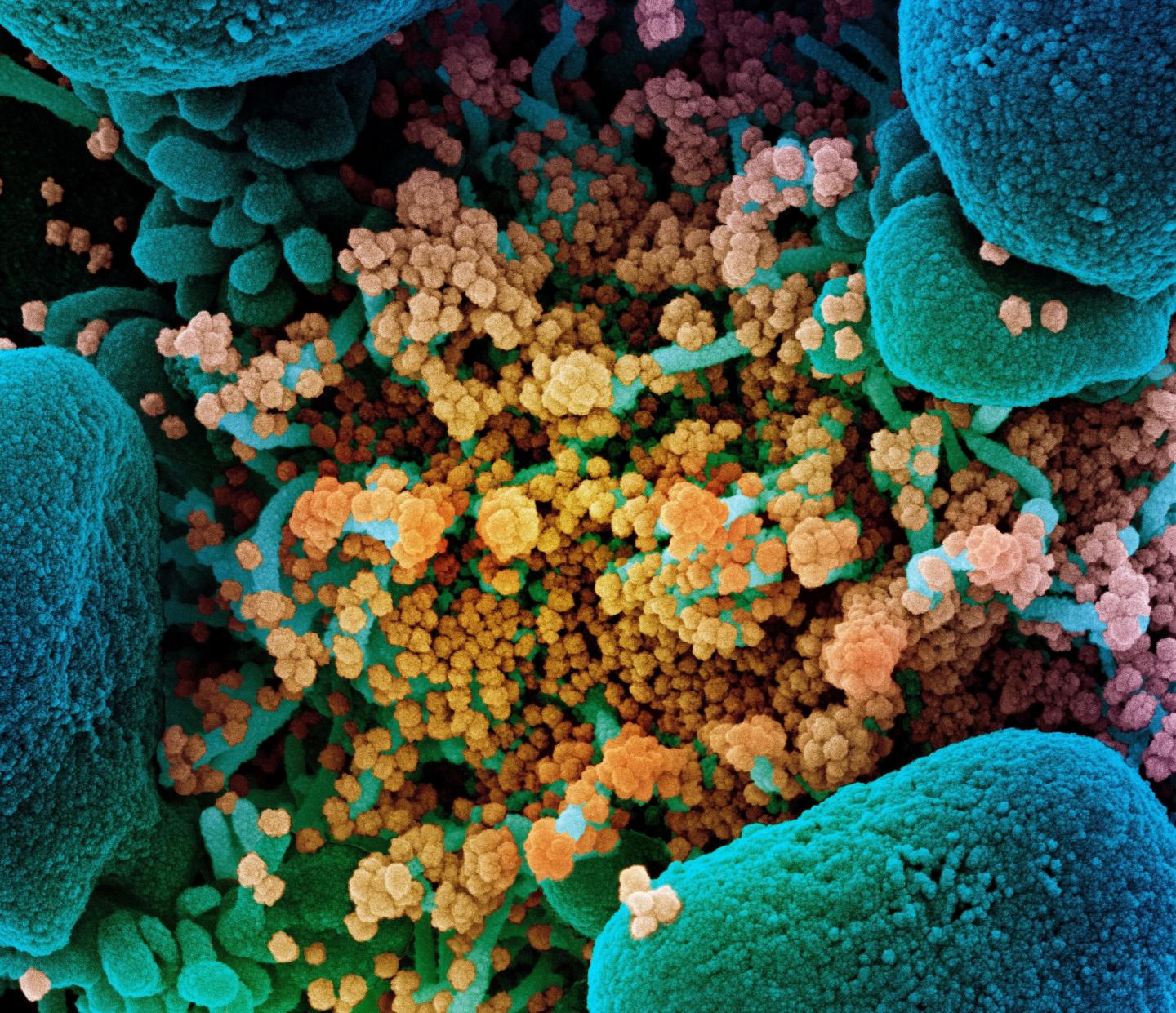
Credit: NIAID Integrated Research Facility, Fort Detrick, Maryland.
WHAT:
New findings by scientists at the National Institutes of Health and their collaborators help explain why some people with COVID-19 develop severe disease. The findings also may provide the first molecular explanation for why more men than women die from COVID-19.
The researchers found that more than 10% of people who develop severe COVID-19 have misguided antibodies?autoantibodies?that attack the immune system rather than the virus that causes the disease. Another 3.5% or more of people who develop severe COVID-19 carry a specific kind of genetic mutation that impacts immunity. Consequently, both groups lack effective immune responses that depend on type I interferon, a set of 17 proteins crucial for protecting cells and the body from viruses. Whether these proteins have been neutralized by autoantibodies or?because of a faulty gene?were produced in insufficient amounts or induced an inadequate antiviral response, their absence appears to be a commonality among a subgroup of people who suffer from life-threatening COVID-19 pneumonia.
These findings are the first published results from the COVID Human Genetic Effort, an international project spanning more than 50 genetic sequencing hubs and hundreds of hospitals. The effort is co-led by Helen Su, M.D., Ph.D., a senior investigator at the National Institute of Allergy and Infectious Diseases (NIAID), part of NIH; and Jean-Laurent Casanova, M.D., Ph.D., head of the St. Giles Laboratory of Human Genetics of Infectious Diseases at The Rockefeller University in New York. Major contributions were made by Luigi Notarangelo, M.D., chief of the NIAID Laboratory of Clinical Immunology and Microbiology (LCIM); Steven Holland, M.D., director of the NIAID Division of Intramural Research and senior investigator in the NIAID LCIM; clinicians and investigators in hospitals in the Italian cities of Brescia, Monza and Pavia, which were heavily hit by COVID-19; and researchers at the Uniformed Services University of the Health Sciences in Bethesda, Maryland.
The wide variation in the severity of disease caused by SARS-CoV-2, the virus behind COVID-19, has puzzled scientists and clinicians. SARS-CoV-2 can cause anything from a symptom-free infection to death, with many different outcomes in between. Since February 2020, Drs. Su and Casanova and their collaborators have enrolled thousands of COVID-19 patients to find out whether a genetic factor drives these disparate clinical outcomes.
The researchers discovered that among nearly 660 people with severe COVID-19, a significant number carried rare genetic variants in 13 genes known to be critical in the body’s defense against influenza virus, and more than 3.5% were completely missing a functioning gene. Further experiments showed that immune cells from those 3.5% did not produce any detectable type I interferons in response to SARS-CoV-2.
Examining nearly 1,000 patients with life-threatening COVID-19 pneumonia, the researchers also found that more than 10% had autoantibodies against interferons at the onset of their infection, and 95% of those patients were men. Biochemical experiments confirmed that the autoantibodies block the activity of interferon type I.
ARTICLE:
Q Zhang et al. Inborn errors of type I IFN immunity in patients with life-threatening COVID-19. Science DOI: 10.1126/science.abd4570 (2020).
P Bastard et al. Auto-antibodies against type I IFNs in patients with life-threatening COVID-19. Science DOI: 10.1126/science.abd4585 (2020).
WHO:
NIAID Director Anthony S. Fauci, M.D., NIAID Senior Investigator Helen C. Su, M.D., Ph.D., and Luigi Notarangelo, M.D., chief of the NIAID Laboratory of Clinical Immunology and Microbiology, are available for interviews.
CONTACT:
To schedule interviews, please contact NIAID Office of Communications, (301) 402-1663, [email protected].
###
NIAID conducts and supports research–at NIH, throughout the United States, and worldwide–to study the causes of infectious and immune-mediated diseases, and to develop better means of preventing, diagnosing and treating these illnesses. News releases, fact sheets and other NIAID-related materials are available on the NIAID website.
About the National Institutes of Health (NIH): NIH, the nation’s medical research agency, includes 27 Institutes and Centers and is a component of the U.S. Department of Health and Human Services. NIH is the primary federal agency conducting and supporting basic, clinical, and translational medical research, and is investigating the causes, treatments, and cures for both common and rare diseases. For more information about NIH and its programs, visit http://www.
Media Contact
NIAID Office of Communications
[email protected]
Related Journal Article
http://dx.