• HOME
  • NEWS
  • EXPLORE
    • CAREER
      • Companies
      • Jobs
    • EVENTS
    • iGEM
      • News
      • Team
    • PHOTOS
    • VIDEO
    • WIKI
  • BLOG
  • COMMUNITY
    • FACEBOOK
    • INSTAGRAM
    • TWITTER
Saturday, February 7, 2026
BIOENGINEER.ORG
No Result
View All Result
  • Login
  • HOME
  • NEWS
  • EXPLORE
    • CAREER
      • Companies
      • Jobs
        • Lecturer
        • PhD Studentship
        • Postdoc
        • Research Assistant
    • EVENTS
    • iGEM
      • News
      • Team
    • PHOTOS
    • VIDEO
    • WIKI
  • BLOG
  • COMMUNITY
    • FACEBOOK
    • INSTAGRAM
    • TWITTER
  • HOME
  • NEWS
  • EXPLORE
    • CAREER
      • Companies
      • Jobs
        • Lecturer
        • PhD Studentship
        • Postdoc
        • Research Assistant
    • EVENTS
    • iGEM
      • News
      • Team
    • PHOTOS
    • VIDEO
    • WIKI
  • BLOG
  • COMMUNITY
    • FACEBOOK
    • INSTAGRAM
    • TWITTER
No Result
View All Result
Bioengineer.org
No Result
View All Result
Home NEWS Science News Chemistry

Alcohol, nicotine mix during pregnancy increases health risk in newborns

Bioengineer by Bioengineer
September 23, 2020
in Chemistry
Reading Time: 3 mins read
0
IMAGE
Share on FacebookShare on TwitterShare on LinkedinShare on RedditShare on Telegram

Report: Combination increases brain damage and development risk

IMAGE

Credit: Houston

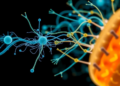
University of Houston researchers have found that during early pregnancy, the mix of alcohol and nicotine significantly alters the gene regulatory pathways of the developing fetus, which can lead to major deficiencies in brain development. Metin Akay, founding chair and John S. Dunn Endowed Chair Professor of biomedical engineering is reporting the findings, the first study of its kind, in the Nature journal Scientific Reports.

“The alterations of these pathways are crucial since they are involved in neural network formation, cell development and communication,” reports Akay. “Among pathways in which many genes and miRNAs were significantly altered in response to perinatal nicotine/alcohol co-exposure are dopamine cell growth, neuronal migration, neuronal axon guidance, neurotrophin signaling and glutamatergic synapse.”

Addictive substances act on the brain’s reward system by triggering the release of the dopamine hormone through the activation of the mesocorticolimbic DA system, also known as the reward circuitry in the brain.

“A characteristic structure of dopamine neurons are the long axons that project to different regions of the brain to build functional networks, which results in pathways such as the mesocorticolimbic DA system,” said Akay. “It is highly likely that axon guidance is modulated in the newborn after perinatal substance abuse and may cause faulty assembly of the network.”

The alterations in this pathway cause interruptions in cellular communication and development, and finally, lead to synaptic rearrangements in the plasticity and neurological disorders.

It’s no small problem.

Maternal substance abuse (drinking and smoking) during pregnancy increases health risks, including cognitive impairments, lower academic achievement, attention deficit hyperactivity disorder (ADHD), the likelihood of substance abuse in newborns, and may even lead sudden infant death syndrome (SIDS). Despite these harmful effects, more than 10% of pregnant women drink and smoke, according to the Centers for Disease Control.

Following alcohol treatment, 1,257 unique genes were found to be differentially upregulated and 330 were differentially downregulated. Following perinatal nicotine-alcohol treatment contrasted against the alcohol group, 2,113 genes were upregulated and 1,836 were downregulated.

“A more comprehensive treatment needs to be developed for the perinatal co-exposure since more pathways and gene expressions were significantly altered, suggesting the involvement of several addiction pathways in newborns,” said Akay.

“Until now, the influence of maternal alcohol and nicotine co-exposure on the brain development of newborns has not been investigated at the multi scale from molecular, to cellular and to systemic levels,” said Yasemin Akay, instructional associate professor of biomedical engineering and the co-lead investigator on the project. “Our group has focused on the integration of molecular, cellular and systemic data – using a custom-made implantable dopamine probe and artificial intelligence – to better understand the addiction mechanism and develop effective therapeutics,” she said.

###

The paper was also co-authored by Tina Kazemi, a graduate student supervised by both Metin and Yasemin Akay.

Media Contact
Laurie Fickman
[email protected]

Original Source

https://uh.edu/news-events/stories/2020/september-2020/09232020-metin-akay-pregnancy-alcohol-nicotine-mix-risk-newborns.php

Related Journal Article

http://dx.doi.org/10.1038/s41598-020-71875-1

Tags: BiochemistryBiomedical/Environmental/Chemical EngineeringCell BiologyDevelopmental/Reproductive BiologyEvolutionGeneticsMedicine/HealthneurobiologyNeurochemistryParenting/Child Care/Family
Share12Tweet8Share2ShareShareShare2

Related Posts

blank

Breakthrough in Environmental Cleanup: Scientists Develop Solar-Activated Biochar for Faster Remediation

February 7, 2026
blank

Cutting Costs: Making Hydrogen Fuel Cells More Affordable

February 6, 2026

Scientists Develop Hand-Held “Levitating” Time Crystals

February 6, 2026

Observing a Key Green-Energy Catalyst Dissolve Atom by Atom

February 6, 2026
Please login to join discussion

POPULAR NEWS

  • Robotic Ureteral Reconstruction: A Novel Approach

    Robotic Ureteral Reconstruction: A Novel Approach

    82 shares
    Share 33 Tweet 21
  • Digital Privacy: Health Data Control in Incarceration

    63 shares
    Share 25 Tweet 16
  • Study Reveals Lipid Accumulation in ME/CFS Cells

    57 shares
    Share 23 Tweet 14
  • Breakthrough in RNA Research Accelerates Medical Innovations Timeline

    53 shares
    Share 21 Tweet 13

About

We bring you the latest biotechnology news from best research centers and universities around the world. Check our website.

Follow us

Recent News

Evaluating Pediatric Emergency Care Quality in Ethiopia

TPMT Expression Predictions Linked to Azathioprine Side Effects

Improving Dementia Care with Enhanced Activity Kits

Subscribe to Blog via Email

Success! An email was just sent to confirm your subscription. Please find the email now and click 'Confirm' to start subscribing.

Join 73 other subscribers
  • Contact Us

Bioengineer.org © Copyright 2023 All Rights Reserved.

Welcome Back!

Login to your account below

Forgotten Password?

Retrieve your password

Please enter your username or email address to reset your password.

Log In
No Result
View All Result
  • Homepages
    • Home Page 1
    • Home Page 2
  • News
  • National
  • Business
  • Health
  • Lifestyle
  • Science

Bioengineer.org © Copyright 2023 All Rights Reserved.