Credit: UTHSC
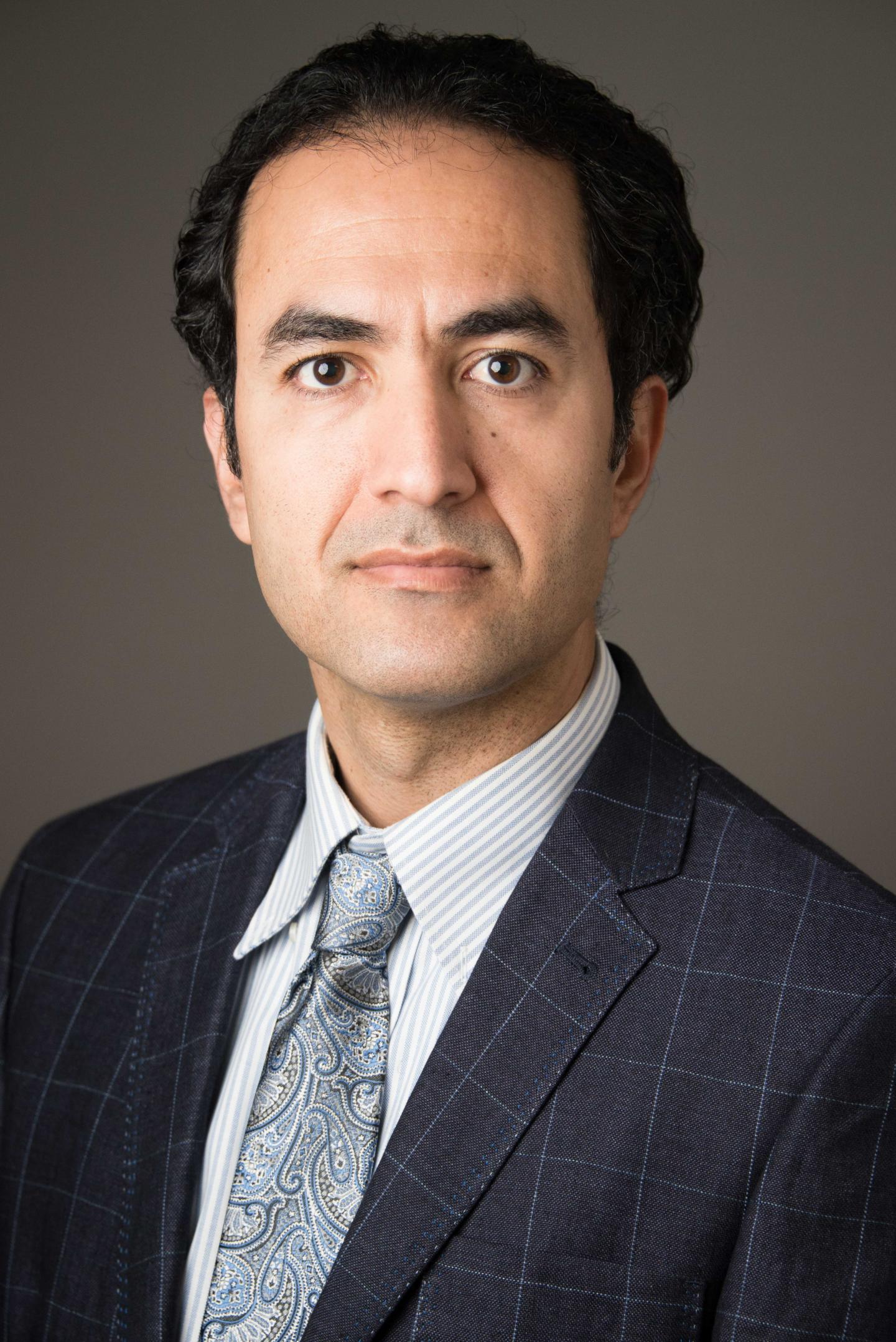
Memphis, Tenn. (September 17, 2020) – Siamak Yousefi, PhD, an assistant professor in the Department of Ophthalmology and the Department of Genetics, Genomics, and Informatics at the University of Tennessee Health Science Center, has received two grants worth more than $600,000 combined to further develop artificial intelligence (AI) to help diagnose and monitor glaucoma.
Dr. Yousefi is the recipient of $451,139 from the National Eye Institute of the National Institutes of Health for a two-year study aimed at improving glaucoma monitoring using an artificial-intelligence-enabled dashboard. He was awarded $180,000 from the Bright Focus Foundation to study the impact of glaucoma on certain retinal ganglion cells, as a path to uncover more information on glaucoma progression. The foundation is a nonprofit organization supporting research on brain and eye diseases.
“Glaucoma affects over 90 million people worldwide and its incidence is predicted to double over the next two decades,” Dr. Yousefi said. “The costs of treatment of glaucoma increase sharply for later stages of the disease. Therefore, earlier detection of glaucoma and its progression could result not only in retaining vision, but also in significant financial savings. Effective monitoring and determining appropriate treatment strategies require reliable approaches that quantify disease-induced changes more accurately.”
With the NIH grant, Dr. Yousefi proposes to develop state-of-the-art machine learning and advanced visualization dashboards using a large clinical dataset with about 1 million samples to provide a fuller and more-informative quantitative glaucoma assessment that is accessible to clinicians.
With the Bright Focus grant, Dr. Yousefi will seek to identify the impact of glaucoma on certain retinal ganglion cells. Glaucoma-induced vision loss and blindness result from the slow degeneration and death of retinal ganglion cells, which can be subdivided into more than 30 subtypes. Certain of these cells are more vulnerable to glaucoma-induced damage than others.
“We will develop and refine novel artificial intelligence approaches to study single-cell RNA-sequencing data, and to identify retinal ganglion cell subtypes that are more impacted by glaucoma,” he said. “We hypothesize that state-of-the-art AI algorithms can improve identification of the subtypes that are affected in early stages of glaucoma. Such analyses can advance our understanding of the genetic basis for glaucoma-induced retinal ganglion cell death and may lead to possible therapeutic interventions.”
Dr. Yousefi is the director of the Data Mining and Machine Learning laboratory at UTHSC. He and his team develop state-of-the-art models to identify eye conditions from ocular imaging data. His laboratory is among a few in the nation working on data mining techniques applied on a range of eye conditions including glaucoma, macular degeneration, keratoconus, keratoplasty, and uveitis.
###
As Tennessee’s only public, statewide, academic health system, the mission of the University of Tennessee Health Science Center is to bring the benefits of the health sciences to the achievement and maintenance of human health through education, research, clinical care, and public service, with a focus on the citizens of Tennessee and the region. The main campus in Memphis includes six colleges: Dentistry, Graduate Health Sciences, Health Professions, Medicine, Nursing, and Pharmacy. UTHSC also educates and trains medicine, pharmacy, dentistry, and health professions students, as well as medical residents and fellows, at major sites in Knoxville, Chattanooga, and Nashville. For more information, visit http://www.
Media Contact
Amber Carter
[email protected]