• HOME
  • NEWS
  • EXPLORE
    • CAREER
      • Companies
      • Jobs
    • EVENTS
    • iGEM
      • News
      • Team
    • PHOTOS
    • VIDEO
    • WIKI
  • BLOG
  • COMMUNITY
    • FACEBOOK
    • INSTAGRAM
    • TWITTER
Friday, January 2, 2026
BIOENGINEER.ORG
No Result
View All Result
  • Login
  • HOME
  • NEWS
  • EXPLORE
    • CAREER
      • Companies
      • Jobs
        • Lecturer
        • PhD Studentship
        • Postdoc
        • Research Assistant
    • EVENTS
    • iGEM
      • News
      • Team
    • PHOTOS
    • VIDEO
    • WIKI
  • BLOG
  • COMMUNITY
    • FACEBOOK
    • INSTAGRAM
    • TWITTER
  • HOME
  • NEWS
  • EXPLORE
    • CAREER
      • Companies
      • Jobs
        • Lecturer
        • PhD Studentship
        • Postdoc
        • Research Assistant
    • EVENTS
    • iGEM
      • News
      • Team
    • PHOTOS
    • VIDEO
    • WIKI
  • BLOG
  • COMMUNITY
    • FACEBOOK
    • INSTAGRAM
    • TWITTER
No Result
View All Result
Bioengineer.org
No Result
View All Result
Home NEWS Science News Immunology

Using artificial intelligence to predict genuine outcomes in COVID-19 patients

Bioengineer by Bioengineer
September 14, 2020
in Immunology
Reading Time: 2 mins read
0
IMAGE
Share on FacebookShare on TwitterShare on LinkedinShare on RedditShare on Telegram

IMAGE

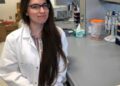
Credit: West Virginia University

Artificial intelligence can do more than recommend a song or suggest what to write in an email. It might even be able to predict outcomes in COVID-19 patients.

Larissa Casaburi, a researcher in the West Virginia University School of Medicine, is using artificial intelligence to study how being a coal miner affects COVID-19 outcomes. She’s also investigating the ways smoking, vaping and having a chronic lung condition influence how COVID-19 patients fare.

“One of the features of machine learning is that it can develop personalized predictive models,” said Casaburi, an associate professor of radiology. “It’s precise medicine. It’s a novel approach to improve patients’ care, and there’s a lot of research interest in it.”

Using demographic and health data associated with COVID-19 patients in West Virginia, Casaburi and her colleagues will build a machine learning model that predicts the patients’ outcomes based on multiple variables. They will draw this data from the WVU COVID-19 registry.

“The artificial intelligence will make the analysis more accurate than traditional statistical models,” she said.

The model–produced by SporeData, a partner in the project–will consider whether patients have asthma, chronic obstructive pulmonary disease or other lung conditions. It will appraise CT scans of their lungs. And it will take into account whether they have chronic lung disease, whether they smoke or vape, whether they have worked in a coal mine and other factors.

The West Virginia Clinical and Translational Science Institute has funded the $30,000 project.

“West Virginia is uniquely positioned to test our hypothesis, mainly because of the high percentage of smokers here,” Casaburi said. “Approximately 25 percent of the population has a history of smoking.”

According to the Centers for Disease Control and Prevention, West Virginia is tied with Maine for the highest prevalence of asthma. COPD is also prevalent in the state. In 2011, the CDC reported that 8.9 percent of West Virginians had been diagnosed with the disease.

But “one of the most important parts of this project is the large population of coal miners” in West Virginia, Casaburi said. According to the Energy Information Administration, West Virginia was the largest employer of coal workers in 2016.

The model could help doctors individualize care for COVID-19 patients, rather than taking a one-size-fits-all approach.

Research reported in this publication was supported by the West Virginia Clinical and Translational Science Institute. WVCTSI is funded by an IDeA Clinical and Translational grant from the National Institute of General Medical Sciences, under Award Number U54GM104942, to support the mission of building clinical and translational research infrastructure and capacity to impact health disparities in West Virginia. The content is solely the responsibility of the authors and does not necessarily represent the official views of CTSI.

###

Media Contact
Cassie Thomas
[email protected]

Original Source

https://wvutoday.wvu.edu/stories/2020/09/14/using-artificial-intelligence-to-predict-genuine-outcomes-in-covid-19-patients

Tags: Environmental HealthInfectious/Emerging DiseasesMedicine/HealthPublic Health
Share12Tweet8Share2ShareShareShare2

Related Posts

IMAGE

UMass Amherst grad student awarded fellowship for food allergy research

July 23, 2021
IMAGE

Less-sensitive COVID-19 tests may still achieve optimal results if enough people tested

July 22, 2021

Public trust in CDC, FDA, and Fauci holds steady, survey shows

July 20, 2021

USC study shows male-female differences in immune cell function

July 19, 2021
Please login to join discussion

POPULAR NEWS

  • blank

    PTSD, Depression, Anxiety in Childhood Cancer Survivors, Parents

    112 shares
    Share 45 Tweet 28
  • NSF funds machine-learning research at UNO and UNL to study energy requirements of walking in older adults

    71 shares
    Share 28 Tweet 18
  • Exploring Audiology Accessibility in Johannesburg, South Africa

    52 shares
    Share 21 Tweet 13
  • SARS-CoV-2 Subvariants Affect Outcomes in Elderly Hip Fractures

    44 shares
    Share 18 Tweet 11

About

We bring you the latest biotechnology news from best research centers and universities around the world. Check our website.

Follow us

Recent News

AI Innovations in Non-Small Cell Lung Cancer Care

Asthma Medicine Costs and Access in Nigeria

OBP-801 Reduces Fibrosis and Eye Pressure in Rabbits

Subscribe to Blog via Email

Success! An email was just sent to confirm your subscription. Please find the email now and click 'Confirm' to start subscribing.

Join 71 other subscribers
  • Contact Us

Bioengineer.org © Copyright 2023 All Rights Reserved.

Welcome Back!

Login to your account below

Forgotten Password?

Retrieve your password

Please enter your username or email address to reset your password.

Log In
No Result
View All Result
  • Homepages
    • Home Page 1
    • Home Page 2
  • News
  • National
  • Business
  • Health
  • Lifestyle
  • Science

Bioengineer.org © Copyright 2023 All Rights Reserved.