• HOME
  • NEWS
  • EXPLORE
    • CAREER
      • Companies
      • Jobs
    • EVENTS
    • iGEM
      • News
      • Team
    • PHOTOS
    • VIDEO
    • WIKI
  • BLOG
  • COMMUNITY
    • FACEBOOK
    • INSTAGRAM
    • TWITTER
Saturday, February 7, 2026
BIOENGINEER.ORG
No Result
View All Result
  • Login
  • HOME
  • NEWS
  • EXPLORE
    • CAREER
      • Companies
      • Jobs
        • Lecturer
        • PhD Studentship
        • Postdoc
        • Research Assistant
    • EVENTS
    • iGEM
      • News
      • Team
    • PHOTOS
    • VIDEO
    • WIKI
  • BLOG
  • COMMUNITY
    • FACEBOOK
    • INSTAGRAM
    • TWITTER
  • HOME
  • NEWS
  • EXPLORE
    • CAREER
      • Companies
      • Jobs
        • Lecturer
        • PhD Studentship
        • Postdoc
        • Research Assistant
    • EVENTS
    • iGEM
      • News
      • Team
    • PHOTOS
    • VIDEO
    • WIKI
  • BLOG
  • COMMUNITY
    • FACEBOOK
    • INSTAGRAM
    • TWITTER
No Result
View All Result
Bioengineer.org
No Result
View All Result
Home NEWS Science News Health

Muscle weakness in patients in intensive care: Potential approach to treatment

Bioengineer by Bioengineer
September 9, 2020
in Health
Reading Time: 2 mins read
0
IMAGE
Share on FacebookShare on TwitterShare on LinkedinShare on RedditShare on Telegram

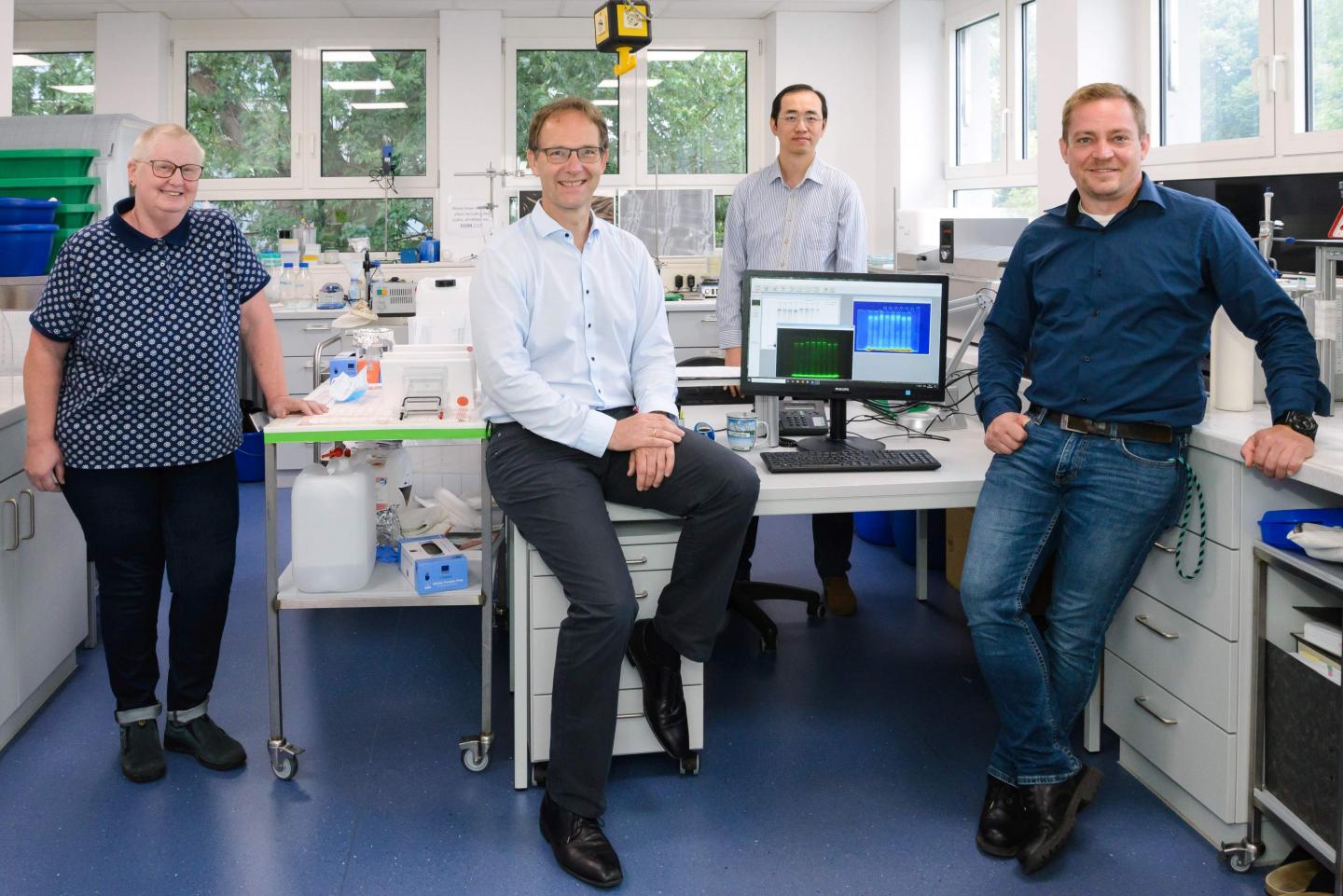
Critical Illness Myopathy can be prevented by stretching the patient’s peripheral muscles during the ventilation phase
IMAGE

Credit: FZ/Wibberg

Critical Illness Myopathy (CIM) has taken on a new relevance as a result of the Corona virus. CIM is the specialists’ term for a muscle weakness which occurs in patients being treated in intensive care for a longer period of time. In a severe case of a Covid19 infection, for example, many patients need artificial ventilation for a long time – sometimes over several weeks. CIM subsequently occurs in up to 30 percent of these patients, and this can entail symptoms of long-term paralysis, making it more difficult to take the patient off the ventilator. A group of researchers headed by Prof. Wolfgang Linke, the Director of the Institute of Physiology II at the University of Münster’s Medical Faculty, has now found a potential method of treating Critical Illness Myopathy. The research results have been published in the latest issue of the journal Nature Communications.

As a result of its research, the team was able to describe for the first time what happens in an organism when the production of the muscle protein titin is suppressed in the skeletal muscle. Titin is the largest protein in humans and vertebrates, ensuring both stability and elasticity and functioning as a sensor for muscle power. The researchers deactivated titin in the organisms of mice and were able to demonstrate that after three to four weeks the animals’ muscle power declined markedly. These findings can now be used in CIM research. In the case of patients on ventilation, complete immobilization – sometimes lasting weeks – means that there is no longer any incentive in the muscle to produce the muscle protein and thus to enable muscles to grow; the titin spring is defective. As a consequence, the muscle tissue shrinks.

The study now published indicates that Critical Illness Myopathy can be prevented by stretching the patient’s peripheral muscles during the ventilation phase. Especially in view of the Corona pandemic and the higher number of patients needing ventilation, the Münster researchers’ findings give cause for optimism.

###

Media Contact
Prof Wolfgang A. Linke
[email protected]

Original Source

https://www.medizin.uni-muenster.de/fakultaet/news/muskelschwaeche-bei-intensivstation-patienten-forscher-finden-potenziellen-therapieansatz.html

Related Journal Article

http://dx.doi.org/10.1038/s41467-020-18131-2

Tags: Medicine/HealthPhysiology
Share12Tweet8Share2ShareShareShare2

Related Posts

Evaluating Pediatric Emergency Care Quality in Ethiopia

February 7, 2026

TPMT Expression Predictions Linked to Azathioprine Side Effects

February 7, 2026

Improving Dementia Care with Enhanced Activity Kits

February 7, 2026

Decoding Prostate Cancer Origins via snFLARE-seq, mxFRIZNGRND

February 7, 2026
Please login to join discussion

POPULAR NEWS

  • Robotic Ureteral Reconstruction: A Novel Approach

    Robotic Ureteral Reconstruction: A Novel Approach

    82 shares
    Share 33 Tweet 21
  • Digital Privacy: Health Data Control in Incarceration

    63 shares
    Share 25 Tweet 16
  • Study Reveals Lipid Accumulation in ME/CFS Cells

    57 shares
    Share 23 Tweet 14
  • Breakthrough in RNA Research Accelerates Medical Innovations Timeline

    53 shares
    Share 21 Tweet 13

About

We bring you the latest biotechnology news from best research centers and universities around the world. Check our website.

Follow us

Recent News

Evaluating Pediatric Emergency Care Quality in Ethiopia

TPMT Expression Predictions Linked to Azathioprine Side Effects

Improving Dementia Care with Enhanced Activity Kits

Subscribe to Blog via Email

Success! An email was just sent to confirm your subscription. Please find the email now and click 'Confirm' to start subscribing.

Join 73 other subscribers
  • Contact Us

Bioengineer.org © Copyright 2023 All Rights Reserved.

Welcome Back!

Login to your account below

Forgotten Password?

Retrieve your password

Please enter your username or email address to reset your password.

Log In
No Result
View All Result
  • Homepages
    • Home Page 1
    • Home Page 2
  • News
  • National
  • Business
  • Health
  • Lifestyle
  • Science

Bioengineer.org © Copyright 2023 All Rights Reserved.