Credit: DIfE
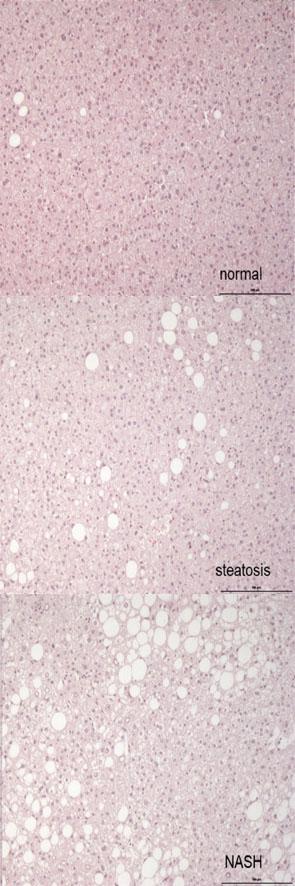
Non-alcoholic fatty liver disease is the most common chronic liver disease in the world, with sometimes life-threatening consequences. A high-protein, calorie-reduced diet can cause the harmful liver fat to melt away – more effectively than a low-protein diet. A new study by DIfE/DZD researchers published in the journal Liver International shows which molecular and physiological processes are potentially involved.
Causes and consequences of a non-alcoholic fatty liver
Non-alcoholic fatty liver disease is characterized by a build-up of fat in the liver and is often associated with obesity, type 2 diabetes, high blood pressure and lipid disorders. If left untreated, fatty liver can lead to cirrhosis with life-threatening consequences. The causes of the disease range from an unhealthy lifestyle – that is, eating too many high-fat, high-sugar foods and lack of exercise – to genetic components. Already in previous studies, the research team led by PD Dr. Olga Ramich and Professor Andreas Pfeiffer from the German Institute of Human Nutrition Potsdam-Rehbruecke (DIfE) observed a positive effect of a high-protein diet on liver fat content. “The new results now give us deeper insights into how the high-protein diet works,” said Ramich, head of the research group Molecular Nutritional Medicine at DIfE.
High-protein diet is more effective than low-protein diet
For the current study, the research team led by Ramich and Pfeiffer investigated how the protein content of food influences the amount of liver fat in obese people with a non-alcoholic fatty liver. For this, the 19 participants were to follow either a diet with a high or low protein content for three weeks. Subsequently, surgery to treat obesity (bariatric surgery) was carried out and liver samples were collected.
Analysis of the samples showed that a calorie-reduced, high-protein diet decreased liver fat more effectively than a calorie-reduced, low-protein diet: while the liver-fat content in the high-protein group decreased by around 40 percent, the amount of fat in the liver samples of the low-protein group remained unchanged. The study participants in both groups lost a total of around five kilograms. “If the results continue to be confirmed in larger studies, the recommendation for an increased intake of protein together with a healthy low-fat diet as part of an effective fatty liver therapy could find its way into medical practice,” said Andreas Pfeiffer, head of the Research Group Clinical Nutrition/DZD at DIfE and the Clinic for Endocrinology in the Charité — Universitätsmedizin Berlin, Campus Benjamin Franklin.
Molecular fat absorption mechanisms
The researchers assume that the positive effect of the high-protein diet is mainly due to the fact that the uptake, storage and synthesis of fat is suppressed. This is indicated by extensive genetic analyses of the liver samples that Professor Stephan Herzig and his team at Helmholtz Zentrum München conducted. According to these analyses, numerous genes that are responsible for the absorption, storage and synthesis of fat in the liver were less active after the high-protein diet than after the low-protein diet.
Unexpected results
In addition, Olga Ramich’s research group, together with the Department of Physiology of Energy Metabolism at DIfE, also investigated the functions of the mitochondria. “Mitochondrial activity was very similar in both groups. That surprised us. We originally assumed that the high-protein diet would increase mitochondrial activity and thus contribute to the degradation of liver fat,” said Department Head Professor Susanne Klaus. The researchers were also surprised that the serum levels of Fibroblast Growth Factor 21 (FGF21) were lower after the high-protein diet which reduced liver fat than after the low-protein diet. “FGF21 is known to have beneficial effects on metabolic regulation. Further studies will be necessary to show why the factor was reduced in the actually positively acting high-protein diet,” said Ramich. Furthermore, autophagy activity was lower in liver tissue after the high-protein diet compared to the low-protein diet. “Lipid degradation via ‘lipophagy’, as a special form of autophagy, therefore does not appear to be involved in the breakdown of liver fat in the high-protein diet.”
As a next step, Ramich and Pfeiffer intend to follow up their findings about the mechanisms involved and thus gain new insights into the mode of action of targeted dietary intervention strategies.
###
Publication
Xu, C., Markova, M., Seebeck, N., Loft, A., Hornemann, S., Gantert, T., Kabisch, S., Herz, K., Loske, J., Ost, M., Coleman, V., Klauschen, F., Rosenthal, A., Lange, V., Machann, J., Klaus, S., Grune, T., Herzig, S., Pivovarova-Ramich, O., Pfeiffer, A. F. H.: High-protein diet more effectively reduces hepatic fat than low-protein diet despite lower autophagy and FGF21 levels. Liver Inter. in press (E-pub ahead of print) (2020).
Media Contact
Birgit Niesing
[email protected]
Original Source
https:/
Related Journal Article
http://dx.