Credit: UTHSC
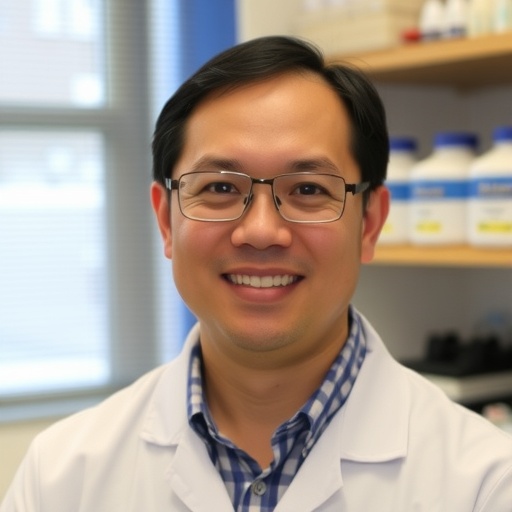
Memphis, Tenn. (August 14, 2020) – Despite a plethora of treatment options, the burdens of cardiovascular and kidney disease still pose significant challenges to public health and the economy. Efforts to reduce cardiovascular and kidney disease include scientific investigations into the mechanisms that underlie alterations in the function of blood vessels. These efforts include the research done in the laboratory of Adebowale Adebiyi, PhD, professor of Physiology in the College of Medicine at the University of Tennessee Health Science Center. Over the last 10 years, Dr. Adebiyi’s laboratory has focused on investigating cellular mechanisms that control vascular and kidney functions in health and disease of newborns and adults. Dr. Adebiyi recently received two new grants from the National Institutes of Health to support these research initiatives.
The first grant, a $1.8 million award from the National Heart, Lung, and Blood Institute, will support his project, “Control of microvascular function by ion channels.” The central objective of the project is to study how ion channels in nerve endings that impinge on blood vessels regulate blood flow and their roles in vascular and kidney dysfunctions caused by oxidative stress.
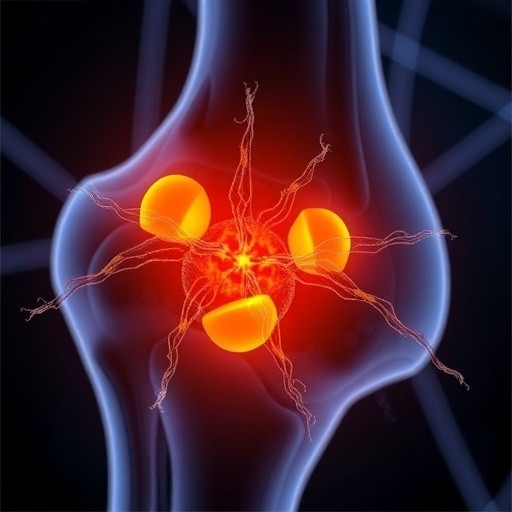
Although a large body of research has studied the function of ion channels in the smooth muscle and inner lining of blood vessels, there remain significant knowledge gaps on their roles in vascular adventitia (the outermost connective tissue covering blood vessels). Dr. Adebiyi’s group has identified calcium-permeable ion channels in this outer covering in nerves that respond to oxidative stress by promoting the release of chemicals known as neurotransmitters. These neurotransmitters activate receptors on blood vessel cells leading to changes in blood supply to the kidneys and blood pressure.
“We proposed to use a repertoire of first-rate scientific approaches to study interventions that modulate calcium-permeable ion channels in perivascular nerves and their contributions to oxidative stress-induced vascular and kidney dysfunction,” Dr. Adebiyi said. “We anticipate that this project will unravel new insights into the mechanisms that control vascular reactivity and their roles in cardiovascular and kidney disorders, thereby providing potential therapeutic targets for the prevention or treatment of these life-threatening diseases.”
Dr. Adebiyi’s laboratory is one of the few in the country that uses preclinical models to investigate the basic science of kidney microcirculation and dysfunction within the first week of life. Preterm birth and postnatal kidney injury are risk factors for the development of adult cardiovascular and renal diseases, yet newborn kidney research lags behind adults. Using animal models, Dr. Adebiyi’s group explores cellular functions specifically in newborn kidneys and mechanisms that lead to their alterations in kidney injury. In a newly funded $2.7 million grant from the National Institute of Diabetes and Digestive and Kidney Diseases, Dr. Adebiyi aims to investigate vascular mechanisms that underlie impairment of kidney blood flow caused by urinary tract obstruction in newborns.
Congenital or acquired blockage along the urinary tract from the kidneys to the urethra in infants is a significant cause of acute kidney injury and long-term risk of subsequent chronic kidney disease. Although the significance of urinary tract obstruction in the pediatric population is well-established, the resulting circulatory problems that remain even after the obstruction is removed are not fully resolved. Preliminary findings by Dr. Adebiyi’s group suggest that enhanced production of components affecting blood vessel constriction and ion channel activation in the kidneys contribute to decreased kidney function following urinary tract obstruction in newborns. The proposed studies in this project will improve understanding of kidney injury and may lead to the future development of diagnostic markers or therapeutic targets for obstructive kidney insufficiency in newborns.
###
As Tennessee’s only public, statewide, academic health system, the mission of the University of Tennessee Health Science Center is to bring the benefits of the health sciences to the achievement and maintenance of human health through education, research, clinical care, and public service, with a focus on the citizens of Tennessee and the region. The main campus in Memphis includes six colleges: Dentistry, Graduate Health Sciences, Health Professions, Medicine, Nursing and Pharmacy. UTHSC also educates and trains medicine, pharmacy, and/or health professions students, as well as medical residents and fellows, at major sites in Knoxville, Chattanooga and Nashville. For more information, visit uthsc.edu. Find us on Facebook: facebook.com/uthsc, on Twitter: twitter.com/uthsc and on Instagram: instagram.com/uthsc.
Media Contact
Amber Carter
[email protected]